

Rolex Daytona Buying Guide 2026: Models, Prices and What You Need to Know
There's a reason the Rolex Daytona is the most talked about watch in the world. It's not because it's the most expensive Rolex. It's not because it has the most complications. It's because no other watch on earth carries this particular combination of racing heritage, design perfection, and sheer unobtainability that makes collectors lose sleep. Walk into any authorized dealer and ask for a steel Daytona. The look on the sales associate's face will tell you everything you need to know.
The Cosmograph Daytona has been Rolex's flagship chronograph since 1963. Named after Daytona Beach, Florida, the spiritual home of American motorsport, it was built to do one thing brilliantly: help racing drivers measure elapsed time and calculate average speeds. Six decades later, it's transcended the racetrack entirely. Paul Newman made it an icon. Auction houses have sold individual examples for nearly $18 million. And somewhere right now, someone is staring at their phone refreshing a waitlist notification that may never come.
This guide covers everything you need to know about buying a Rolex Daytona in 2026. We'll walk through every current model, break down real pricing, explain what the waitlist situation actually looks like, and help you make a genuinely informed decision about whether this is the right watch for you.
A Brief History That Explains Why Everyone Wants One
To understand the Daytona's appeal, you need to understand its story. And it starts with failure.
When Rolex launched the Cosmograph in 1963 as reference 6239, it wasn't an instant hit. The chronograph market was dominated by brands like Omega and Heuer, and Rolex's entry struggled to find buyers. The "exotic" dial variants, with their distinctive Art Deco numerals and crosshair subdials, were particularly slow sellers. Dealers couldn't move them. Rolex had to offer them as alternatives when customers didn't want the standard dial. Only an estimated 2,000 to 3,000 exotic dial Daytonas were ever produced.
Then Paul Newman happened. The Hollywood legend developed a passion for motorsport after filming "Winning" in 1969. His wife Joanne Woodward gifted him a reference 6239 with an exotic white dial, engraved on the caseback with "DRIVE CAREFULLY ME." Newman wore that watch nearly every day for fifteen years, on a leather military strap, at racetracks, photo shoots, and charity events. When an Italian magazine published photos of Newman wearing his Daytona in the early 1980s, collectors noticed. The exotic dial, once unwanted, became the most coveted vintage watch in existence.
In 2017, Newman's personal Daytona sold at Phillips auction for $17.75 million, the highest price ever paid for a Rolex at auction. The watch that nobody wanted became the watch that everybody needed. And that energy has never cooled off.
Since then, the Daytona has evolved through four distinct generations. The original hand-wound models (1963 to 1988). The Zenith El Primero era with automatic winding (1988 to 2000). The first in-house movement generation with calibre 4130 (2000 to 2023). And the current generation with calibre 4131, launched in 2023 with refined aesthetics, the Chronergy escapement, and updated case proportions. Each generation improved on the last while preserving the essential Daytona DNA: the tricompax dial, the tachymeter bezel, the 40mm case, and that unmistakable chronograph silhouette.
The Current Daytona Lineup: Every Model Explained
Stainless Steel: The Holy Grail (Reference 126500LN)
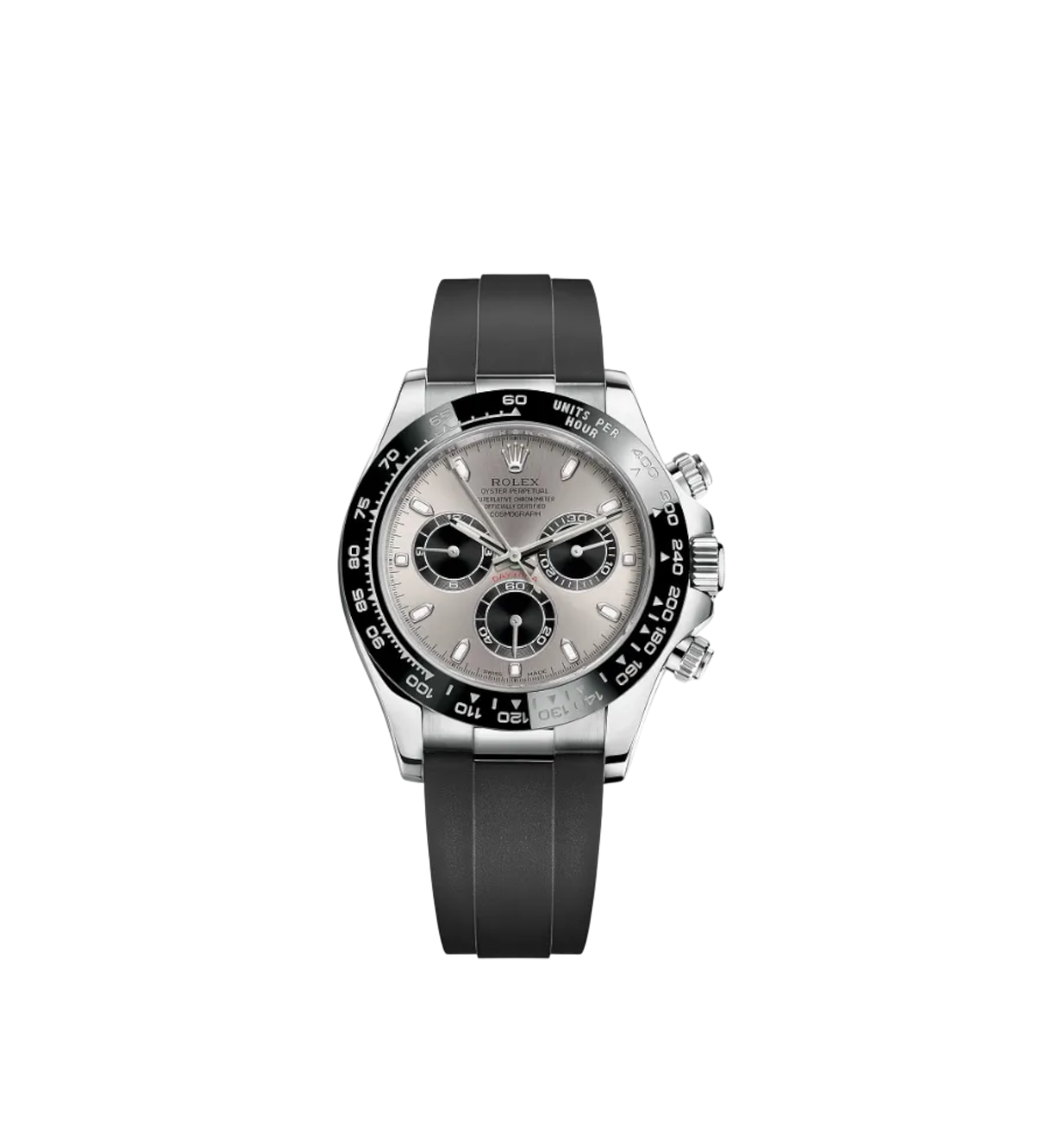
The steel Daytona is the watch that launched a thousand waitlists. Available in black or white dial configurations, the 126500LN represents the purest expression of what the Daytona is about. No precious metals, no gem setting, just a perfectly executed chronograph in stainless Oystersteel with a black Cerachrom ceramic bezel.
The white dial version is the famous "Panda" configuration, named for its white face with black subdials that resembles a panda's face. The Panda is slightly more popular among collectors and typically commands a small premium on the secondary market. The black dial "Reverse Panda" with its black face and contrasting subdials has its own devoted following, particularly among buyers who want something slightly more understated.
As of January 2026, the steel Daytona retails for approximately $16,900, up from $16,000 in 2025. On the secondary market, expect to pay $19,500 to $21,000 for a current production example. That premium has actually compressed from the heights of 2022 and 2023, when steel Daytonas were trading at $22,000 to $24,000. For context, the previous generation 116500LN still holds strong value, and even the generation before that with the steel bezel (116520) commands collector premiums.
The steel Daytona is powered by calibre 4131, which brought the Chronergy escapement, Paraflex shock absorbers, and a new oscillating weight design. The movement provides approximately 72 hours of power reserve, which means you can take it off Friday evening and it'll still be running Monday morning.
Yellow Gold (Reference 126508)
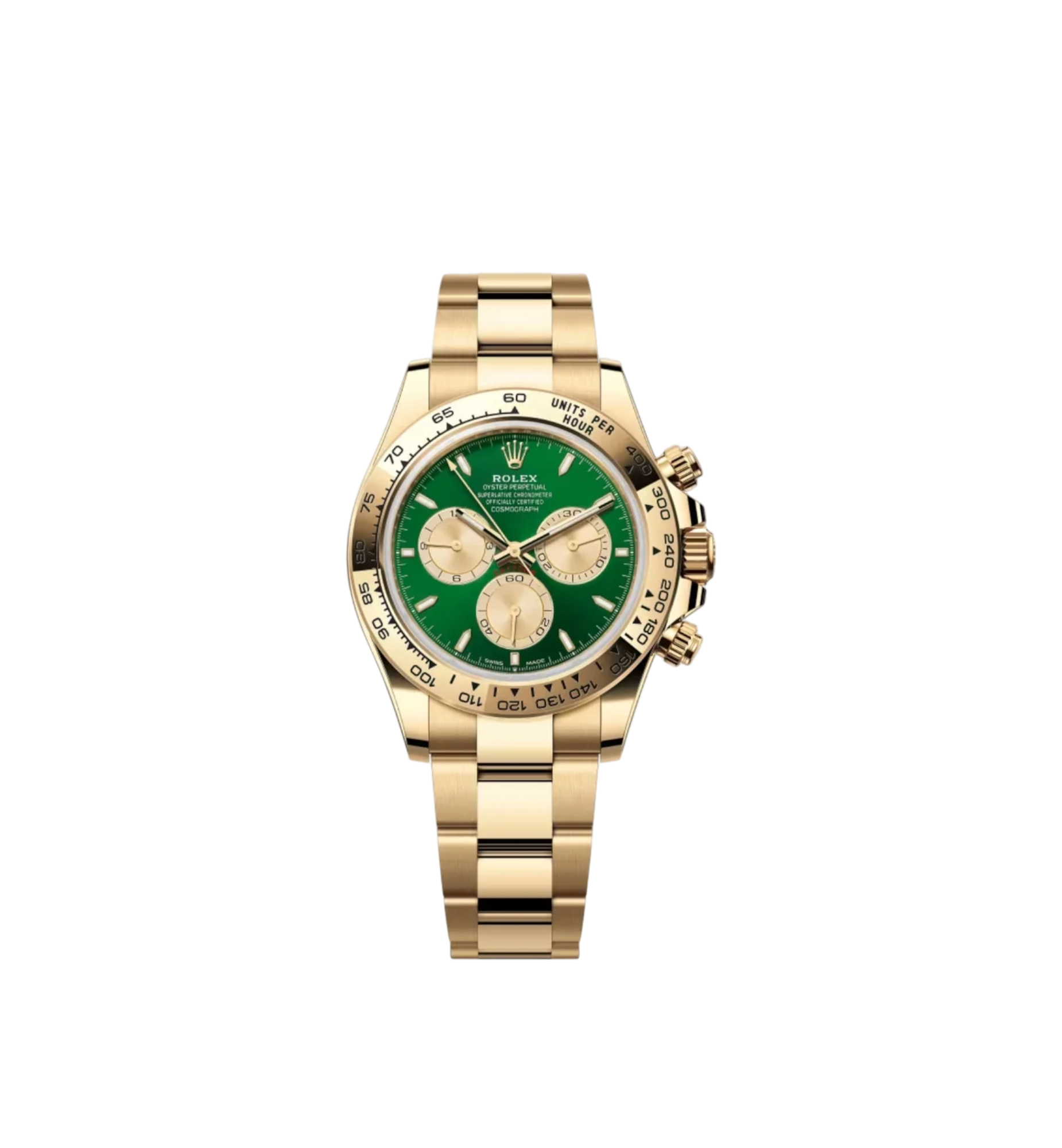
The yellow gold Daytona on an Oyster bracelet is pure, unapologetic luxury. It's the version that says "I have arrived" without needing to say anything at all. The most famous current variant is the green dial on yellow gold, widely nicknamed the "John Mayer" or "Pikachu" among collectors for its vibrant pairing. This particular combination has been selling at extraordinary premiums, with secondary market prices reaching $77,000 to over $100,000 against a retail of approximately $48,400.
Standard dial options include champagne and black, both of which trade closer to retail on the secondary market. If pure investment isn't your primary motivation and you simply want a beautiful gold chronograph, the champagne dial yellow gold Daytona is actually one of the better value propositions in the current lineup because you can occasionally find examples near retail pricing.
Everose Gold (References 126505, 126515LN)
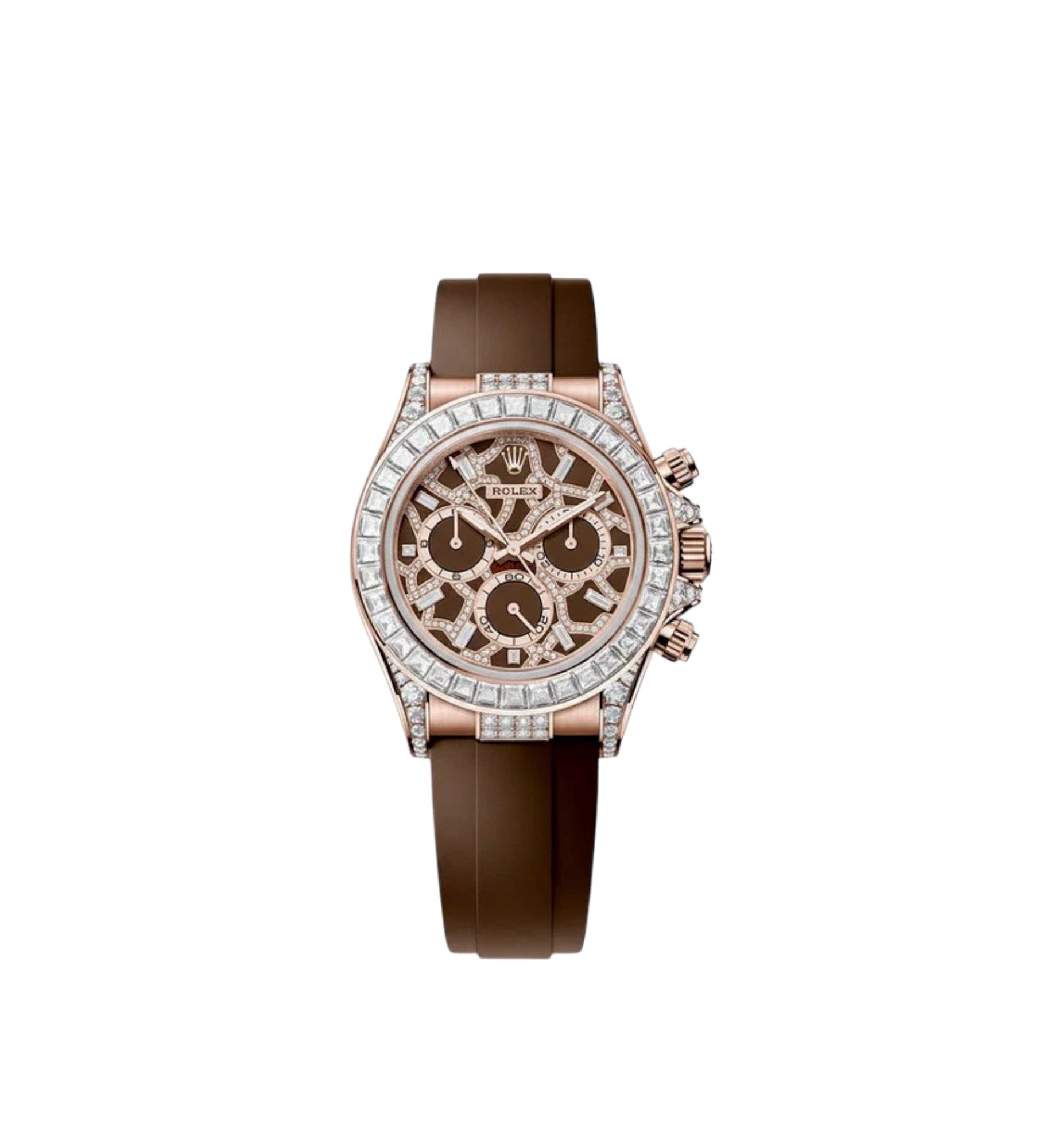
Everose is Rolex's proprietary rose gold alloy, developed in house to resist fading. Where traditional rose gold can lose its warmth over time, Everose maintains its distinctive pink tone indefinitely. The Daytona is available in Everose on both the Oyster bracelet (126505) and the Oysterflex rubber strap (126515LN).
The 2025 additions to this family made serious waves. A meteorite dial variant on the Oysterflex strap became one of the most sought after Daytonas in the current catalogue, with secondary market prices reaching approximately $150,000 against a retail around $43,750. The chocolate dial with Oysterflex remains one of the more attainable precious metal Daytonas, trading in the $55,000 to $65,000 range.
The recently introduced Le Mans edition (reference 126525LN), celebrating the centenary of the 24 Hours of Le Mans, added an Everose gold Daytona with a ceramic bezel featuring a red "100" marker. This limited piece has been trading at extraordinary premiums, with asking prices of $240,000 to $284,000.
White Gold
The white gold Daytona is the stealth wealth option. From a distance, it looks remarkably similar to the steel model, but in hand the weight tells a completely different story. White gold is significantly denser than stainless steel, so a white gold Daytona feels noticeably heavier on the wrist. It's the choice for buyers who want precious metal without broadcasting it.
The Le Mans centenary edition was also produced in white gold with a transparent caseback, allowing the wearer to view the decorated movement. This feature, previously reserved for the platinum model, elevated the white gold Daytona into true collector territory.
Platinum (Reference 126506)
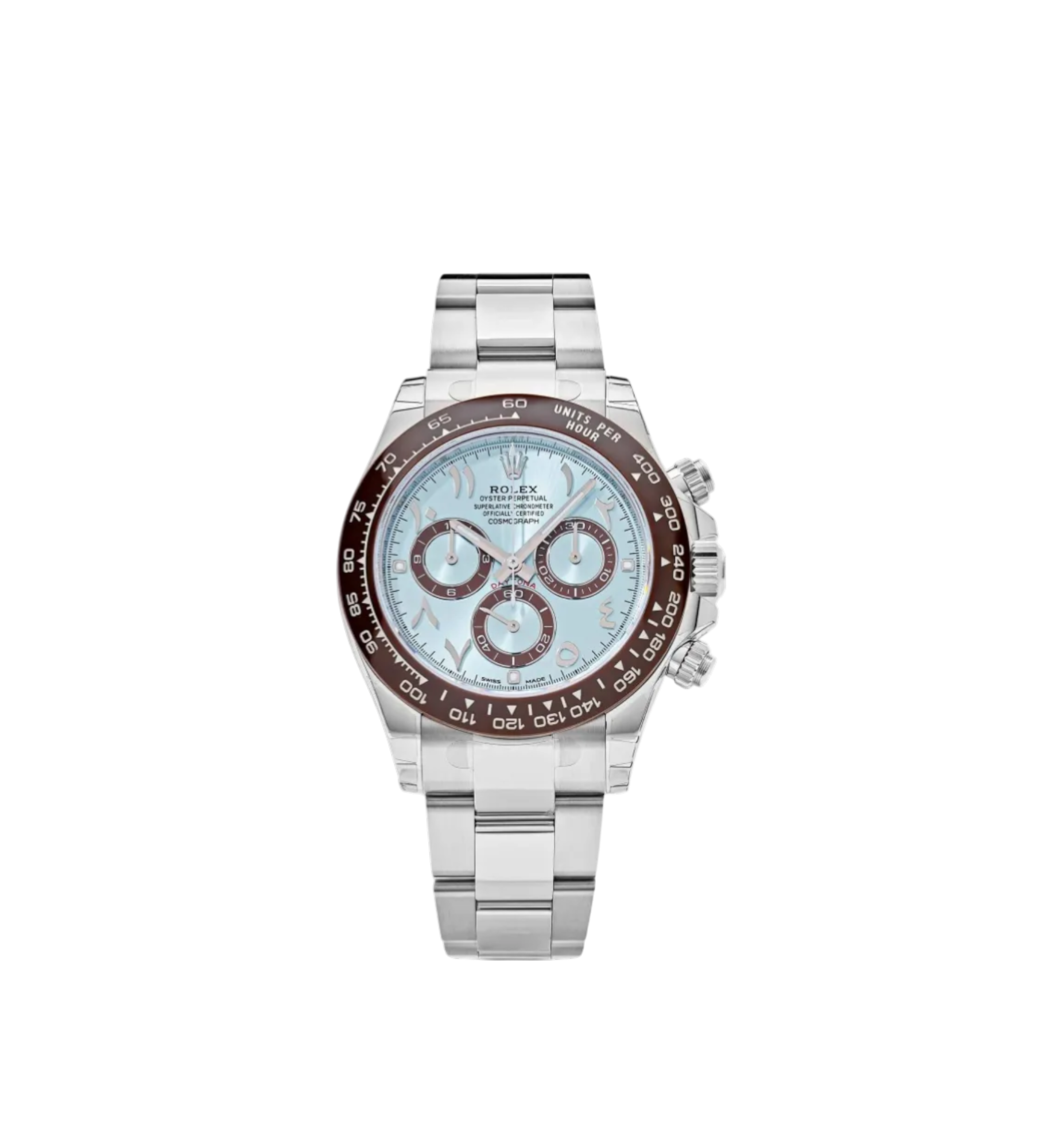
The platinum Daytona sits at the absolute pinnacle of the collection. Distinguished by its ice blue dial, which is Rolex's signature colour reserved exclusively for platinum models, this is the most expensive production Daytona. The 2026 retail price has risen to approximately $141,500 in Australian dollars (roughly $95,000 to $100,000 USD depending on market), with the ceramic bezel featuring a chestnut brown Cerachrom insert that's unique to the platinum model.
The platinum Daytona was the first in the collection to feature a transparent caseback, revealing the beautifully finished movement with its yellow gold oscillating weight. Secondary market prices hover around $124,000 to $130,000 for current examples, which actually represents a relatively modest premium over retail compared to some of the more hyped gold variants.
Gem-Set and Special Models
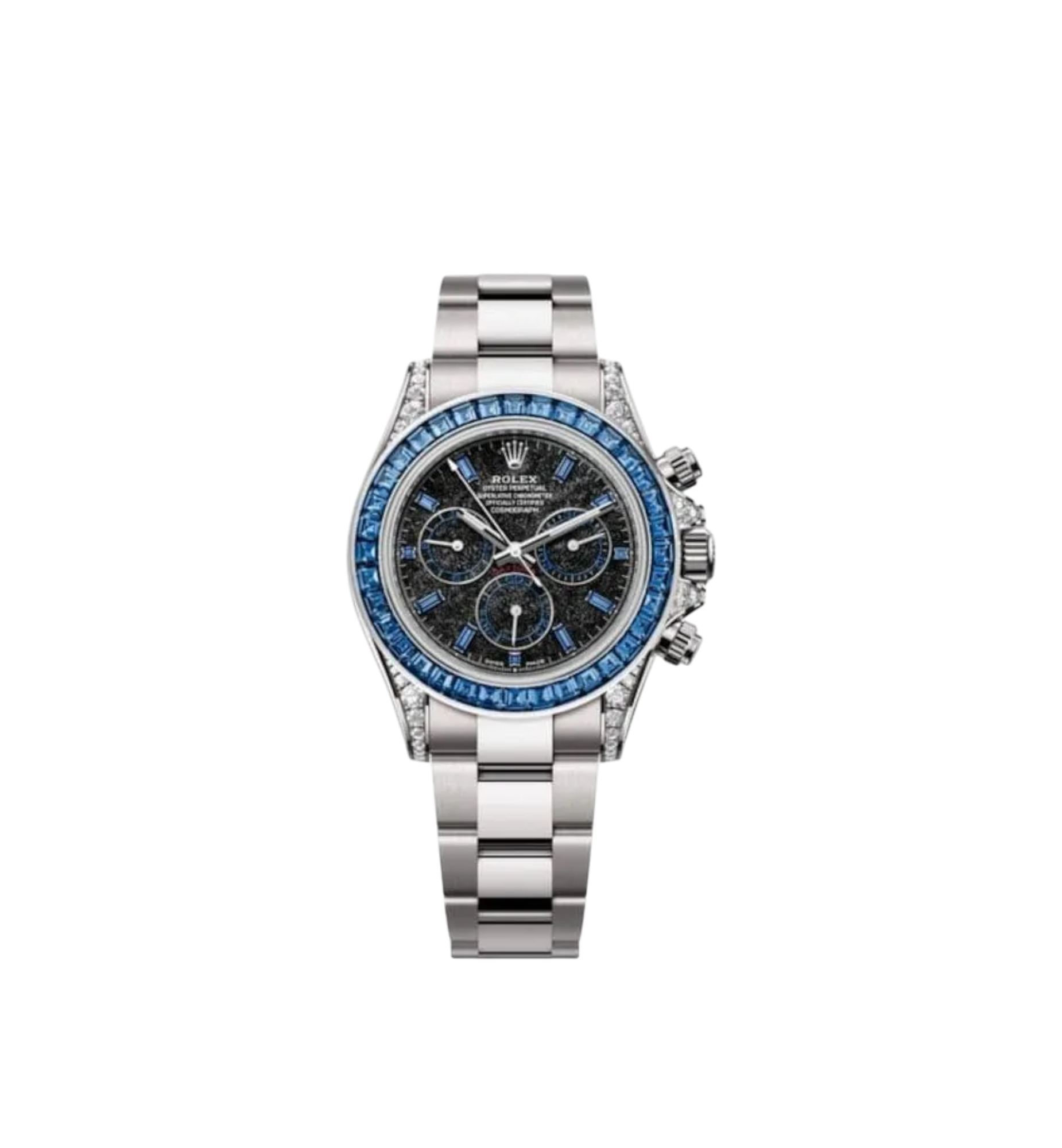
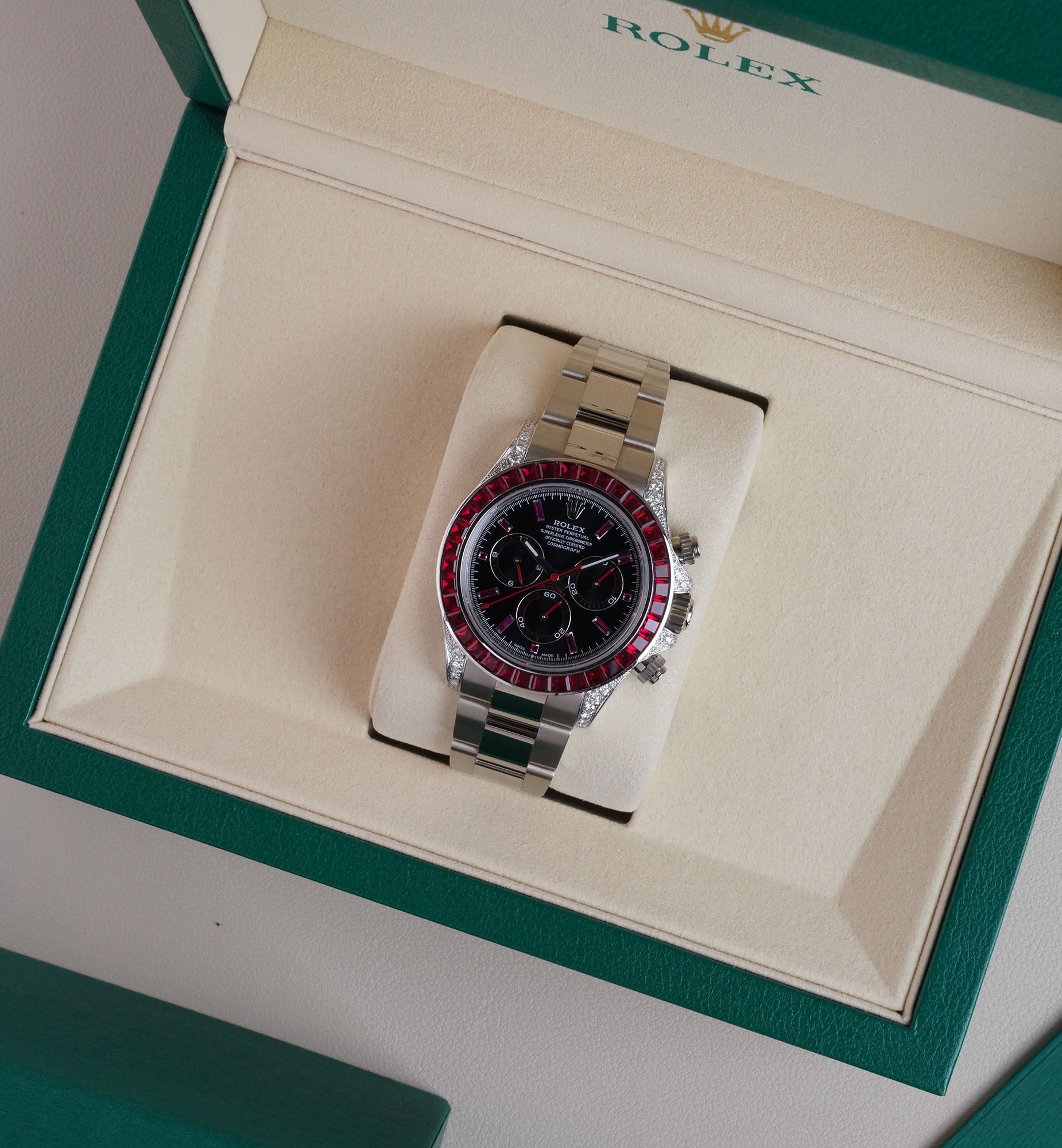
For buyers who want maximum impact, Rolex offers Daytona variants with diamond-set bezels, diamond hour markers, and even fully paved cases. The "Rainbow" Daytona, featuring a bezel set with colour-graduated sapphires, has become one of the most recognisable luxury watches in the world, frequently spotted on celebrity wrists and commanding prices well into six figures. These models exist at the intersection of haute horlogerie and high jewellery, and they represent a significant departure from the tool-watch origins of the Daytona.
How to Actually Get a Rolex Daytona
Let's be direct about this. Walking into an authorized Rolex dealer and buying a steel Daytona off the shelf is essentially impossible in 2026. The waitlist situation has improved somewhat from the peak mania of 2021 and 2022, but steel sports models remain allocated exclusively to clients with established purchase histories. New collectors face minimum wait times of several years, and many dealers have stopped accepting new registrations entirely.
There are three realistic paths to Daytona ownership:
The first is building a relationship with an authorized dealer over time, purchasing other Rolex models and demonstrating that you're a genuine enthusiast rather than a flipper. This can take years and requires patience. Some buyers start with a Datejust or an Oyster Perpetual, building a rapport before being offered a sports model.
The second is buying pre-owned from a trusted dealer. This means paying a premium over retail, but you get the watch immediately and you get to inspect the specific piece you're buying. The premium on steel Daytonas has compressed significantly from its 2022 highs, making this route more reasonable than it's been in years.
The third is exploring gold and precious metal variants, which are significantly more available at retail than steel models. A gold Daytona purchased at retail from an authorized dealer can actually represent better value than a steel Daytona purchased at a premium on the secondary market, particularly given how gold prices have surged above $5,000 per ounce in early 2026.
Daytona as an Investment
The Daytona's investment credentials are well established. The steel model has consistently traded above retail since the introduction of the ceramic bezel in 2016. Rolex implements regular price increases, with the January 2026 increase adding approximately 2.2% to steel models and 5 to 9% to gold variants. This means that every Daytona purchased before a price increase is instantly worth more relative to current retail pricing.
That said, the secondary market has cooled from its peaks. Steel Daytonas that were trading at 50 to 60% above retail in 2022 are now closer to 15 to 25% above retail. This is actually healthier for the market and better for genuine buyers. The speculative froth has dissipated, but fundamental demand remains strong.
Gold Daytonas are in an interesting position right now. With gold trading above $5,000 per ounce, the precious metal content in a gold Daytona provides a rising value floor. Sellers of solid gold Rolex watches are in the strongest position because resale value is partially anchored to commodity pricing, not just brand perception. If you believe gold prices will remain elevated or continue rising, a gold Daytona becomes a compelling combination of wearable luxury and tangible asset.
For those interested in watches as investments more broadly, the Daytona sits alongside the Rolex Submariner, the GMT-Master II, and models from Patek Philippe and Audemars Piguet as the most reliable value holders in horology.
Which Daytona Should You Buy?
This depends entirely on your situation, but here's a practical framework.
If this is your first serious luxury watch and you want pure horological credibility, aim for the steel 126500LN in either dial colour. It's the definitive Daytona experience, and the Panda in particular has become one of the most recognisable watches in the world. Be prepared to either wait for an allocation or pay a premium on the secondary market.
If you already own a steel sports Rolex like a Submariner or GMT-Master and want to step up, an Everose gold Daytona on Oysterflex is one of the most satisfying luxury watches you can put on your wrist. The rubber strap makes it wearable in situations where a gold bracelet might feel too dressy, and the Everose warmth is genuinely stunning in person.
If investment potential matters alongside enjoyment, the yellow gold Daytona on a bracelet with a standard dial (champagne or black) offers the best balance. You're getting Rolex's most iconic chronograph in a precious metal that's backed by surging gold prices, at a price point that's closer to retail than the hyped steel versions. It's arguably the smartest Daytona purchase you can make in 2026.
If budget is less of a concern and you want the ultimate collector's piece, the platinum with ice blue dial or any of the Le Mans editions represent the pinnacle. These are heirloom pieces that combine the Daytona's racing heritage with Rolex's most exclusive materials.
Caring for Your Daytona
A Rolex Daytona is built to be worn, not kept in a safe. The Oyster case is robust, the movement is shock resistant, and the bracelet or strap is designed for daily wear. The 40mm case at approximately 12.5mm thick slips comfortably under shirt cuffs, and many collectors wear their Daytonas as daily drivers.
The ceramic Cerachrom bezel on current models is essentially scratch proof, which is a significant advantage over the metal bezels of earlier generations. The sapphire crystal is equally resilient. Where you'll see wear first is on the bracelet and case sides, which will develop a patina of fine scratches over time. Many owners consider this character rather than damage.
Rolex recommends servicing the Daytona approximately every ten years, though many watchmakers suggest every five to seven years for optimal performance. A full service involves disassembling the movement, cleaning every component, replacing worn parts, relubrication, and testing. For a chronograph as complex as the Daytona, this is best done by Rolex service centres or highly qualified independent watchmakers.
For daily care, wipe the watch with a soft cloth after wearing it. If you've been in saltwater, rinse it with fresh water and dry it. Ensure the pushers and crown are screwed down before any water exposure. And when you're not wearing it, store it in a watch box or on a winder if you want it ready to wear without having to reset the time.
The Daytona in the Context of Rolex's Sport Collection
The Daytona doesn't exist in isolation. It's part of Rolex's legendary sport watch lineup, and understanding where it fits helps inform your buying decision.
The Submariner is the dive watch, built for underwater exploration with a unidirectional rotating bezel. The GMT-Master II is the traveler's watch, displaying multiple time zones simultaneously. The Day-Date, known as "The President," is the dress sport watch that displays both day and date. And the Daytona is the racing chronograph, designed to time laps and calculate speeds.
Each serves a different purpose, but the Daytona commands the highest premiums and longest waitlists because of its unique position as both a tool watch and a cultural icon. It's the only Rolex sport watch with a chronograph complication, and the combination of that functionality with the Paul Newman legend and decades of motorsport heritage creates a desirability that no other model quite matches.
Collectors who want to build a comprehensive Rolex collection often aim for the "sport watch trinity" of Submariner, GMT-Master, and Daytona. If you can only have one, the Daytona is the crown jewel. If you want to start more accessibly and work toward a Daytona, the Submariner and GMT-Master are both exceptional watches in their own right that you'll never regret owning.
Frequently Asked Questions
How much does a Rolex Daytona cost in 2026?
The steel Daytona (reference 126500LN) has a retail price of approximately $16,900 as of January 2026, though it sells on the secondary market for $19,500 to $21,000. Gold models range from approximately $37,000 to $52,000 at retail depending on the specific configuration, with some variants commanding significant premiums above retail. The platinum model retails for approximately $95,000 to $100,000 USD.
How long is the waitlist for a Rolex Daytona?
For the steel model, realistic wait times range from three to seven years at most authorized dealers, and many have stopped accepting new waitlist registrations entirely. Gold and platinum models have shorter wait times, and in some cases can be purchased with an established dealer relationship within months. The availability situation has improved from the extremes of 2021 to 2022 but remains challenging for steel sport models.
Is the Rolex Daytona a good investment?
Historically, yes. The steel Daytona has traded above retail consistently since 2016. Rolex's regular price increases (2.2% on steel, 5 to 9% on gold in January 2026) provide built-in appreciation for pieces purchased before each increase. Gold models benefit additionally from surging gold prices, which have risen above $5,000 per ounce in early 2026. However, secondary market premiums have compressed from their 2022 peaks, so buying at inflated secondary prices reduces the investment upside.
What is the Panda Daytona?
The "Panda" is the white dial steel Daytona (126500LN) with black subdials. The white face with contrasting dark subdials is said to resemble a panda's face, hence the nickname. The opposite configuration, a black dial with light subdials, is called the "Reverse Panda" or sometimes "Inverse Panda." The Panda is slightly more popular and typically commands a small premium over the black dial version on the secondary market.
Who was Paul Newman and why does his name matter?
Paul Newman was an Academy Award winning actor and passionate racing driver. His wife Joanne Woodward gifted him a Daytona reference 6239 with an exotic dial in the late 1960s, engraved "DRIVE CAREFULLY ME" on the caseback. Newman wore the watch daily for fifteen years, and his association with it transformed the once unpopular exotic dial variant into the most coveted vintage watch in existence. His personal Daytona sold for $17.75 million at Phillips auction in 2017, a record for any Rolex.
Should I buy a steel or gold Daytona?
It depends on your priorities. The steel Daytona is more versatile for daily wear and carries the strongest cultural cachet as the "original" Daytona experience. The gold Daytona is more available at retail (no multi-year waitlist), benefits from rising gold prices as a value floor, and makes a stronger visual statement. In terms of pure value, a gold Daytona at retail can actually be a smarter purchase than a steel Daytona bought at a 20% premium on the secondary market.
What movement powers the current Daytona?
The current generation Daytona uses calibre 4131, introduced in 2023. It features the Chronergy escapement for improved energy efficiency, Paraflex shock absorbers for enhanced durability, and delivers approximately 72 hours of power reserve. The movement is COSC certified as a Superlative Chronometer, meaning it performs at minus 2 to plus 2 seconds per day, twice as precise as standard COSC certification.
Can you swim with a Rolex Daytona?
The Daytona is water resistant to 100 metres (330 feet), which is more than adequate for swimming and recreational water activities. The critical thing is to ensure both the crown and the chronograph pushers are fully screwed down before entering water. While the Daytona can handle water, it's not a dive watch like the Submariner, so avoid diving or high pressure water activities.
What is the difference between the 126500LN and 116500LN?
The 126500LN is the current generation (2023 onwards) and the 116500LN is the previous generation (2016 to 2023). The main differences are the updated calibre 4131 movement (versus 4130), refined case proportions with slightly thinner lugs, an updated dial with subtle design refinements, and the Cerachrom bezel now features a polished metal edge. Both feature ceramic bezels and 40mm cases. The previous generation 116500LN remains highly collectible and holds strong secondary market value.
How can I tell if a Rolex Daytona is authentic?
Authentic modern Daytonas feature laser etched crown logos at 6 o'clock on the crystal (visible under magnification), a micro-etched Rolex crown on the dial at 6 o'clock, properly engraved serial and model numbers between the lugs (visible with the bracelet removed), smooth chronograph pusher operation, and the correct weight for the material. The most reliable method is purchasing from a trusted dealer who provides authentication and documentation. At Konesseur, every watch is verified for authenticity before being offered.
Is the Daytona too small at 40mm?
The 40mm case size has been the Daytona's signature since 1988, and it works exceptionally well on most wrist sizes. The relatively compact size is actually one of its strengths, sitting comfortably under shirt cuffs and maintaining proportional elegance. The case thickness of approximately 12.5mm keeps it from feeling top heavy. If you're accustomed to larger watches (44mm plus), the Daytona may feel compact initially, but most owners find the proportions perfect after a brief adjustment period.
Where can I buy a Rolex Daytona in Dubai?
Dubai is one of the world's premier markets for luxury watches, with competitive pricing and no sales tax advantage for international buyers. Authorized dealers carry the full Rolex range but allocation for steel sport models remains limited. For buyers who want a specific Daytona without the waitlist, pre-owned specialists like Konesseur offer authenticated pieces with the confidence of expert verification. Whether you're a Dubai resident or visiting, the city's deep luxury watch market means options exist across the spectrum from authorized retail to premium pre-owned.
 Same Day Delivery
 Same Day Delivery
Read more

Walk into any watch forum, authorized dealer, or collector gathering and you'll hear people casually discussing Pepsis, Batmans, Hulks, and Kermits. If you're new to Rolex, this sounds absurd. If ...
This is the debate that has defined Rolex collecting for the past decade. The Submariner or the Daytona. The dive watch or the chronograph. The one you can actually buy at retail (with patience) or...