

Rolex Datejust
If there's one watch that defines what Rolex means to the world, it's the Datejust. Introduced in 1945 to celebrate the company's 40th anniversary, this was the watch that changed everything. Before the Datejust, no wristwatch could display the date while being fully automatic and waterproof. Ro...
See moreIf there's one watch that defines what Rolex means to the world, it's the Datejust. Introduced in 1945 to celebrate the company's 40th anniversary, this was the watch that changed everything. Before the Datejust, no wristwatch could display the date while being fully automatic and waterproof. Rolex combined their Oyster case, their Perpetual self-winding movement, and added a window showing the date—magnified by what would become their signature Cyclops lens. The result? The most versatile luxury watch ever created.
What makes the Datejust special isn't just its history—it's how it works for everyone. Your first Rolex? Probably a Datejust. Need a watch that goes from the office to dinner to the weekend? Datejust. Want something your kids might inherit? Datejust. Available in sizes from 31mm to 41mm, in steel or gold or two-tone, with dozens of dial options, the Datejust adapts to you. It's not trying to be a dive watch like the Submariner or a racing chronograph like the Daytona. The Datejust is simply the watch you wear when you want to look like you have your life together.
At Konesseur, we've assembled a carefully selected collection of Rolex Datejust watches in various sizes, metals, and dial configurations. Whether you're looking for the classic 36mm that's been the standard for decades, or the modern 41mm, you'll find authenticated timepieces ready to become part of your story.
Sort by
 Same Day Delivery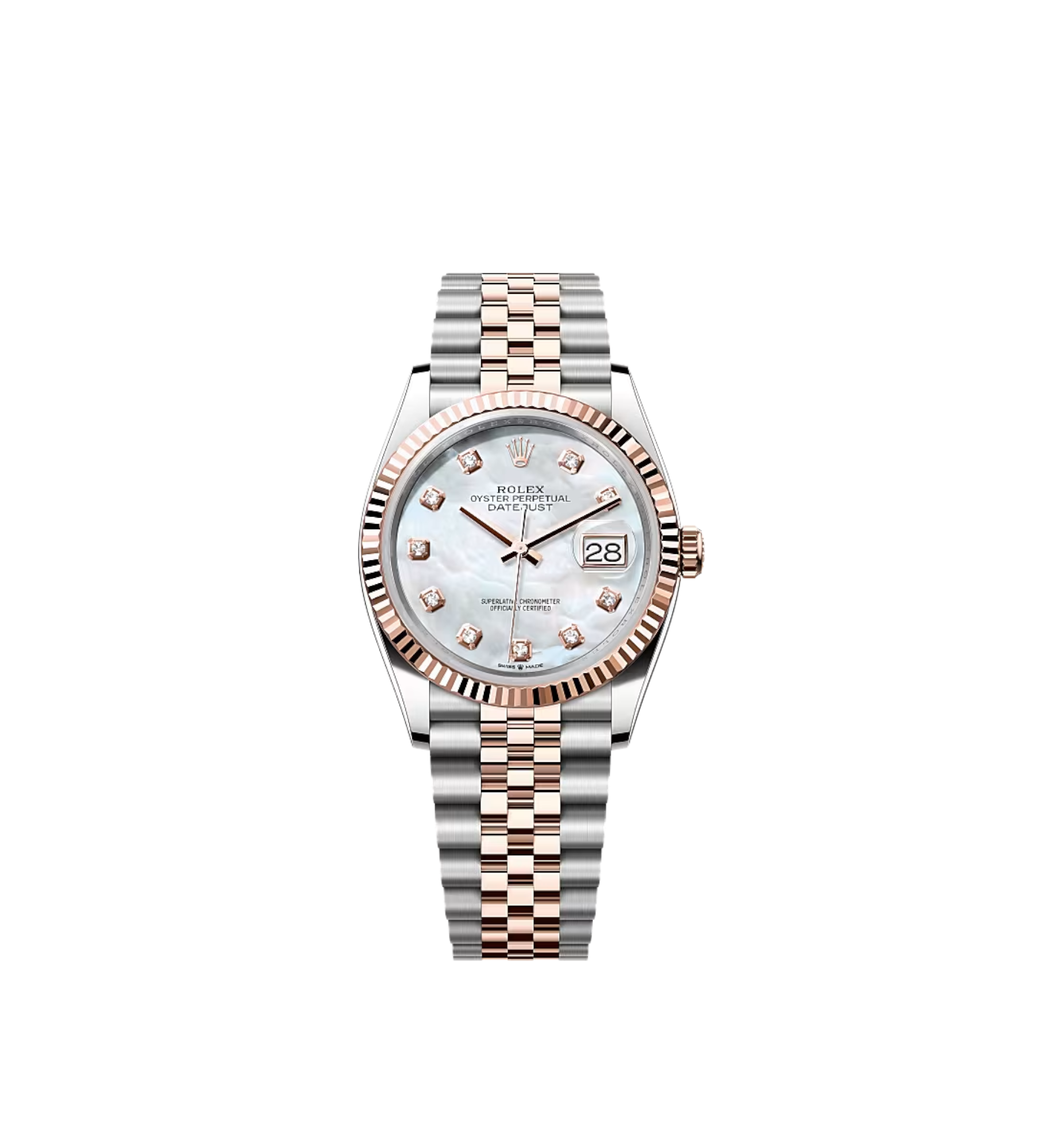
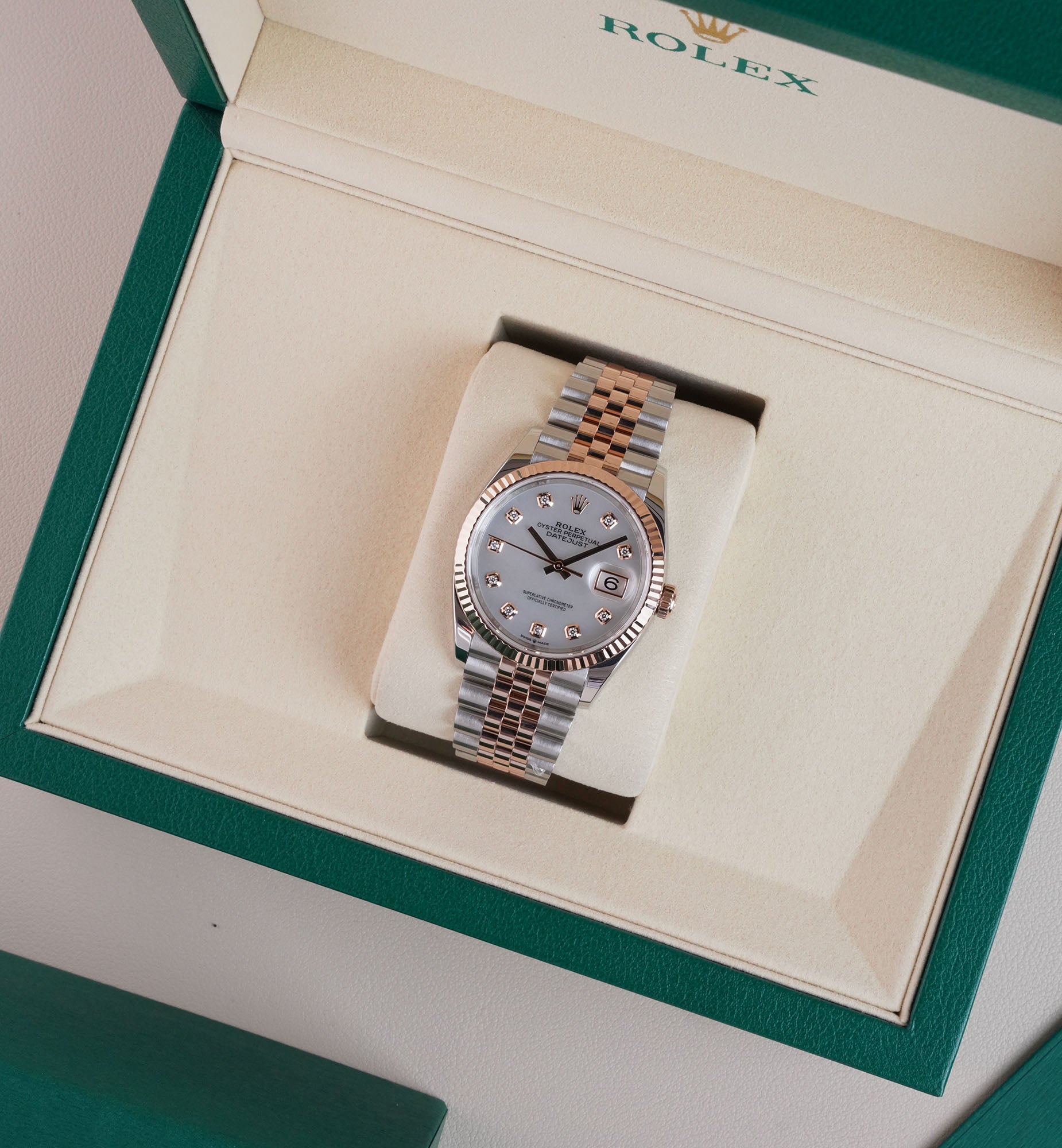 Same Day Delivery
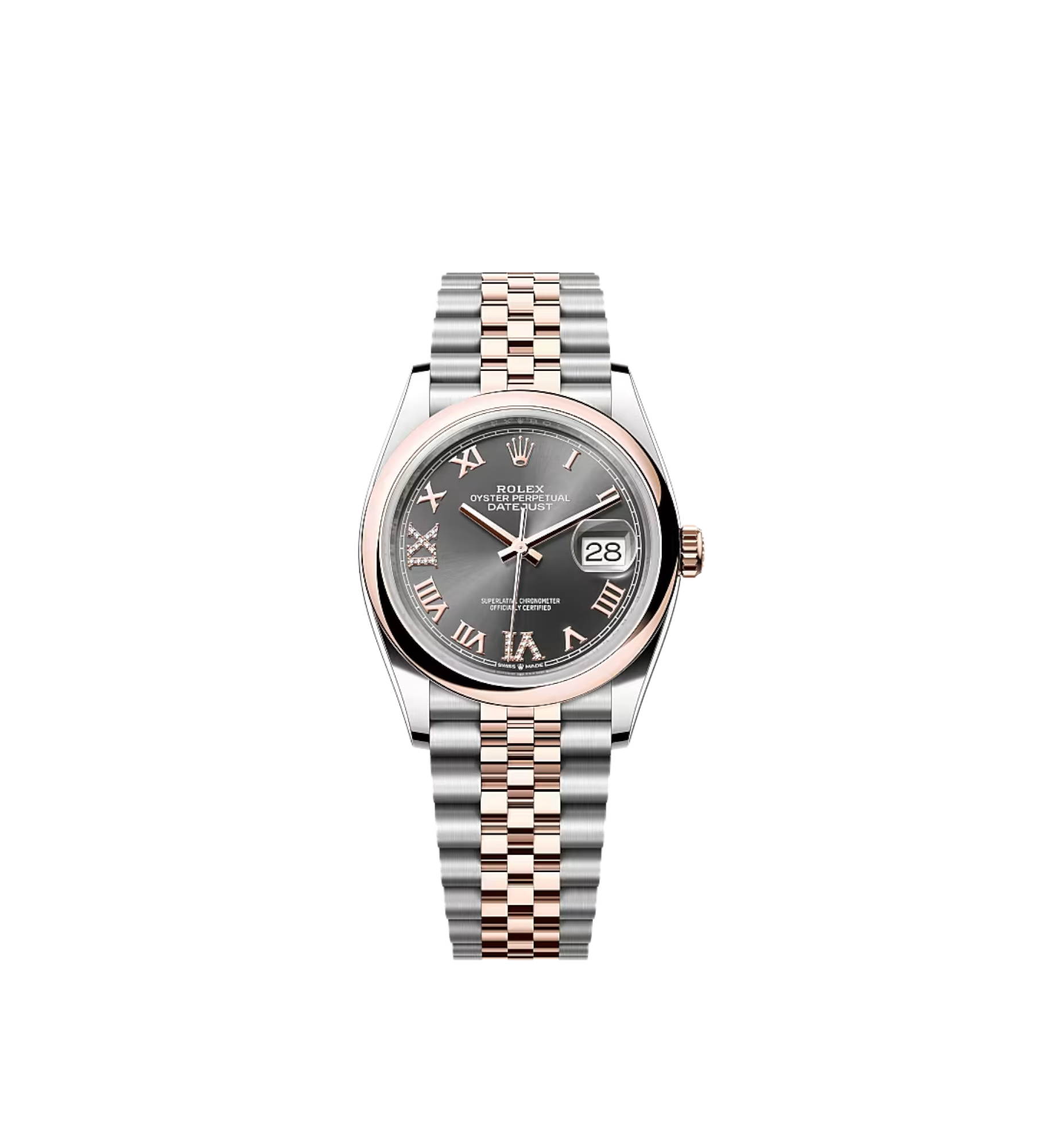 Same Day Delivery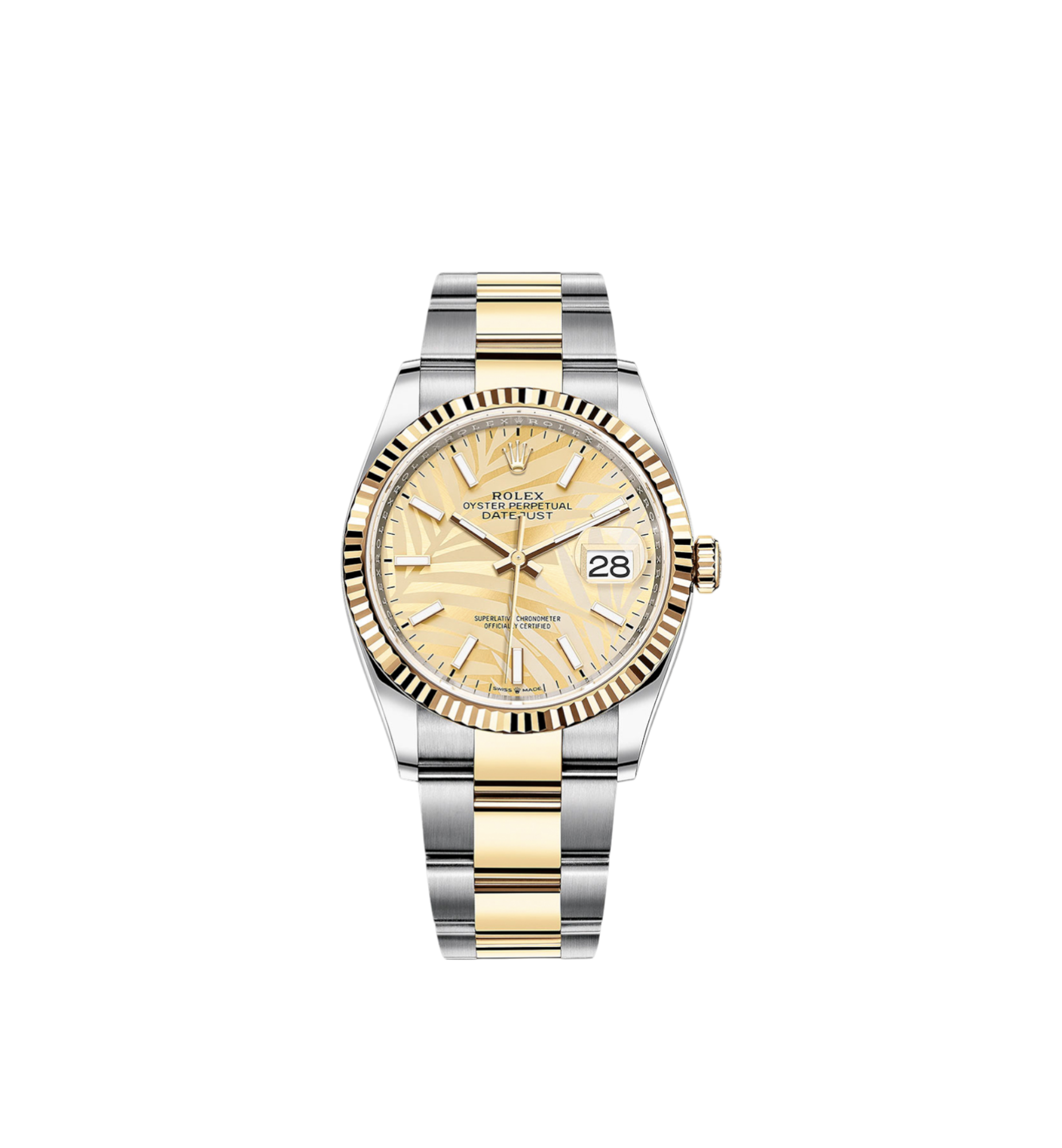
 Same Day Delivery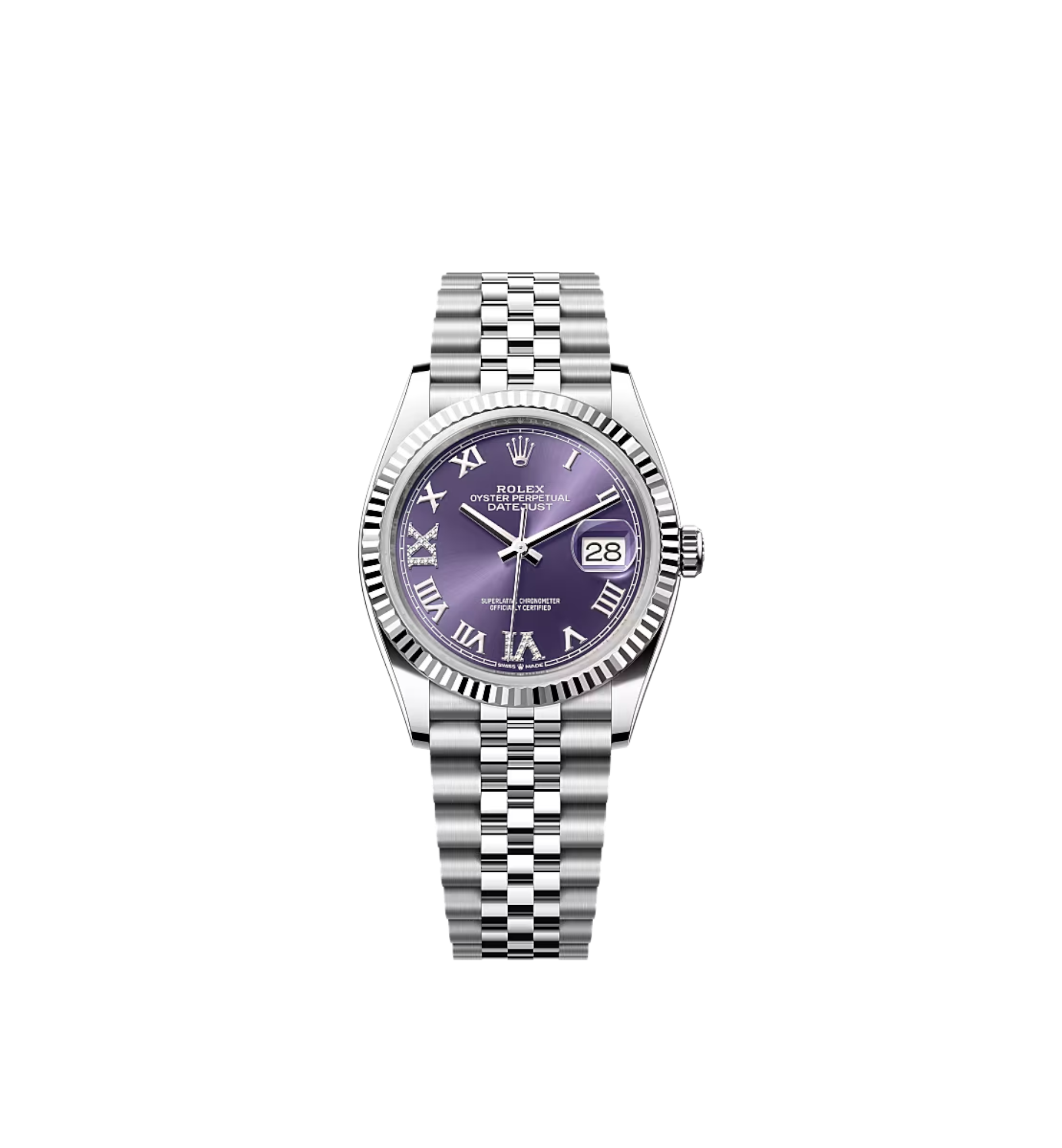


The Datejust Story: 1945 to Now
When Rolex unveiled the Datejust in 1945, they weren't just launching a watch they were setting the template for luxury watches that would last nearly 80 years. Think about that. The design language created in 1945 still works today, still feels current, still sells. The fluted bezel, the Cyclops lens magnifying the date at 3 o'clock, the seamless integration of form and function these weren't trends. They were design decisions so good they've never needed replacing.
The original Datejust measured 36mm, which was actually considered large for 1945. At the time, dress watches typically ran 32-34mm. Rolex was thinking ahead. That 36mm size would go on to become the universal "right size" for a men's dress watch, so perfect that it's now worn by people of all genders and wrist sizes. The Datejust wasn't trying to be bold or make a statement. It was trying to be right, and it succeeded.
Understanding Datejust Sizes
Datejust 31mm
The 31mm Datejust occupies an interesting space. It's perfect for smaller wrists, often chosen by women, but plenty of men wear it too especially those who appreciate vintage proportions or simply prefer a watch that doesn't dominate their wrist. The 31mm wears elegantly, slides under any cuff, and makes you look twice because it's confident enough not to shout. If you're used to 40mm+ watches, try a 31mm before dismissing it. You might be surprised how good proper proportions feel.
Datejust 36mm
This is the one. The 36mm Datejust is what people mean when they talk about "the perfect watch size." Worn by everyone from CEOs to craftsmen, from your grandfather to your younger sibling, the 36mm Datejust just works. It's formal enough for black tie, casual enough for jeans, substantial without being flashy. If you only own one watch for the rest of your life, make it a 36mm Datejust. That's not hyperbole it's earned wisdom from decades of watch collectors who've tried everything else and come back to this.
Datejust 41mm
Modern wrists have adapted to larger watches, and Rolex responded with the Datejust 41. At 41mm, it fills out your wrist without crossing into oversized territory. If you're used to sports watches like the Submariner, the 41mm Datejust will feel familiar same diameter, but sleeker, more refined. The larger dial offers more canvas for intricate dial patterns and provides better legibility. For those who think 36mm might feel small after years of wearing 40mm+ watches, the 41mm bridges that gap perfectly.
Materials: Finding Your Perfect Combination
Steel Datejust (Oystersteel)
The all-steel Datejust is where most people start, and where many people stay. Rolex's Oystersteel (their proprietary 904L steel alloy) is harder, shinier, and more corrosion-resistant than standard stainless steel. It doesn't wear down or dull over time. A 20-year-old steel Datejust can be polished to look nearly new. Steel Datejusts work everywhere formal occasions don't mind steel (unlike yellow gold which can feel too bold), and daily wear doesn't baby it because you're not worried about scratching precious metal. The value proposition is clear: Rolex quality without the precious metal premium.
Two-Tone Datejust (Rolesor)
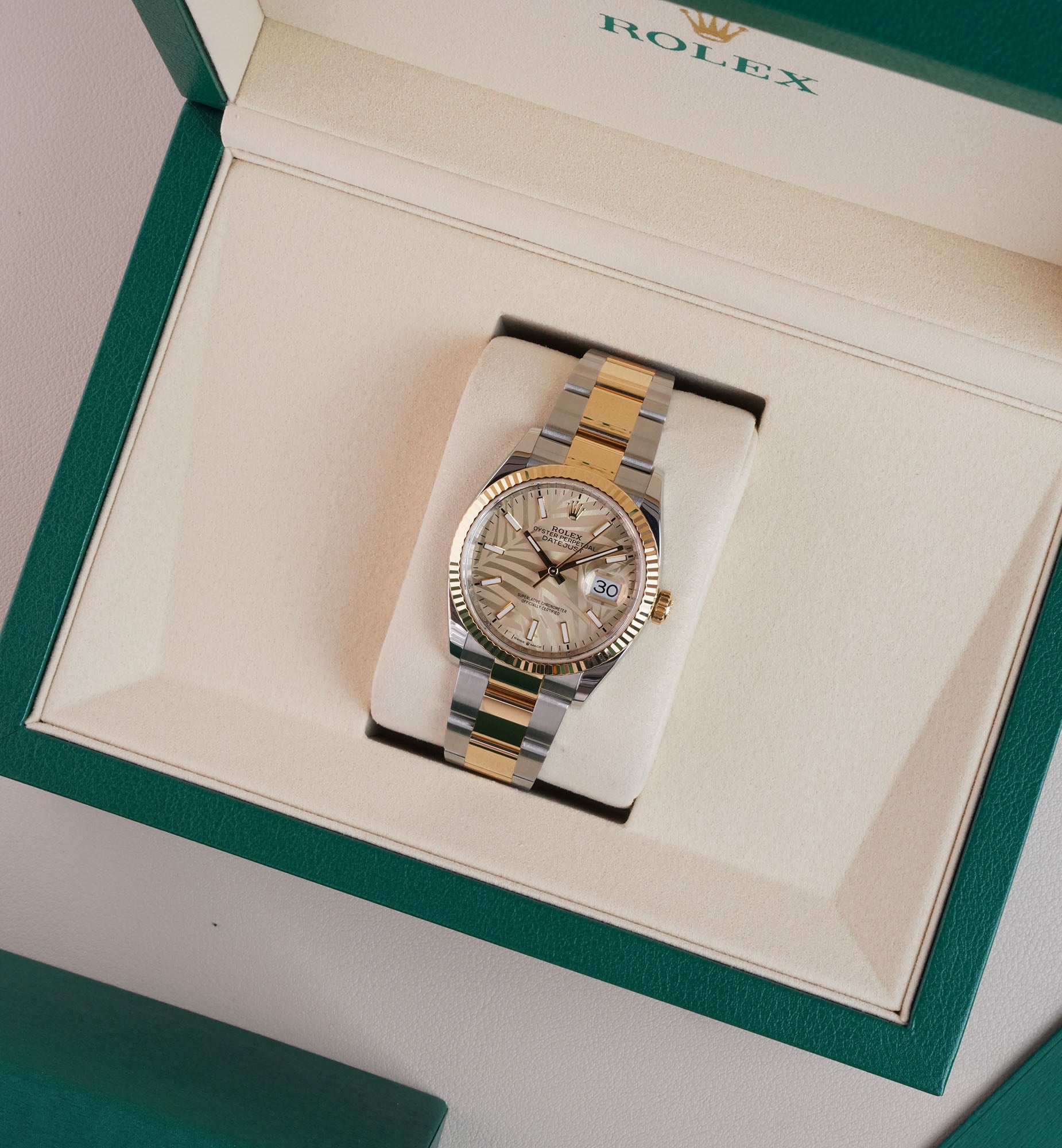
Rolex calls their steel-and-gold combination "Rolesor," and it's genius. You get the durability and restraint of steel with just enough gold to catch the light typically on the bezel, crown, center bracelet links, and hands. Two-tone walks the line between professional and luxurious. It's dressier than full steel but less flashy than full gold. The beauty of two-tone is versatility: business casual to formal wear, it adapts. If you're torn between steel and gold, two-tone gives you both. Yellow gold two-tone is the classic choice, while Everose (Rolex's rose gold) two-tone offers contemporary warmth.
Full Gold Datejust
Yellow gold, white gold, or Everose full precious metal Datejusts make a statement. They're heavier on the wrist, more expensive to acquire, and impossible to mistake for anything else. Yellow gold Datejusts have a vintage appeal, especially with champagne or black dials. White gold offers precious metal prestige that's more subtle at a glance it looks like steel, but the weight and finish reveal the truth. Everose gold brings modern warmth without yellow gold's boldness. If you want a Datejust that announces success, precious metal is the choice. If you want one that quietly represents success, stick with steel or two-tone.
Dials: Where the Datejust Gets Personal
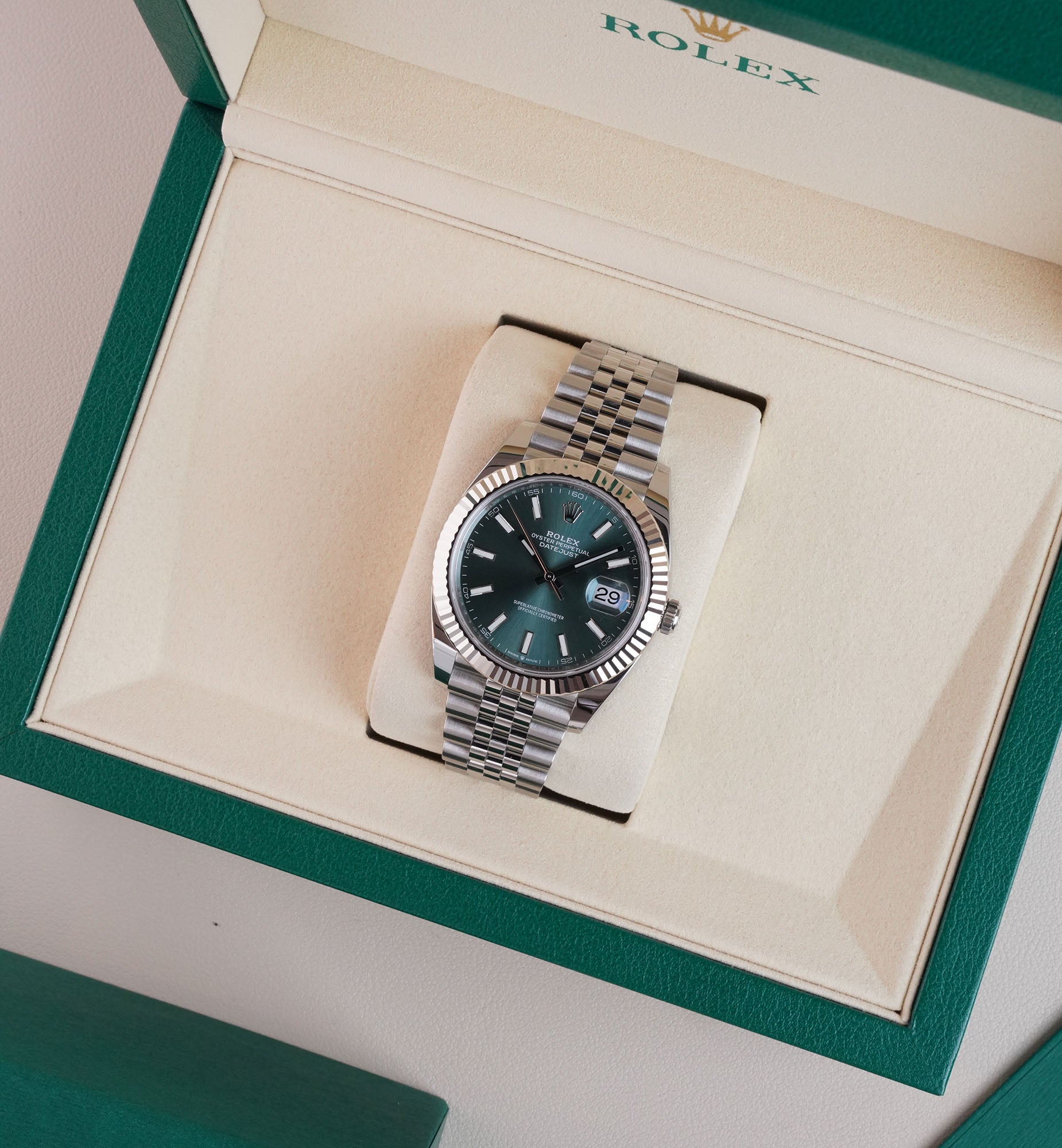
Here's where Datejust ownership becomes deeply personal. Rolex offers the Datejust in dozens of dial configurations, and your choice says something about you. Black dials are the most versatile legible, professional, works with any outfit. Silver or rhodium dials offer quiet elegance. Champagne dials (especially on gold or two-tone) scream classic luxury. Blue dials have become hugely popular recently, offering personality without being loud.
Then there are the special dials: mother-of-pearl for iridescent elegance, diamond markers for subtle luxury, computer-generated patterns like palm or fluted motifs, meteorite dials for cosmic uniqueness. The dial options let you customize your Datejust to match your personality. Conservative? Stick with black or silver. Want some flair? Blue sunburst or champagne. Ready to stand out? Mother-of-pearl or meteorite.
Bezels: Fluted vs Smooth
The fluted bezel is the Datejust's signature those vertical grooves catching light, creating a crown-like appearance. Originally functional (the grooves helped screw the bezel onto the case for waterproofing), the fluted bezel became decorative once Rolex developed better sealing methods. Today it's pure style, and it's what most people picture when they think "Datejust." The fluted bezel is only available in gold (yellow, white, or Everose), which is why steel Datejusts come with smooth bezels.
The smooth bezel is cleaner, more understated. It lets the dial do the talking. Some prefer it because it's less visually busy, more minimalist. The smooth bezel also allows for different treatments engine-turned, polished, or even set with diamonds. If you're going full steel, the smooth bezel is your option. If you're doing two-tone or gold, you'll likely want the fluted bezel because that's what makes the Datejust iconic.
Bracelets: Oyster vs Jubilee
The Datejust introduced the world to the Jubilee bracelet in 1945 a five-piece link design that's incredibly comfortable and undeniably dressy. The Jubilee flows and flexes with your wrist, feeling almost liquid. It's the dressier choice, the one that says "special occasion watch" even though you can wear it daily. The polished center links catch light beautifully, especially on gold or two-tone models.
The three-piece link Oyster bracelet is sportier, more robust. It's the same bracelet used on the Submariner and GMT-Master, bringing some of that tool-watch DNA to the Datejust. The Oyster is better for active wear, more masculine in feel, and keeps the Datejust from looking too formal. Both bracelets feature Rolex's Easylink extension system pull out the clasp for an extra 5mm when your wrist swells in heat. Small detail, massive comfort improvement.
The Movement Inside
Modern Datejusts house Rolex's Caliber 3235 (in 41mm and some 36mm models) or Caliber 2236 (in 31mm models). These are automatic movements entirely manufactured in-house by Rolex, certified as Superlative Chronometers with accuracy of -2/+2 seconds per day twice as accurate as standard COSC chronometer requirements. The 3235 offers 70 hours of power reserve, meaning you can take it off Friday night and put it back on Monday morning without it stopping.
The date mechanism is particularly clever. It changes instantaneously at midnight (within milliseconds) rather than slowly rolling over. The date is also easy to adjust pull the crown out to position 2 and turn. The Cyclops lens magnifies the date 2.5 times, making it easily readable without glasses. These details seem small until you use the watch daily, then they become essential.
Datejust vs Day-Date: What's the Difference?
People often confuse these models because they look similar. Here's the breakdown: the Day-Date shows both the date and the full day of the week spelled out. It's only available in precious metals (gold or platinum) and comes exclusively on the President bracelet. The Day-Date is Rolex's ultimate dress watch, nicknamed "The President."
The Datejust shows only the date, is available in steel, and comes on the Jubilee or Oyster bracelet. It's more accessible in price and more versatile in styling. If you want Rolex's top-tier dress watch and budget isn't a concern, go Day-Date. If you want the most versatile Rolex that works for everything, go Datejust. Both are excellent—they just serve different purposes.
Why the Datejust Still Matters
In a world chasing complications, limited editions, and hype, the Datejust just is. It doesn't need the street credibility of a Submariner or the waiting list drama of a Daytona. The Datejust's appeal is simpler and somehow deeper: it's the right watch worn the right way. Put a Datejust on someone's wrist and they look put-together, successful, like someone who made good decisions.
That's why the Datejust has been gifted more than any other watch. Graduation gift. Promotion gift. Retirement gift. Father to son. Mother to daughter. The Datejust marks life's important moments because it represents achievement without arrogance, luxury without excess, tradition without stuffiness. It's a watch that improves as it ages, accumulating scratches that tell your story.
Buying Your First Datejust
If this is your entry into Rolex, congratulations you picked the right model. Start by deciding on size: try on a 36mm and a 41mm if possible. The 36mm is more classic and works on more wrist sizes than you'd think. The 41mm feels modern and substantial. There's no wrong choice, just personal preference.
Next, material: if budget is a consideration, steel makes the most sense. If you want something special, two-tone gives you gold accents without full gold pricing. If money isn't an issue, yellow gold with a fluted bezel is the most iconic configuration.
For the dial, start conservative if you're unsure. Black and silver dials work with everything and hold value well. You can always add a fun-dial Datejust later. Blue has become very popular and might date your watch to this era, but it's beautiful. Champagne on gold or two-tone is timeless.
Finally, bracelet: the Jubilee is dressier and more comfortable. The Oyster is sportier and more durable. If you'll wear your Datejust daily in an office environment, Jubilee. If you'll wear it doing active things, Oyster. Both are correct it's about matching your lifestyle.
The Datejust in Dubai
Dubai's appreciation for quality and achievement makes it natural Datejust territory. The watch works for the city's international business community professional enough for boardrooms, luxurious enough for Dubai's refined social scene. At Konesseur, we understand that Dubai buyers know quality when they see it. Our Datejust selection reflects this, offering well-maintained examples in configurations that resonate with the region's sophisticated watch collectors.
Frequently Asked Questions
Which Datejust size should I buy: 36mm or 41mm?
Try both if possible, but here's a guide: if your wrist is under 7 inches, the 36mm will likely look more proportional. If your wrist is over 7.5 inches, the 41mm will fill it out nicely. Between 7 and 7.5 inches, either works go 36mm for classic proportions, 41mm for modern sizing. Remember, the 36mm Datejust was worn by men for 60+ years before the 41mm existed, so don't let anyone tell you it's "too small." It's perfectly sized for what it is: a dress watch.
Is steel Datejust or two-tone better?
Steel is more versatile and less expensive. It works everywhere without drawing attention to wealth. Two-tone adds luxury without full gold's boldness and tends to photograph beautifully. Here's a test: if you wear a lot of gold jewelry (rings, bracelets, chains), two-tone Datejust with yellow gold will match. If you don't wear much jewelry, steel keeps things clean. Two-tone does make the watch more recognizably "Rolex" at a glance. Both hold value well, with steel being slightly easier to sell if that matters to you.
Should I get a fluted or smooth bezel?
The fluted bezel is the iconic Datejust look it's what most people picture. However, it's only available in gold, so if you're buying all-steel, you'll have a smooth bezel. If you're going two-tone or gold, the fluted bezel is the classic choice and really makes the watch sparkle. The smooth bezel is more understated and minimalist. You can't go wrong with fluted on anything that's not full steel it's literally the Datejust signature element.
What dial color is most versatile?
Black and silver (rhodium) are the most versatile they work with any outfit, any occasion, any season. Blue has become extremely popular and adds personality while still being professional. Champagne looks incredible on gold or two-tone but can look odd on steel. White dials are clean and classic but show age more visibly. If this is your only watch, go black or silver. If you have other watches and want the Datejust to have character, blue or champagne are excellent choices.
Is the Datejust a good investment?
The Datejust holds value reasonably well but won't appreciate dramatically like a Daytona or steel Submariner. It's more of a value-hold than an investment. Steel Datejusts maintain value best. Two-tone can be harder to sell but holds steady with the right buyer. Think of the Datejust as a long-term store of value you'll get most of your money back if you ever sell, but don't expect to profit. You're buying it to wear and enjoy, and the fact that it holds value is a bonus.
Can I wear a Datejust every day?
Absolutely, and many people do. The Oyster case is water-resistant to 100 meters fine for daily life, swimming, showering. The sapphire crystal is scratch-resistant. The bracelet is comfortable for all-day wear. The movement is built for daily use and maintains accuracy. If you're doing heavy manual labor, you might choose a different watch, but for normal daily life office work, meetings, errands, dinners, weekends the Datejust handles it all. It's actually designed for exactly this: being your everyday watch.
How do I choose between Oyster and Jubilee bracelet?
The Jubilee is more comfortable and dressier it flows around your wrist and looks more refined. The Oyster is sportier and more robust it's what you'll find on Rolex's tool watches. If your job involves wearing suits regularly, Jubilee makes sense. If you're more casual or want something that feels sturdier, Oyster. The Jubilee works better on two-tone and gold because the polished center links complement the gold accents. The Oyster works better if you're going full steel. Both are excellent, and Rolex wouldn't offer the choice if one was clearly better. Pick based on aesthetics and how dressy versus sporty you want your Datejust to feel.
What's the difference between Datejust and Oyster Perpetual?
The Oyster Perpetual is simpler no date display, no fluted bezel option, no Jubilee bracelet, no two-tone or gold (steel only). It's basically a stripped-down Datejust, which makes it more affordable and more casual. The Datejust adds the date complication, more material choices, and more configuration options. If you want the most affordable Rolex with a clean dial, Oyster Perpetual. If you want something more versatile with more presence, Datejust.
Rolex Datejust
The Datejust Story: 1945 to Now
When Rolex unveiled the Datejust in 1945, they weren't just launching a watch they were setting the template for luxury watches that would last nearly 80 years. Think about that. The design language created in 1945 still works today, still feels current, still sells. The fluted bezel, the Cyclops lens magnifying the date at 3 o'clock, the seamless integration of form and function these weren't trends. They were design decisions so good they've never needed replacing.
The original Datejust measured 36mm, which was actually considered large for 1945. At the time, dress watches typically ran 32-34mm. Rolex was thinking ahead. That 36mm size would go on to become the universal "right size" for a men's dress watch, so perfect that it's now worn by people of all genders and wrist sizes. The Datejust wasn't trying to be bold or make a statement. It was trying to be right, and it succeeded.
Understanding Datejust Sizes
Datejust 31mm
The 31mm Datejust occupies an interesting space. It's perfect for smaller wrists, often chosen by women, but plenty of men wear it too especially those who appreciate vintage proportions or simply prefer a watch that doesn't dominate their wrist. The 31mm wears elegantly, slides under any cuff, and makes you look twice because it's confident enough not to shout. If you're used to 40mm+ watches, try a 31mm before dismissing it. You might be surprised how good proper proportions feel.
Datejust 36mm
This is the one. The 36mm Datejust is what people mean when they talk about "the perfect watch size." Worn by everyone from CEOs to craftsmen, from your grandfather to your younger sibling, the 36mm Datejust just works. It's formal enough for black tie, casual enough for jeans, substantial without being flashy. If you only own one watch for the rest of your life, make it a 36mm Datejust. That's not hyperbole it's earned wisdom from decades of watch collectors who've tried everything else and come back to this.
Datejust 41mm
Modern wrists have adapted to larger watches, and Rolex responded with the Datejust 41. At 41mm, it fills out your wrist without crossing into oversized territory. If you're used to sports watches like the Submariner, the 41mm Datejust will feel familiar same diameter, but sleeker, more refined. The larger dial offers more canvas for intricate dial patterns and provides better legibility. For those who think 36mm might feel small after years of wearing 40mm+ watches, the 41mm bridges that gap perfectly.
Materials: Finding Your Perfect Combination
Steel Datejust (Oystersteel)
The all-steel Datejust is where most people start, and where many people stay. Rolex's Oystersteel (their proprietary 904L steel alloy) is harder, shinier, and more corrosion-resistant than standard stainless steel. It doesn't wear down or dull over time. A 20-year-old steel Datejust can be polished to look nearly new. Steel Datejusts work everywhere formal occasions don't mind steel (unlike yellow gold which can feel too bold), and daily wear doesn't baby it because you're not worried about scratching precious metal. The value proposition is clear: Rolex quality without the precious metal premium.
Two-Tone Datejust (Rolesor)
Rolex calls their steel-and-gold combination "Rolesor," and it's genius. You get the durability and restraint of steel with just enough gold to catch the light typically on the bezel, crown, center bracelet links, and hands. Two-tone walks the line between professional and luxurious. It's dressier than full steel but less flashy than full gold. The beauty of two-tone is versatility: business casual to formal wear, it adapts. If you're torn between steel and gold, two-tone gives you both. Yellow gold two-tone is the classic choice, while Everose (Rolex's rose gold) two-tone offers contemporary warmth.
Full Gold Datejust
Yellow gold, white gold, or Everose full precious metal Datejusts make a statement. They're heavier on the wrist, more expensive to acquire, and impossible to mistake for anything else. Yellow gold Datejusts have a vintage appeal, especially with champagne or black dials. White gold offers precious metal prestige that's more subtle at a glance it looks like steel, but the weight and finish reveal the truth. Everose gold brings modern warmth without yellow gold's boldness. If you want a Datejust that announces success, precious metal is the choice. If you want one that quietly represents success, stick with steel or two-tone.
Dials: Where the Datejust Gets Personal
Here's where Datejust ownership becomes deeply personal. Rolex offers the Datejust in dozens of dial configurations, and your choice says something about you. Black dials are the most versatile legible, professional, works with any outfit. Silver or rhodium dials offer quiet elegance. Champagne dials (especially on gold or two-tone) scream classic luxury. Blue dials have become hugely popular recently, offering personality without being loud.
Then there are the special dials: mother-of-pearl for iridescent elegance, diamond markers for subtle luxury, computer-generated patterns like palm or fluted motifs, meteorite dials for cosmic uniqueness. The dial options let you customize your Datejust to match your personality. Conservative? Stick with black or silver. Want some flair? Blue sunburst or champagne. Ready to stand out? Mother-of-pearl or meteorite.
Bezels: Fluted vs Smooth
The fluted bezel is the Datejust's signature those vertical grooves catching light, creating a crown-like appearance. Originally functional (the grooves helped screw the bezel onto the case for waterproofing), the fluted bezel became decorative once Rolex developed better sealing methods. Today it's pure style, and it's what most people picture when they think "Datejust." The fluted bezel is only available in gold (yellow, white, or Everose), which is why steel Datejusts come with smooth bezels.
The smooth bezel is cleaner, more understated. It lets the dial do the talking. Some prefer it because it's less visually busy, more minimalist. The smooth bezel also allows for different treatments engine-turned, polished, or even set with diamonds. If you're going full steel, the smooth bezel is your option. If you're doing two-tone or gold, you'll likely want the fluted bezel because that's what makes the Datejust iconic.
Bracelets: Oyster vs Jubilee
The Datejust introduced the world to the Jubilee bracelet in 1945 a five-piece link design that's incredibly comfortable and undeniably dressy. The Jubilee flows and flexes with your wrist, feeling almost liquid. It's the dressier choice, the one that says "special occasion watch" even though you can wear it daily. The polished center links catch light beautifully, especially on gold or two-tone models.
The three-piece link Oyster bracelet is sportier, more robust. It's the same bracelet used on the Submariner and GMT-Master, bringing some of that tool-watch DNA to the Datejust. The Oyster is better for active wear, more masculine in feel, and keeps the Datejust from looking too formal. Both bracelets feature Rolex's Easylink extension system pull out the clasp for an extra 5mm when your wrist swells in heat. Small detail, massive comfort improvement.
The Movement Inside
Modern Datejusts house Rolex's Caliber 3235 (in 41mm and some 36mm models) or Caliber 2236 (in 31mm models). These are automatic movements entirely manufactured in-house by Rolex, certified as Superlative Chronometers with accuracy of -2/+2 seconds per day twice as accurate as standard COSC chronometer requirements. The 3235 offers 70 hours of power reserve, meaning you can take it off Friday night and put it back on Monday morning without it stopping.
The date mechanism is particularly clever. It changes instantaneously at midnight (within milliseconds) rather than slowly rolling over. The date is also easy to adjust pull the crown out to position 2 and turn. The Cyclops lens magnifies the date 2.5 times, making it easily readable without glasses. These details seem small until you use the watch daily, then they become essential.
Datejust vs Day-Date: What's the Difference?
People often confuse these models because they look similar. Here's the breakdown: the Day-Date shows both the date and the full day of the week spelled out. It's only available in precious metals (gold or platinum) and comes exclusively on the President bracelet. The Day-Date is Rolex's ultimate dress watch, nicknamed "The President."
The Datejust shows only the date, is available in steel, and comes on the Jubilee or Oyster bracelet. It's more accessible in price and more versatile in styling. If you want Rolex's top-tier dress watch and budget isn't a concern, go Day-Date. If you want the most versatile Rolex that works for everything, go Datejust. Both are excellent—they just serve different purposes.
Why the Datejust Still Matters
In a world chasing complications, limited editions, and hype, the Datejust just is. It doesn't need the street credibility of a Submariner or the waiting list drama of a Daytona. The Datejust's appeal is simpler and somehow deeper: it's the right watch worn the right way. Put a Datejust on someone's wrist and they look put-together, successful, like someone who made good decisions.
That's why the Datejust has been gifted more than any other watch. Graduation gift. Promotion gift. Retirement gift. Father to son. Mother to daughter. The Datejust marks life's important moments because it represents achievement without arrogance, luxury without excess, tradition without stuffiness. It's a watch that improves as it ages, accumulating scratches that tell your story.
Buying Your First Datejust
If this is your entry into Rolex, congratulations you picked the right model. Start by deciding on size: try on a 36mm and a 41mm if possible. The 36mm is more classic and works on more wrist sizes than you'd think. The 41mm feels modern and substantial. There's no wrong choice, just personal preference.
Next, material: if budget is a consideration, steel makes the most sense. If you want something special, two-tone gives you gold accents without full gold pricing. If money isn't an issue, yellow gold with a fluted bezel is the most iconic configuration.
For the dial, start conservative if you're unsure. Black and silver dials work with everything and hold value well. You can always add a fun-dial Datejust later. Blue has become very popular and might date your watch to this era, but it's beautiful. Champagne on gold or two-tone is timeless.
Finally, bracelet: the Jubilee is dressier and more comfortable. The Oyster is sportier and more durable. If you'll wear your Datejust daily in an office environment, Jubilee. If you'll wear it doing active things, Oyster. Both are correct it's about matching your lifestyle.
The Datejust in Dubai
Dubai's appreciation for quality and achievement makes it natural Datejust territory. The watch works for the city's international business community professional enough for boardrooms, luxurious enough for Dubai's refined social scene. At Konesseur, we understand that Dubai buyers know quality when they see it. Our Datejust selection reflects this, offering well-maintained examples in configurations that resonate with the region's sophisticated watch collectors.
Frequently Asked Questions
Which Datejust size should I buy: 36mm or 41mm?
Try both if possible, but here's a guide: if your wrist is under 7 inches, the 36mm will likely look more proportional. If your wrist is over 7.5 inches, the 41mm will fill it out nicely. Between 7 and 7.5 inches, either works go 36mm for classic proportions, 41mm for modern sizing. Remember, the 36mm Datejust was worn by men for 60+ years before the 41mm existed, so don't let anyone tell you it's "too small." It's perfectly sized for what it is: a dress watch.
Is steel Datejust or two-tone better?
Steel is more versatile and less expensive. It works everywhere without drawing attention to wealth. Two-tone adds luxury without full gold's boldness and tends to photograph beautifully. Here's a test: if you wear a lot of gold jewelry (rings, bracelets, chains), two-tone Datejust with yellow gold will match. If you don't wear much jewelry, steel keeps things clean. Two-tone does make the watch more recognizably "Rolex" at a glance. Both hold value well, with steel being slightly easier to sell if that matters to you.
Should I get a fluted or smooth bezel?
The fluted bezel is the iconic Datejust look it's what most people picture. However, it's only available in gold, so if you're buying all-steel, you'll have a smooth bezel. If you're going two-tone or gold, the fluted bezel is the classic choice and really makes the watch sparkle. The smooth bezel is more understated and minimalist. You can't go wrong with fluted on anything that's not full steel it's literally the Datejust signature element.
What dial color is most versatile?
Black and silver (rhodium) are the most versatile they work with any outfit, any occasion, any season. Blue has become extremely popular and adds personality while still being professional. Champagne looks incredible on gold or two-tone but can look odd on steel. White dials are clean and classic but show age more visibly. If this is your only watch, go black or silver. If you have other watches and want the Datejust to have character, blue or champagne are excellent choices.
Is the Datejust a good investment?
The Datejust holds value reasonably well but won't appreciate dramatically like a Daytona or steel Submariner. It's more of a value-hold than an investment. Steel Datejusts maintain value best. Two-tone can be harder to sell but holds steady with the right buyer. Think of the Datejust as a long-term store of value you'll get most of your money back if you ever sell, but don't expect to profit. You're buying it to wear and enjoy, and the fact that it holds value is a bonus.
Can I wear a Datejust every day?
Absolutely, and many people do. The Oyster case is water-resistant to 100 meters fine for daily life, swimming, showering. The sapphire crystal is scratch-resistant. The bracelet is comfortable for all-day wear. The movement is built for daily use and maintains accuracy. If you're doing heavy manual labor, you might choose a different watch, but for normal daily life office work, meetings, errands, dinners, weekends the Datejust handles it all. It's actually designed for exactly this: being your everyday watch.
How do I choose between Oyster and Jubilee bracelet?
The Jubilee is more comfortable and dressier it flows around your wrist and looks more refined. The Oyster is sportier and more robust it's what you'll find on Rolex's tool watches. If your job involves wearing suits regularly, Jubilee makes sense. If you're more casual or want something that feels sturdier, Oyster. The Jubilee works better on two-tone and gold because the polished center links complement the gold accents. The Oyster works better if you're going full steel. Both are excellent, and Rolex wouldn't offer the choice if one was clearly better. Pick based on aesthetics and how dressy versus sporty you want your Datejust to feel.
What's the difference between Datejust and Oyster Perpetual?
The Oyster Perpetual is simpler no date display, no fluted bezel option, no Jubilee bracelet, no two-tone or gold (steel only). It's basically a stripped-down Datejust, which makes it more affordable and more casual. The Datejust adds the date complication, more material choices, and more configuration options. If you want the most affordable Rolex with a clean dial, Oyster Perpetual. If you want something more versatile with more presence, Datejust.