
Rolex Submariner vs Daytona: Which Should You Buy First?
This is the debate that has defined Rolex collecting for the past decade. The Submariner or the Daytona. The dive watch or the chronograph. The one you can actually buy at retail (with patience) or the one that might require a relationship, a purchase history, and a healthy dose of luck. Both are Rolex Professional collection watches. Both are steel sports watches that have transcended their original purpose to become universal symbols of luxury. And both will likely be worth more in ten years than you paid for them today. But they are fundamentally different watches that serve different needs, and choosing between them requires an honest assessment of how you actually live rather than which one looks better in an Instagram photo.
This guide breaks down every meaningful difference between the Rolex Submariner and the Rolex Daytona, from the practical to the financial, so you can decide which one deserves to be on your wrist first.
The Fundamental Difference
Before we get into specifics, the core distinction is simple: the Submariner is a dive watch and the Daytona is a racing chronograph. The Submariner was designed in 1953 to keep divers alive underwater. The Daytona was designed in 1963 to help drivers measure speed on the racetrack. Every design decision in each watch flows from that original purpose, even though neither is used for its intended function by 99% of the people who own one today.
The Submariner tells you one thing: what time it is, with a rotating bezel that lets you track elapsed time underwater. It does this with exceptional clarity, massive luminous markers, and 300 metres of water resistance. The Daytona tells you what time it is AND lets you measure elapsed time with a chronograph (stopwatch) function, displayed across three sub dials with a tachymeter scale on the bezel for calculating speed. The Daytona does more. The Submariner does its one thing with absolute purity.
Size and Wearability
On paper, the Submariner and Daytona are close in size. The current Submariner (Ref. 126610) measures 41mm in diameter and 12.3mm thick. The current Daytona (Ref. 126500) measures 40mm in diameter and 12.4mm thick. One millimetre difference in diameter, virtually identical thickness. But they wear very differently on the wrist.
The Submariner has broader shoulders. Its case extends wider because of the rotating bezel, and the overall presence on the wrist is more robust. It feels like a tool watch because it is one. The weight is substantial but balanced, and the Oyster bracelet with its Oysterlock clasp and Glidelock extension sits flat and secure. The Submariner is the kind of watch you forget you're wearing until you look at it, which is the highest compliment for an everyday timepiece.
The Daytona is more compact despite being only 1mm smaller. The pushers on either side of the crown add visual width, but the case itself is more refined and the lugs are shorter, pulling the watch closer to the wrist. The Daytona has smoother lines and a profile that is closer to a dress watch than a dive watch. If you wear tailored clothing regularly, the Daytona slides under a cuff more easily. If you wear the watch exposed on your wrist most of the time, the size difference is negligible.
The Dial: Simplicity vs Complexity
This is where the watches diverge most dramatically, and it's often the deciding factor for buyers.
The Submariner dial is a masterclass in legibility. Large, luminous hour markers. Clean hands. A date window at 3 o'clock with the Cyclops magnifier (on the Date version). A minute track around the edge. That's it. You can read the time at a glance in any lighting condition, underwater, in the dark, or across a boardroom table. The simplicity is the luxury. There is nothing on the Submariner dial that doesn't need to be there.
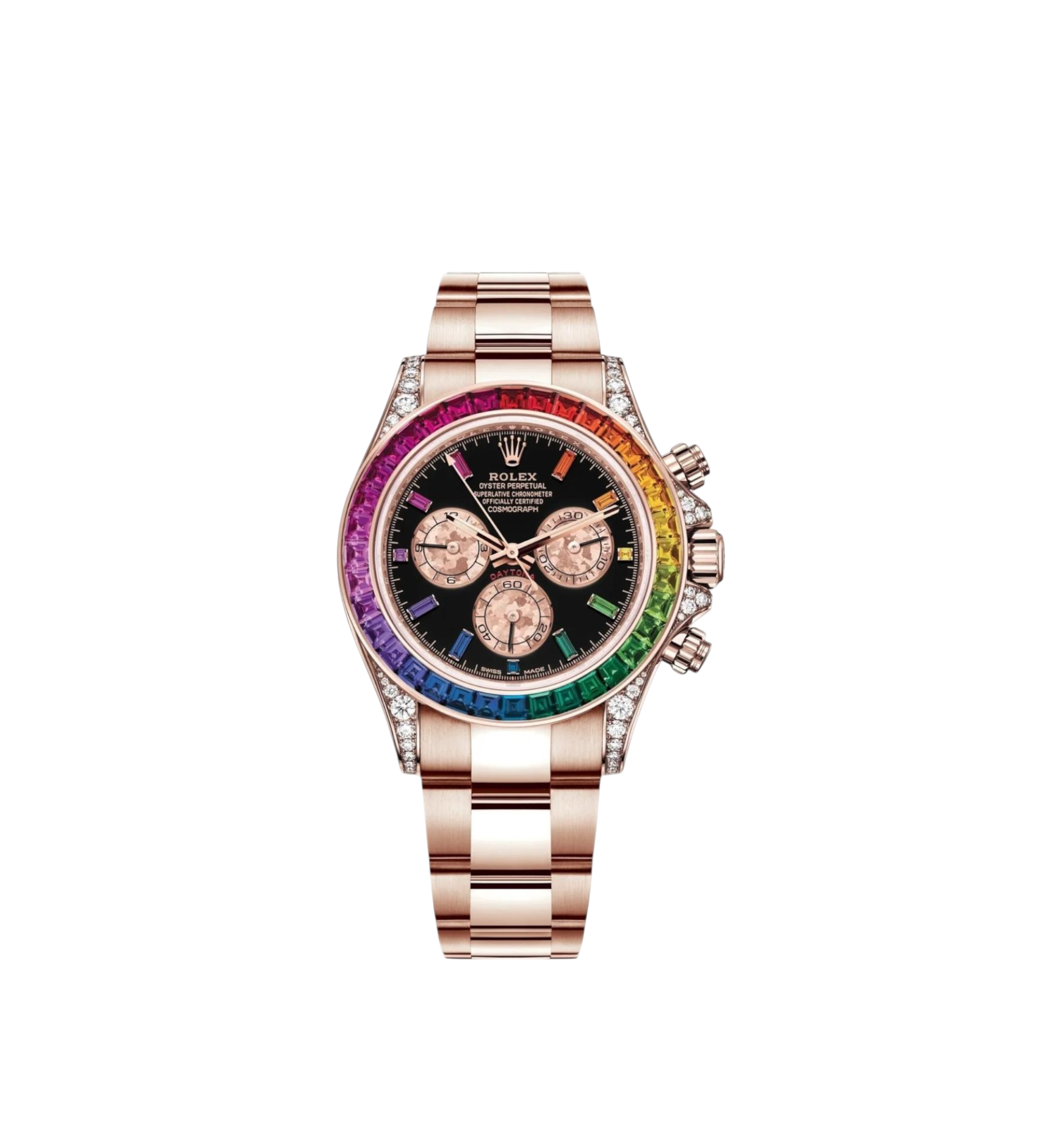
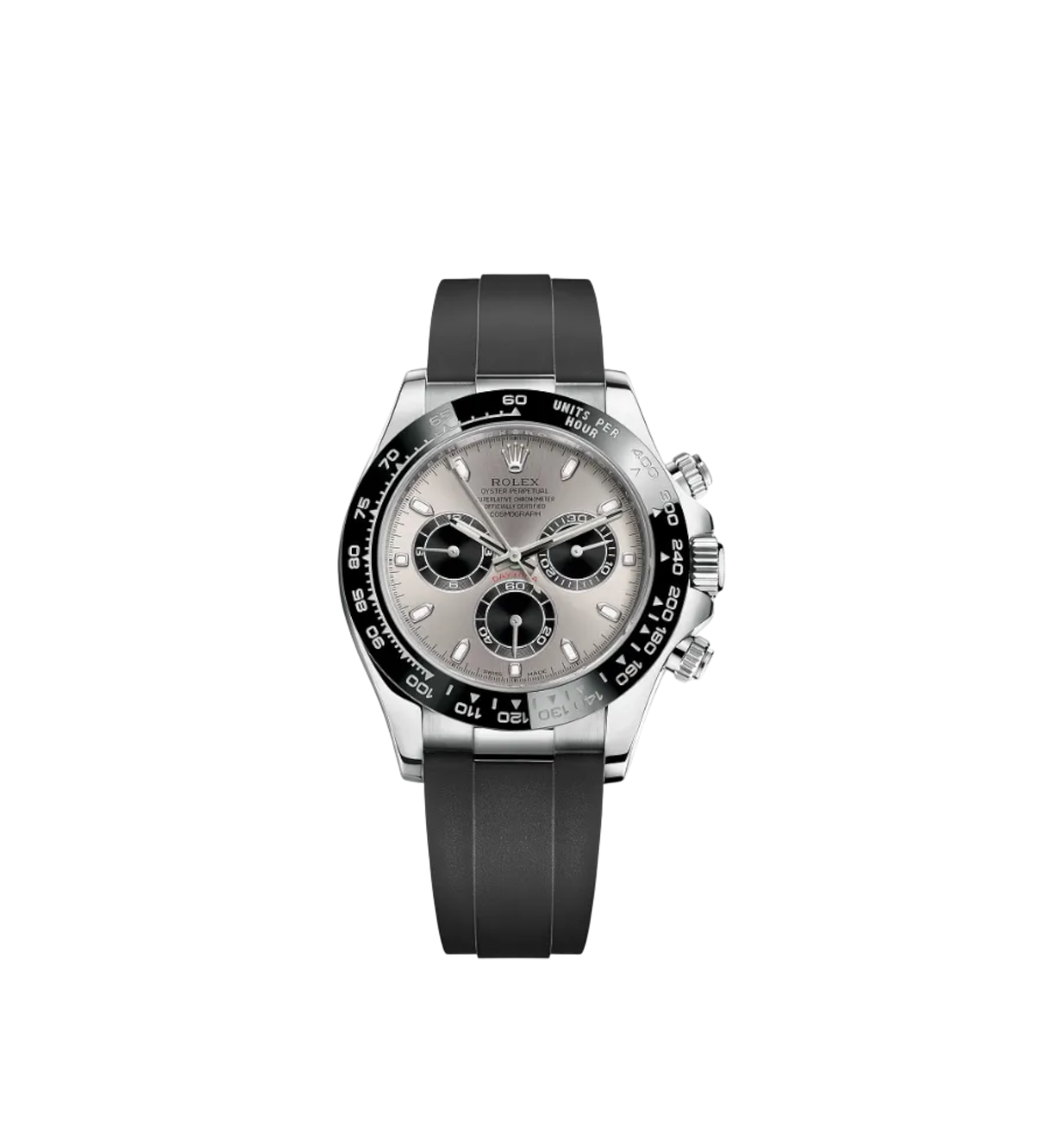
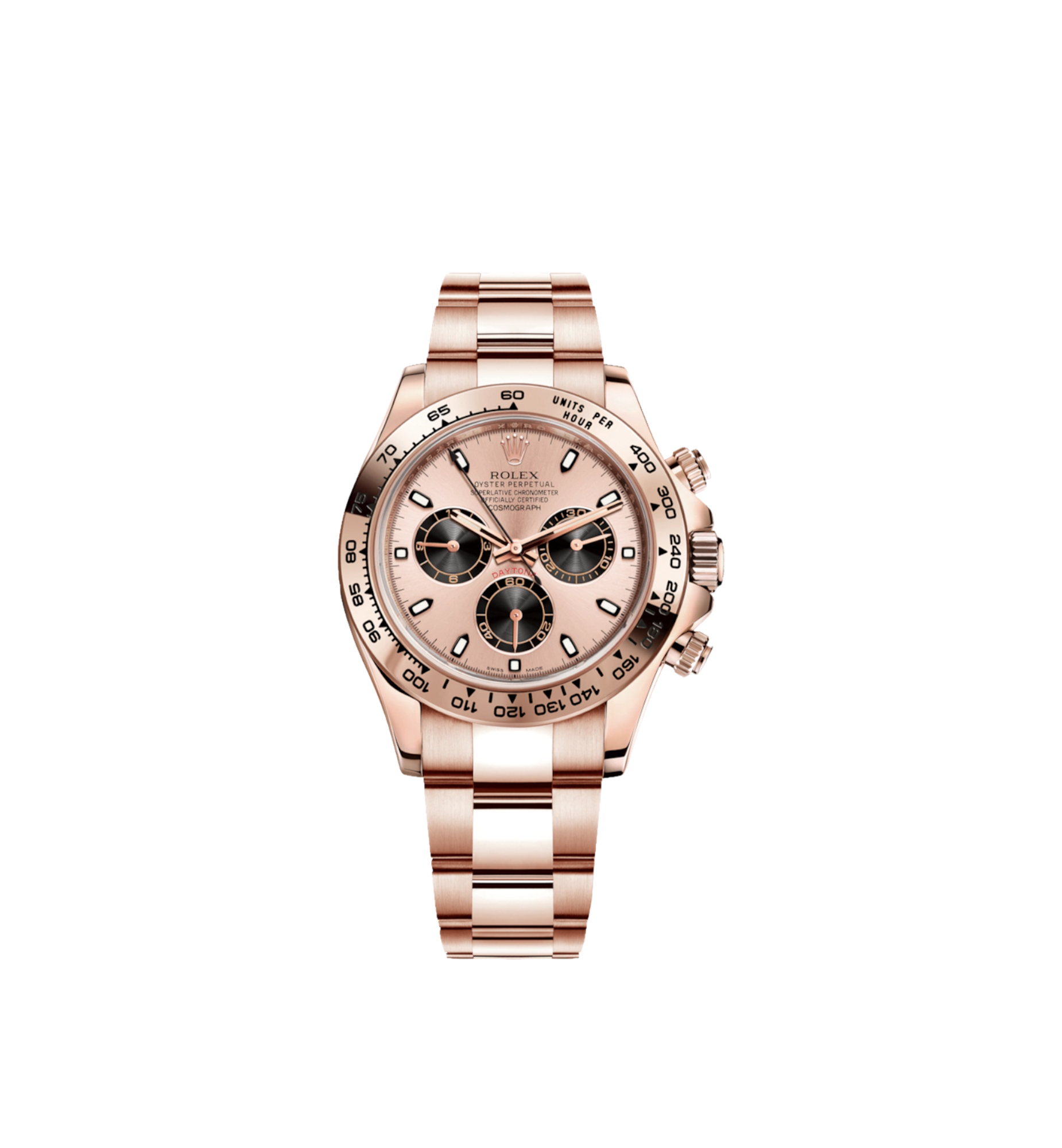
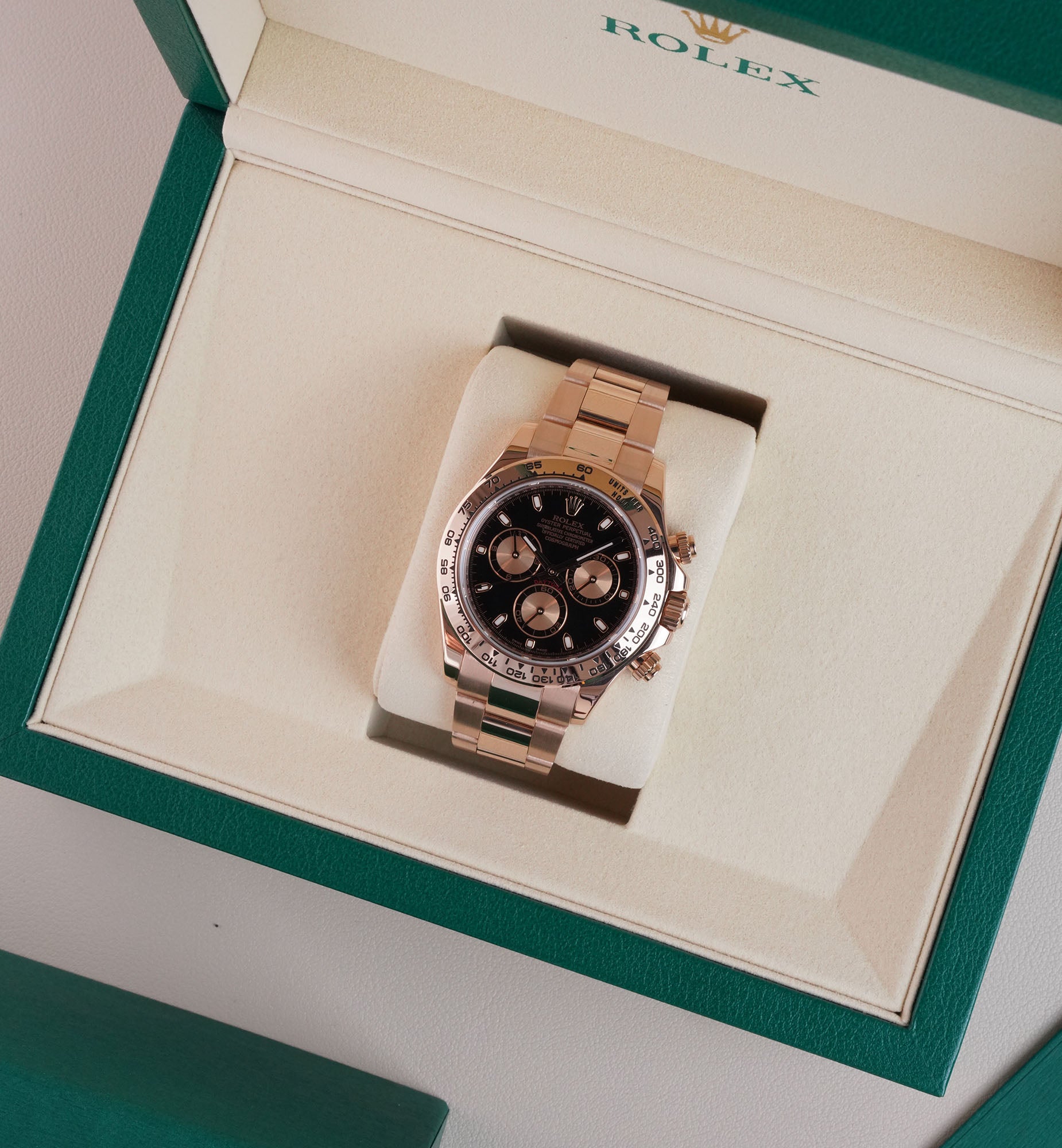
The Daytona dial is busier and more visually engaging. Three sub dials (running seconds, 30 minute counter, 12 hour counter) sit within the main dial, creating the "Panda" (white dial, black sub dials) or "Reverse Panda" (black dial, white sub dials) configurations that collectors obsess over. The tachymeter scale runs around the bezel. The chronograph pushers flank the crown. There is more to look at, more to interact with, and more mechanical poetry happening at any given moment. For watch enthusiasts who appreciate complications, the Daytona's dial is endlessly satisfying. For people who just want to know what time it is, it can feel like more information than necessary.
Movement and Functionality
The current Submariner houses the Rolex Calibre 3235, a time and date movement with a 70 hour power reserve and Rolex's Chronergy escapement. It's accurate, reliable, and essentially maintenance free between service intervals. The Submariner does one job (telling the time) with one optional function (the date) and it does both flawlessly.
The current Daytona houses the Rolex Calibre 4131, the brand's latest chronograph movement, replacing the legendary 4130 that served the Daytona for over two decades. The 4131 offers a 72 hour power reserve and the same Chronergy escapement, but with the added mechanical complexity of the chronograph function. The column wheel chronograph is one of the most respected movement architectures in watchmaking, and Rolex's execution is characteristically excellent.
In practical terms: the Submariner is a watch you put on and forget about until it needs service. The Daytona is a watch you interact with. Pressing the chronograph pushers, timing something (even if it's just how long your coffee takes to brew), and resetting the chronograph hands is a tactile pleasure that the Submariner simply doesn't offer. If you enjoy the mechanical engagement of a watch, the Daytona delivers more of it.
Water Resistance and Durability
The Submariner is rated to 300 metres (1,000 feet). The Daytona is rated to 100 metres (330 feet). Both are more than sufficient for swimming, showering, and getting caught in the rain. The practical difference only matters if you actually dive: the Submariner is designed for it, with a unidirectional rotating bezel for tracking dive time and a Triplock crown system. The Daytona's chronograph pushers should not be operated underwater, which is the main limitation.
For everyday durability, both watches are built to Rolex's exacting standards with 904L Oystersteel cases and Cerachrom ceramic bezels that resist scratching. The Submariner's rotating bezel can accumulate minor marks from regular use (it's designed to be touched), while the Daytona's fixed tachymeter bezel stays pristine unless you actively damage it. Both watches will last generations with proper servicing.
Investment and Value
Both the Submariner and Daytona are exceptional stores of value, but their market dynamics are different.
The steel Daytona is one of the most sought after watches in the world. Retail price for the current steel Daytona is approximately $14,800 USD, but secondary market prices run significantly higher, often two to three times retail depending on the configuration and dial colour. The white "Panda" dial consistently commands the highest premiums. The Daytona's value is driven by extreme scarcity at authorised dealers: Rolex produces far fewer Daytonas than Submariners, and the waitlist at most ADs is measured in years, not months.
The Submariner is more attainable, both at retail and on the secondary market. Retail for the current steel Submariner Date (Ref. 126610LN) is approximately $10,250 USD. Secondary market prices typically run 50% to 80% above retail, a significant premium but considerably less than the Daytona's markup. The no date Submariner (Ref. 124060) at approximately $9,100 retail is the most "accessible" current Rolex Professional watch, if you can call any Rolex Professional watch accessible.
As investments, both have demonstrated strong long term appreciation. The Daytona appreciates more aggressively in absolute terms because it starts from a higher secondary market price. The Submariner offers a better entry point with lower initial capital required and still appreciates well. Vintage references of both models, particularly Paul Newman Daytonas and early Submariner references, have achieved auction prices in the hundreds of thousands to millions of dollars.
Which Should You Buy First?
Here's the honest answer, stripped of collector bias and hype:
Buy the Submariner first if you want a watch you can wear every single day without thinking about it. If you swim, travel, work with your hands, or simply want one watch that goes everywhere and does everything, the Submariner is the more practical choice. Its clean dial, superior water resistance, and slightly more robust construction make it the better "only watch" of the two. It is also more attainable and requires less capital, leaving room in your budget for other pieces down the line.
Buy the Daytona first if the chronograph function genuinely appeals to you, if you appreciate a more complex and visually engaging dial, or if your primary motivation is investment appreciation. The Daytona's scarcity at retail means acquiring one is itself an achievement, and its resale performance is among the strongest in the entire watch market. It's also the slightly more refined option for someone who wears tailored clothing frequently and wants a Rolex that leans dressy rather than sporty.
If you plan to own both eventually (and most serious Rolex collectors do), the conventional wisdom is to buy the Submariner first as your daily wearer and add the Daytona later as the collection grows. The Submariner takes the daily wear abuse so the Daytona doesn't have to.
Buying in Dubai
Dubai's 5% VAT compared to European rates of 19% to 25% provides a genuine pricing advantage on Rolex purchases, particularly on precious metal models where the absolute price is significant. On a steel Submariner or Daytona, the tax saving compared to buying in Paris or London amounts to a meaningful sum. On a gold Daytona or a two tone Submariner, the advantage compounds further.
At Konesseur, every Rolex is authenticated and available with worldwide shipping from our boutique at Box Park on Al Wasl Road, Dubai. Browse the Submariner collection and Daytona collection, or explore the wider luxury watch selection across Patek Philippe, Audemars Piguet, Cartier, and more.
Frequently Asked Questions
Is the Rolex Daytona more expensive than the Submariner?
Yes. The Daytona retails at approximately $14,800 USD versus the Submariner Date at approximately $10,250 USD. On the secondary market, the gap widens further: steel Daytonas often trade at two to three times retail, while Submariners typically trade at 50% to 80% above retail. The Daytona's higher price reflects its greater scarcity and collector demand.
Which Rolex holds its value better, Submariner or Daytona?
Both hold value exceptionally well, but the Daytona historically appreciates more aggressively in percentage terms due to its extreme scarcity at retail. The Submariner is the safer, more stable investment with lower entry cost. Neither watch is likely to lose value over the long term under normal market conditions.
Can you swim with a Rolex Daytona?
Yes. The Daytona is water resistant to 100 metres, which is more than sufficient for swimming and surface water activities. However, the chronograph pushers should not be operated underwater, and the Daytona is not designed for diving. For serious water use, the Submariner (300 metres) is the appropriate choice.
Is the Submariner too big for small wrists?
The current Submariner at 41mm is a moderately sized watch by modern standards. It wears well on wrists 17cm and larger. For smaller wrists, older 40mm references or the no date version (which wears slightly smaller due to the absence of the Cyclops lens) may be more comfortable. The Daytona at 40mm with shorter lugs can be a better fit for those with wrists under 17cm.
Submariner Date or No Date?
The Submariner Date (Ref. 126610LN) adds a date window with a Cyclops magnifier. The No Date (Ref. 124060) omits both for a cleaner, more symmetrical dial. The No Date is the purist's choice and the more affordable option. The Date is the more practical everyday watch. Both hold value well, though the No Date has a slightly smaller collector following.
Which Daytona dial is most popular?
The white "Panda" dial (white dial with black sub dials) on the steel Daytona is consistently the most popular and commands the highest premiums on the secondary market. The black "Reverse Panda" dial is also highly sought after but typically trades slightly below the white version.
Can the Daytona be a daily wear watch?
Absolutely. Despite its racing heritage and collector status, the Daytona is a robust, well built Rolex that handles daily wear without issue. The only practical consideration is that the chronograph pushers can catch on shirt cuffs occasionally, which the Submariner's cleaner case profile avoids.
Should I buy a Submariner or a Datejust as my first Rolex?
The Datejust is Rolex's most versatile watch and the most popular first Rolex for many buyers. It offers more size options (31mm to 41mm), more material combinations, and a dressier aesthetic. The Submariner is the better choice if you want a sports watch with serious water resistance and a more casual personality. Both are excellent first Rolex purchases.
Is there a women's Submariner or Daytona?
Rolex does not produce a specifically women's Submariner or Daytona, but both watches are increasingly worn by women, particularly the 40mm Daytona which sits comfortably on many women's wrists. For women who prefer a smaller Rolex sports watch, the Datejust 31 or the Yacht-Master in 37mm are popular alternatives.
How long is the waitlist for a Rolex Daytona?
At most authorised Rolex dealers, the waitlist for a steel Daytona can be several years, and allocation is not guaranteed. Many buyers with purchase histories at their AD have waited three years or more. The Submariner waitlist is shorter but still significant, typically one to two years. Purchasing through the authenticated secondary market (through retailers like Konesseur) eliminates the wait entirely, though at a price premium above retail.
Rolex Submariner vs Daytona for Dubai lifestyle?
Both work exceptionally well for Dubai. The Submariner's superior water resistance makes it ideal for beach days, pool weekends, and the outdoor lifestyle that Dubai encourages during cooler months. The Daytona's slightly dressier character pairs well with Dubai's refined dining and social scene. Many Dubai collectors own both and rotate based on the occasion.
Why buy Rolex in Dubai?
Dubai's 5% VAT compared to European rates of 19% to 25% creates a genuine pricing advantage on luxury watches. On a Rolex priced at AED 50,000 or above, the tax saving compared to purchasing in Europe is substantial. Combined with authentication through trusted retailers like Konesseur and worldwide shipping, Dubai is one of the most compelling markets for Rolex acquisition globally.
 Same Day Delivery
 Same Day Delivery
 Same Day Delivery
 Same Day Delivery
 Same Day Delivery
 Same Day Delivery
 Same Day Delivery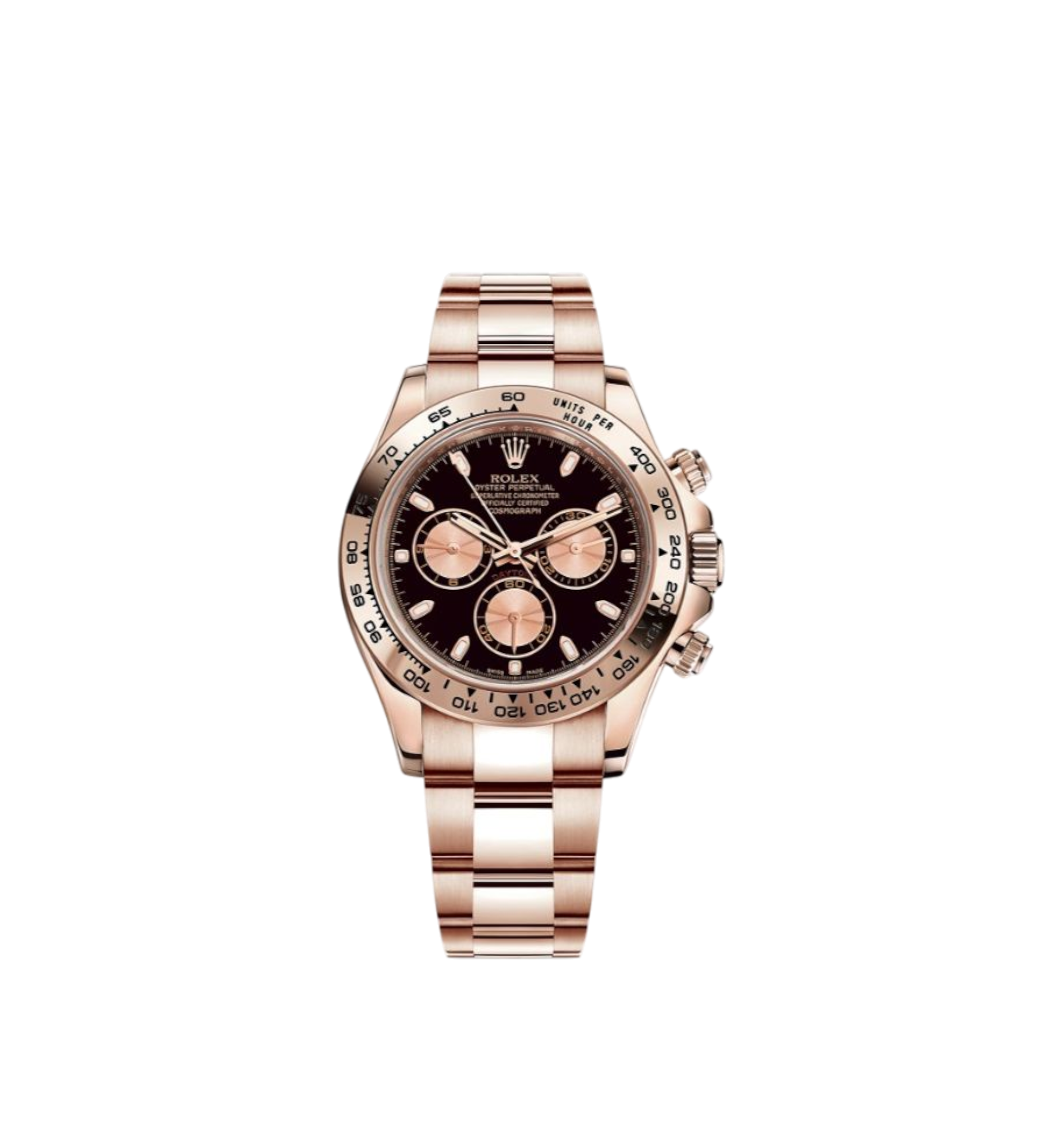
 Same Day Delivery