



How to Spot a Fake Hermès Bag: The Authentication Guide for Dubai Buyers
How to Spot a Fake Hermès Bag: The Authentication Guide for Dubai Buyers
You have found a Birkin or Kelly from a Dubai reseller. The price looks right — maybe just under market, maybe exactly at it. The photos look convincing. The seller seems confident. And you are about to part with AED 60,000, AED 90,000, maybe more.
This is the moment counterfeiting is designed to exploit. The Birkin is the most counterfeited luxury bag in the world, and the market for what are known as super fakes — replicas that reproduce the hardware, stitching, and leather with troubling accuracy — has grown substantially in Dubai and across the Gulf. Some of these bags cost counterfeiters AED 1,500 to produce and sell for AED 40,000 or more to buyers who never knew what they were looking at.
This guide covers every authentication marker that separates a genuine Hermès bag from even the most convincing fake. It works for Birkins, Kellys, and Constance bags — the three models where the risk and the stakes are highest. Read it before you buy anything from an unverified source.
Why Hermès Fakes Are Different From Other Luxury Fakes
Counterfeiting any luxury brand is a calculated business. Counterfeiting Hermès is a particularly high-margin one. A Birkin 30 in Togo leather costs approximately AED 54,700 at a Hermès boutique in 2026. On the secondary market, a pristine authenticated example trades at AED 100,000 to AED 110,000. That spread creates enormous incentive for counterfeiters.
The consequence is that the Hermès counterfeit market is better funded, better resourced, and more technically sophisticated than counterfeit markets for most other brands. Super fakes use genuine Togo or Epsom-grade leather sourced from the same tanneries Hermès works with. They use brass hardware plated with palladium or gold to the correct weight. They replicate blind stamps. They count their stitches. Entry-level fakes are obvious. High-end fakes are not, and they are the ones that cost real buyers real money.
What this means practically is that you cannot authenticate a Hermès bag from photos alone, and you cannot rely on a single marker. Authentication is a checklist, not a single test. Every element must be verified, and a bag that passes nine out of ten markers but fails the tenth is not authentic — it is a sophisticated fake.
The Blind Stamp: Your First Reference Point
Every genuine Hermès bag made for retail since 1945 carries a blind stamp, a heat-pressed code stamped into the interior leather that identifies the production year and the specific artisan who made the bag. It is typically found on the underside of the front strap tab on Birkins and Kellys, or on the interior strap on the Constance.
The stamp uses a letter system that ran from A to Z from 1945 through the late 1990s, then moved to letters inside shapes from 1997 onward. A letter inside a square indicates years from 1997 to 2014. A letter inside a circle indicates years from 2015 to the mid-2020s. Since around 2021, Hermès has transitioned to a new coding format that does not follow the previous letter-in-shape convention, so bags from 2021 onward may have a different stamp appearance. The 2026 stamp identifier appears differently to the 2015 to 2020 format.
On a genuine bag, the blind stamp is crisp and evenly pressed. The letters and any surrounding shape are sharp-edged without smearing or inconsistency in depth. Counterfeits frequently miss the depth and crispness of a genuine stamp, either pressing too shallowly or too deeply, or placing it in the wrong location. Check that the stamp placement is consistent with production year — a bag claiming a 2020 stamp should have a letter inside a circle in the correct position.
Alongside the production year code, the artisan's personal number appears as a separate stamp. On genuine bags, the artisan code and year code are consistently spaced and aligned. Misalignment between the two stamps is a red flag.
The Stitching: The Most Consistent Tell
Hermès bags are made using the saddle stitch, a technique that uses two needles and a single length of waxed linen thread passed through each hole from both sides simultaneously. This creates a stitch pattern that is completely different from machine stitching: each stitch slants consistently in the same direction, every single time, with the thread sitting proud of the leather surface rather than being buried in it.
The stitch count on a genuine Hermès bag is specific and consistent: Birkins and Kellys carry between 8 and 9 stitches per centimetre along the primary seams. Any deviation from this range, whether fewer or more stitches per centimetre, indicates a problem. Count the stitches. Bring a ruler if you can.
The direction of the slant matters. On a genuine Birkin or Kelly, the stitching on the front panel slants from upper left to lower right when the bag faces you. The slant is consistent across the entire seam without a single reversal. Machine stitching, which most fakes use, creates a loop pattern visible from the underside of the stitch line. You can test for this by looking at the inside of a seam with a torch — genuine saddle stitch shows a mirrored pattern of the exterior stitching, not loops.
The thread colour must also match the leather precisely. Hermès matches thread tone-on-tone with leather for standard bags, with very slight variation only for specific design intentions. Contrasting thread on a bag that should have tonal stitching is a clear authentication failure.
The Hardware: Weight, Engraving, and Mechanism
Hermès hardware is either palladium-plated (silver tone) or gold-plated, both over a solid brass base. The weight is the first thing you notice when you handle it: the hardware on a genuine bag feels substantial and cool to the touch. Hardware that feels light, hollow, or that warms quickly against the skin indicates lower-grade metal.
On Birkins and Kellys, the turn-lock hardware carries the Hermès wordmark engraved on the underside of the front plate. Examine this engraving with a loupe or magnification if possible. On a genuine piece, the engraving is deep, crisp, with clean character formation and consistent depth across every letter. Shallow engraving, fuzzy edges on the letterforms, or inconsistent depth are authentication failures. The font Hermès uses is distinctive — the characters have specific proportions that counterfeit engravings consistently misrepresent.
The lock on Birkins and Kellys deserves specific attention. The cadenas lock is stamped on the reverse with "Hermès Paris" and a number that identifies the lock and corresponds to one of two keys that come with the bag. Genuine locks have a smooth, precise keyhole with clean alignment. The keys themselves carry the same Hermès engraving on one face. Mismatched font between the lock and keys, or a keyhole that does not align precisely with the key profile, indicates counterfeit hardware.
The Constance H Clasp Test
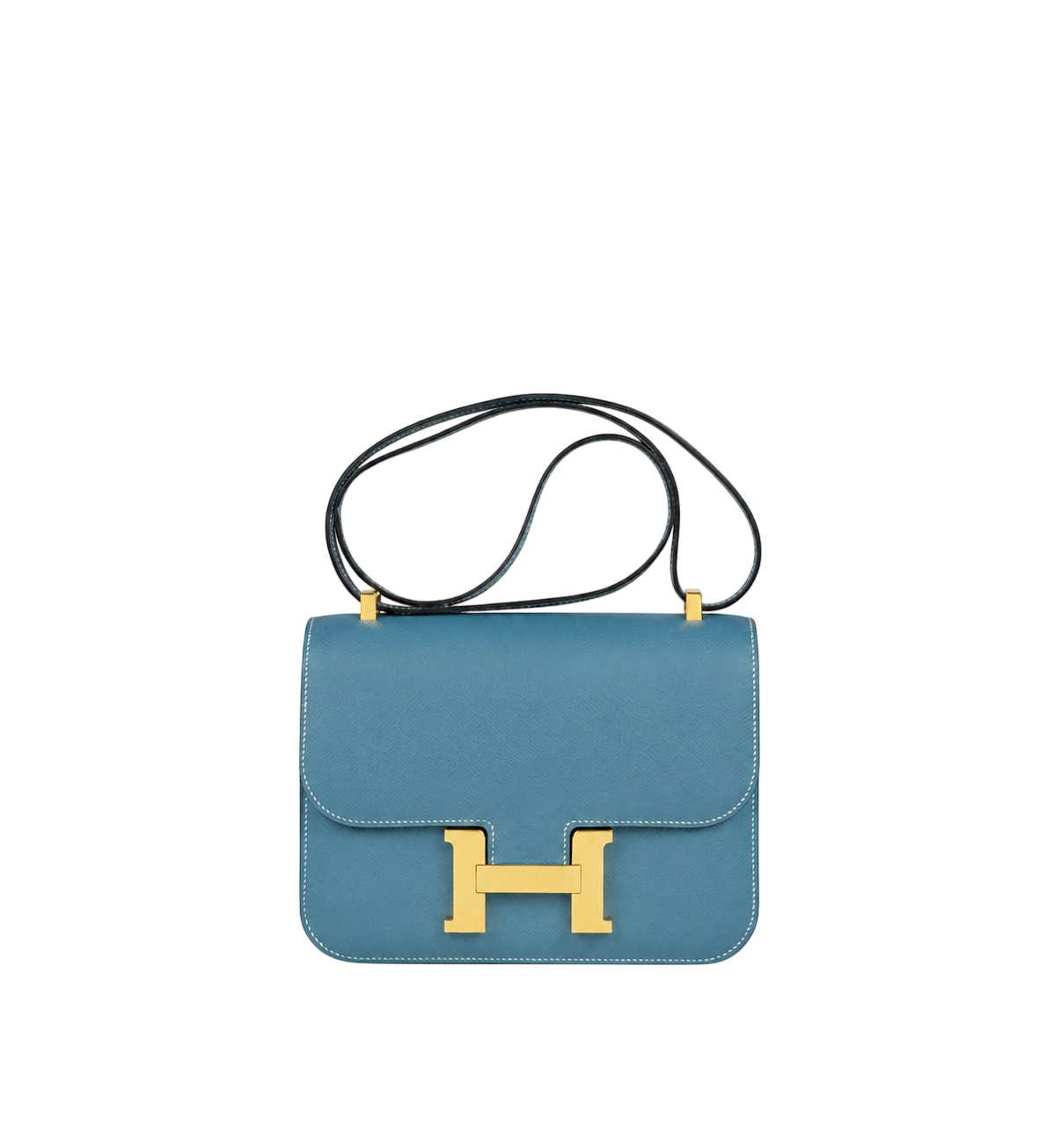
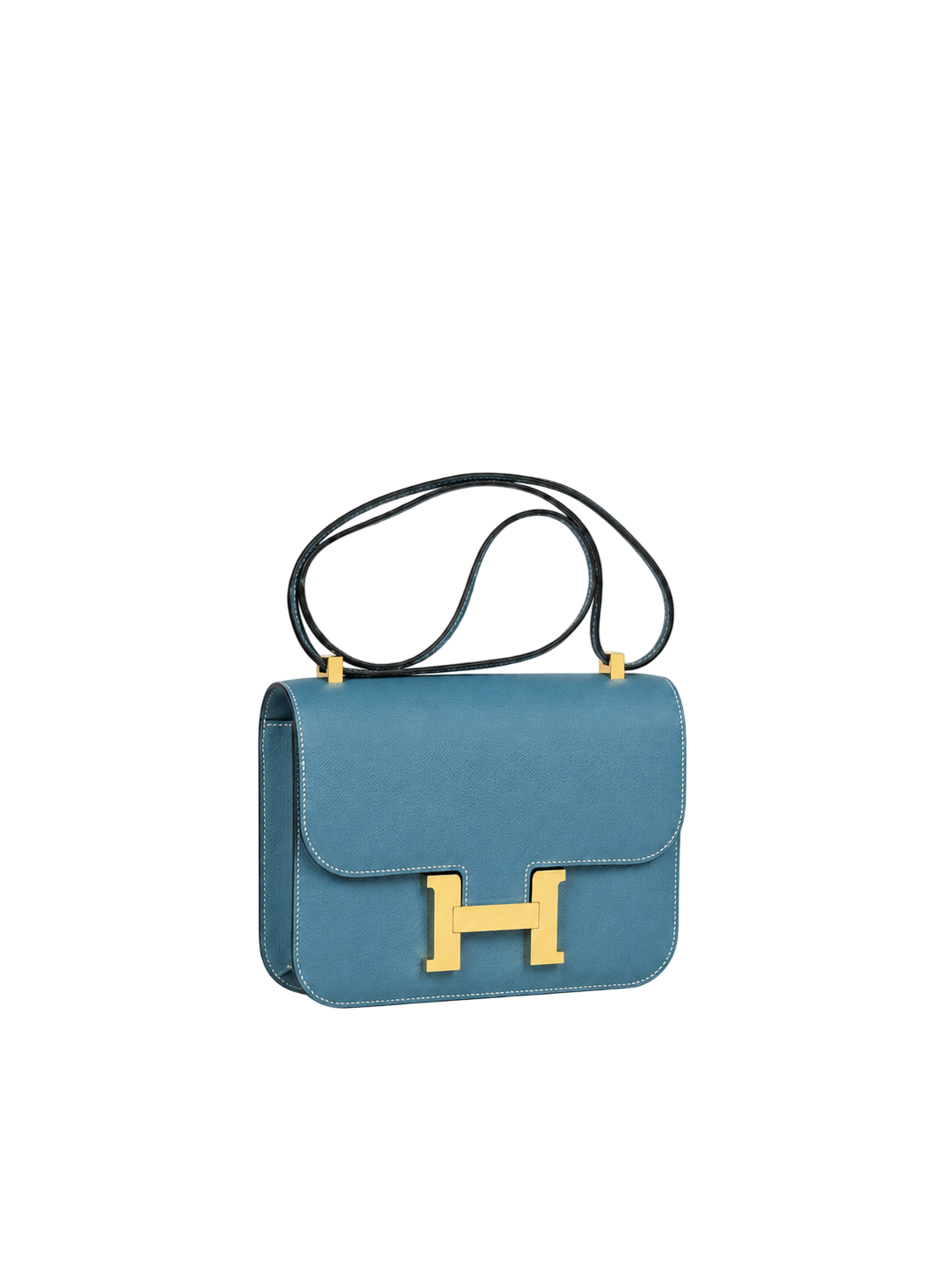
The Constance has a specific authentication point that does not apply to the Birkin or Kelly: the H clasp spring mechanism. On a genuine Constance, the H-shaped clasp has a specific spring tension and a precise clicking action when opening and closing. It opens with consistent pressure, snaps shut with a clear and definitive click, and maintains tension in the closed position without any play or looseness. Counterfeit clasps are frequently either too stiff, too loose, or produce a dull rather than crisp click. The clasp on a genuine Constance also carries engraving on the inner face of both vertical bars of the H. Check that this engraving matches the standard Hermès wordmark in font and depth.
The Leather: Grain, Smell, and Feel
Hermès uses a range of leathers that each have distinct tactile and visual characteristics. Learning the difference between Togo, Epsom, and Clemence — the three most common Birkin and Kelly leathers — is essential for authentication, because counterfeiters frequently use the wrong leather grain for the claimed specification.
Togo calfskin has a slightly rounded, pebbled grain with a soft, slightly flexible surface that shows a gentle natural irregularity up close. It is the most scratch-resistant of the main leathers and feels slightly padded when pressed gently. Epsom is a pressed calfskin with a much more regular, fine cross-hatched embossed grain that is completely consistent across the entire hide. It is firmer and less flexible than Togo, and the grain pattern is visually very orderly. Clemence has a larger, looser grain than Togo, is notably softer and more pliable, and drapes more than the other two leathers. Confusing Togo and Clemence is a common counterfeit failure — they are both pebbled but have clearly different scale and firmness when compared directly.
Genuine Hermès leather has a specific smell: a clean, high-quality leather smell without any chemical or synthetic undertone. The smell of glue, solvent, or plastic near seams is an immediate authentication failure, indicating the use of adhesive rather than purely stitched construction. Hermès uses minimal adhesive and relies primarily on the saddle stitch for structural integrity.
Run a finger along the edge paint — the coloured finishing on all cut leather edges. On a genuine bag, the edge paint is applied with consistent width and an even, smooth finish. It does not crack, peel, or show brush marks. On high-quality counterfeit bags it is frequently this edge paint that reveals itself first: slightly too thick, inconsistent width, or with visible application marks on close inspection.
The Shape and Structure
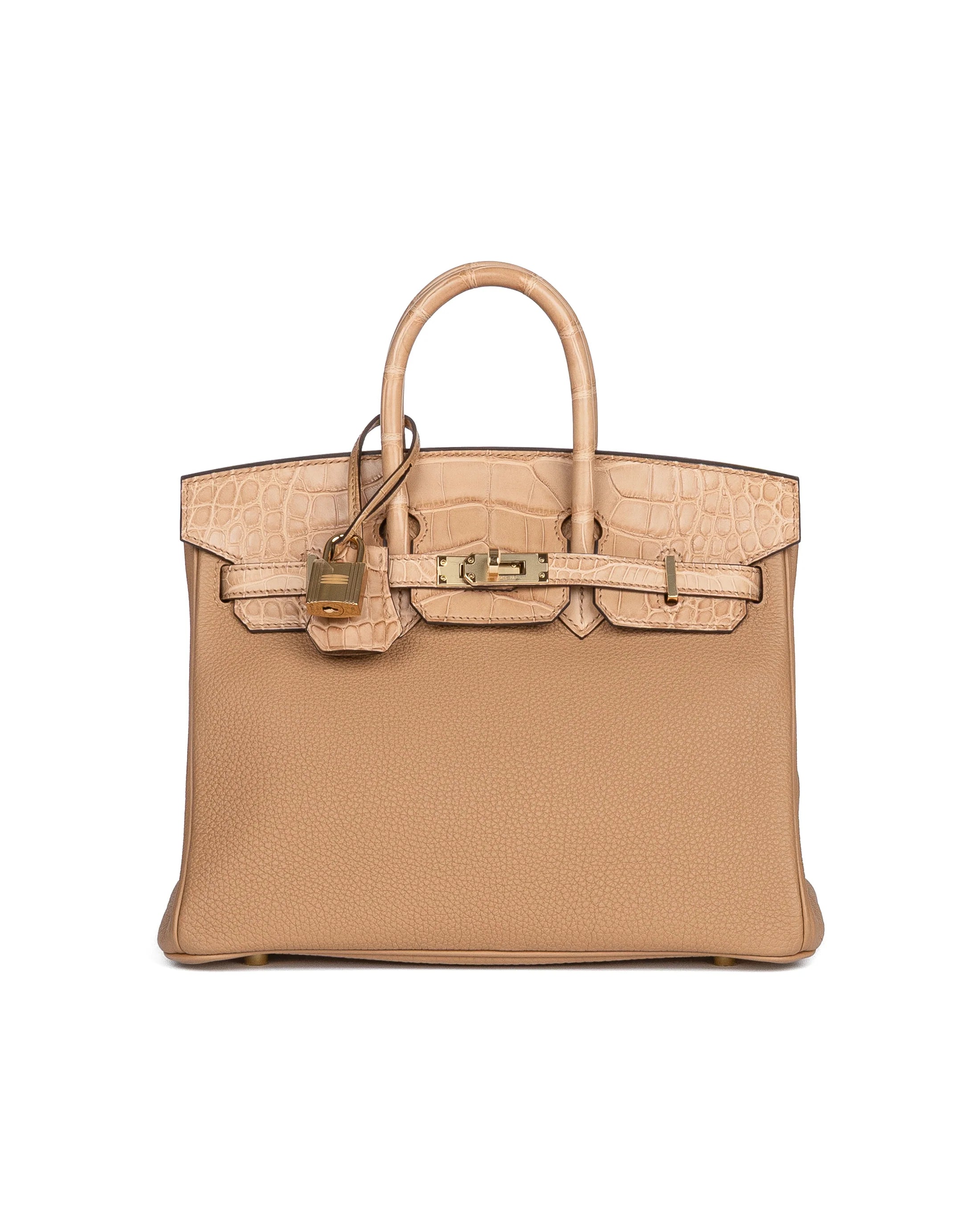
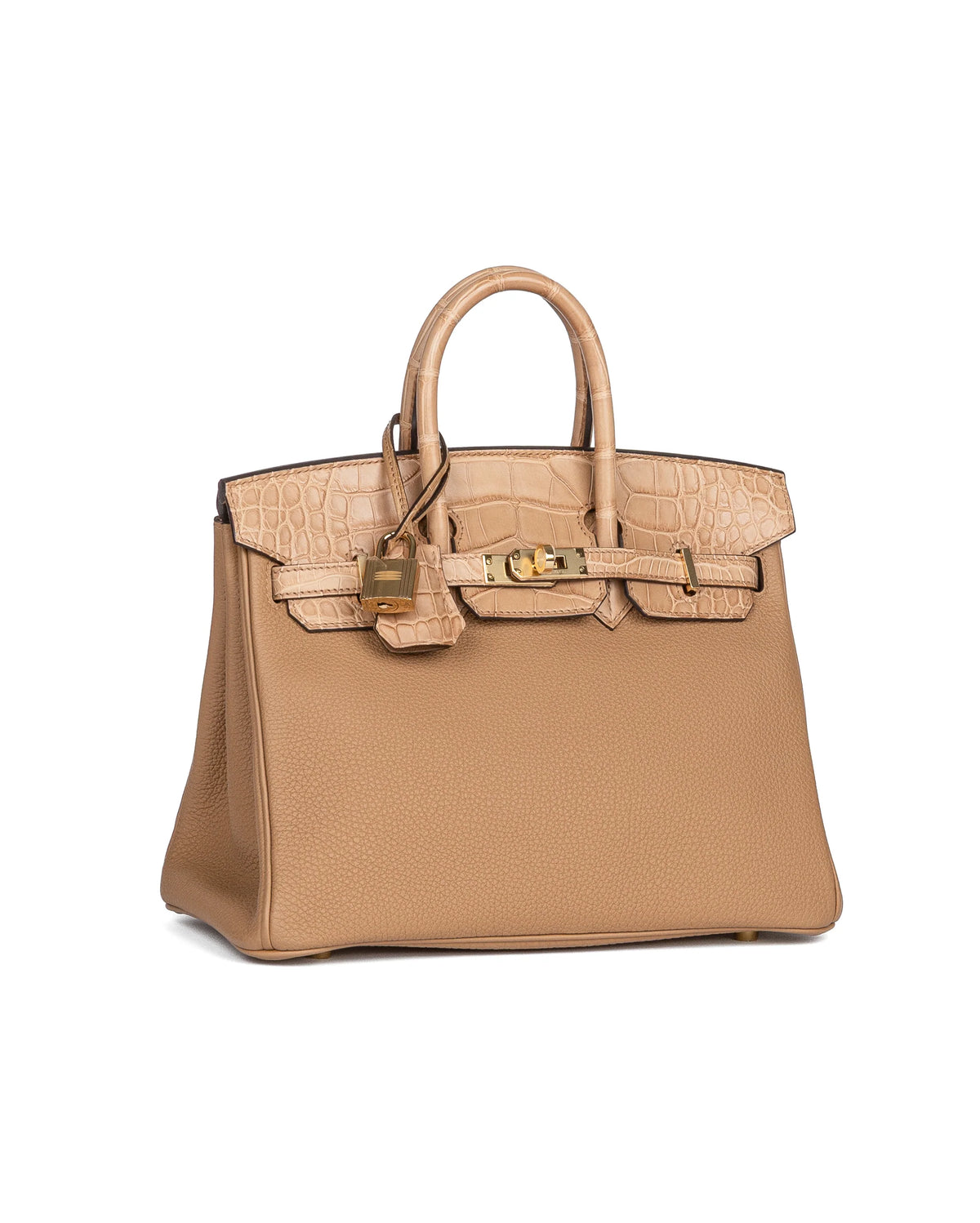
A genuine Birkin holds its shape without internal support. Place it on a flat surface and it should sit with a perfect trapezoid profile — the base flat and straight, the sides angling gently inward toward the top, the corners squared. The bag should not slump, lean, or show any asymmetry. A Kelly holds a similarly precise trapezoid when the flap is closed, with perfectly parallel sides and a flat base.
Check the symmetry of both sides of the bag by holding it at arm's length facing you. The handles on a Birkin should be at identical heights and identical distances from the side seams. The stitching around the base corners should have identical tightness and pattern on both sides. Asymmetry in any of these elements — a handle sitting 2mm higher than its counterpart, a corner slightly fuller on one side — indicates production by someone working without Hermès artisan standards.
The Birkin's front straps (sangles) should lie flat against the bag when closed, with the buckle sitting precisely centered on the front panel. Buckle drift — where the closed buckle sits slightly to one side of center — is a consistent counterfeit tell. The turn-lock on a Birkin or Kelly should rotate with a precise, smooth action and sit perfectly flush against the front panel when locked.
The Interior
Genuine Birkins and Kellys have interiors lined in Chèvre (goatskin) or occasionally other leathers, stitched with the same saddle stitch standard as the exterior. The interior lining colour matches the exterior leather in tonal bags, or is specified as a deliberate contrast in special order pieces. The interior stitching runs along the edges with the same 8 to 9 stitches per centimetre count.
Hermès does not include an interior label with the brand name embroidered or printed on the lining. This is one of the most common counterfeit tells: an interior label reading "Hermès Paris" is not a feature of genuine bags. Authentic bags identify themselves through the blind stamp and the quality of the construction. If a bag has an interior cloth label with the brand name, it is not genuine.
The zip pocket on the interior of Birkins and Kellys uses a specific zip pull with a small clochette-style charm. The zipper tab is made from leather matching the interior, and the zip hardware itself is small and precise. Counterfeit zippers frequently use hardware that is slightly too large, too light, or has a pull that does not match the interior leather quality.
The Accessories: Clochette, Lock, and Keys
A complete genuine Birkin or Kelly comes with a clochette, a small leather bell-shaped holder threaded onto the top handle. The clochette holds the cadenas lock and two keys. All three items are made to the same quality standard as the bag itself. The clochette leather should match the bag leather in type, colour, and surface quality. The stitching on the clochette carries the same saddle stitch standard.
The lock number on the cadenas corresponds to both keys. Both keys must fit and operate the lock precisely. Keys that are slightly too loose or require excessive force to turn indicate either counterfeit hardware or mismatched components assembled by a reseller who lost or damaged the originals. Replacement lock and key sets from Hermès boutiques use different number sequences than originals, which can be verified with documentation if the seller claims the set was replaced.
The dust bag is another reference point. Genuine Hermès dust bags are made from a specific heavyweight cotton flannel in a warm off-white colour, with the Hermès Paris wordmark embroidered in the correct font. The stitching on the drawstring closure is finished neatly. Counterfeit dust bags are frequently lighter in weight, use a thinner material, or have embroidery that uses the incorrect font or thread weight.
The Single Most Important Red Flag
Hermès does not issue authenticity certificates. Hermès does not include authenticity cards, numbered certificates, holographic stickers, or any other form of authentication documentation with its bags. None of these exist for genuine pieces. If a seller presents you with a card, certificate, or hologram sticker and claims it proves authenticity, you are looking at either a counterfeit document added by the seller or evidence that the seller does not know what genuine Hermès documentation looks like. Either scenario should end the transaction.
Similarly, Hermès does not issue a certificate of authenticity when bags are serviced by the brand. Hermès will repair bags for verified original purchasers, but this process does not produce a certificate. Any certificate claiming Hermès origin is a fabrication.
The Pricing Test
Secondary market pricing for Hermès bags in Dubai is broadly consistent across reputable resellers, because the underlying market is transparent. A pristine Birkin 30 in Togo with gold hardware trades at AED 100,000 to AED 110,000. A pristine Kelly 28 Sellier in Epsom trades at similar levels. A Constance 18 in standard leather trades near retail at around AED 35,000 to AED 45,000.
When a bag is priced meaningfully below these benchmarks without a clear condition reason, that discount is worth interrogating. Genuine Hermès bags priced 20 to 30 percent below secondary market value are not bargains. They are either in worse condition than stated, or they are not genuine. Sellers who understand what they have do not discount arbitrarily. Sellers who are trying to move a fake quickly sometimes do.
The Safest Path
The most reliable protection against a counterfeit Hermès bag is purchasing from a source where professional authentication has already been completed before the sale. This means verification of every element in this guide by a specialist who handles Hermès bags regularly and knows the authentic standard from direct experience.
At Konesseur, every Hermès bag in the collection goes through a complete authentication process before being listed: blind stamp verification, stitching count and direction, hardware engraving and mechanism, leather type and edge paint, shape and structural inspection, interior lining standard, and accessory completeness. The process is documented and available to buyers. Our authentication page outlines exactly what that verification covers.
Buyers who want to explore the current authenticated Hermès collection at Konesseur can browse Birkins, Kellys, and Constance bags with the confidence that everything described in this guide has already been checked. New authenticated pieces are added in new arrivals as they become available. For specific piece enquiries or to discuss a bag you are considering from another source, the Konesseur team is available directly.
If you have a Hermès bag and want to understand its value or sell it, our sell with us process applies the same authentication standard in reverse — we verify what you have before we place any value on it.
Frequently Asked Questions
What is the easiest way to spot a fake Hermès Birkin?
Check the stitching first. Genuine Birkins use the saddle stitch with 8 to 9 stitches per centimetre, all slanting consistently in the same direction. Machine stitching, which most fakes use, creates a different pattern that is visible when you look closely at any seam. After stitching, check the hardware weight and engraving clarity. These two tests eliminate the majority of fakes at any tier.
Does Hermès provide an authenticity certificate with bags?
No. Hermès does not issue authenticity certificates, authenticity cards, holographic stickers, or any other authentication documentation for its bags. These do not exist for genuine pieces. Any seller presenting documentation claiming to prove Hermès authenticity is either misinformed or attempting to deceive you.
How can I check the blind stamp on a Hermès bag?
On Birkins and Kellys, the blind stamp is located on the underside of the front strap tab, inside the bag. Look for a letter inside a shape for bags made between 1997 and approximately 2020, or a newer format code for bags made from 2021 onward. The stamp should be crisp, evenly pressed, and positioned precisely. Alongside the year code, the artisan's personal number appears as a separate stamped figure. Both should be clearly legible with consistent depth.
Are there good fakes of Hermès bags in Dubai?
Yes. The Dubai secondary market includes both obvious counterfeits and high-quality super fakes that have fooled experienced buyers. Super fakes use genuine-grade leather, accurate hardware plating, and replicated blind stamps. They are not detectable from photographs and require physical inspection against the full authentication checklist. The secondary market price for some of these fakes in Dubai reaches AED 30,000 to AED 50,000.
What leather does a real Hermès Birkin come in?
The most common standard leathers are Togo calfskin (pebbled, slightly flexible), Epsom calfskin (fine cross-hatched pressed grain, firm), and Clemence calfskin (larger grain, notably soft and pliable). Each has distinct tactile and visual characteristics. Counterfeiters frequently use incorrect leather for the claimed specification — a bag described as Togo with Epsom-like regularity is not what it claims to be.
Can I get a Hermès bag authenticated in Dubai?
Yes. Independent authentication services exist in Dubai, and specialist luxury retailers carry out authentication as part of their acquisition process. Konesseur authenticates every piece in the collection before listing — details of the process are on the authenticity page. If you are considering purchasing from a private seller and want a second opinion, contacting a specialist before completing the transaction is the right approach.
What accessories should a Hermès Birkin come with?
A complete Birkin includes the bag, a clochette in matching leather, a cadenas padlock, two keys that correspond to the padlock number, and a flannel dust bag. Many pre-owned pieces are sold without the original orange Hermès box, which is normal for the secondary market. Missing the clochette, lock, and keys reduces both the completeness of the piece and its secondary market value. Missing accessories do not indicate a fake, but a complete set is always preferable for both investment and resale purposes.
How much should I pay for a genuine Hermès Birkin 30 in Dubai?
A pristine authenticated Birkin 30 in Togo or Epsom in a classic neutral colour trades at AED 100,000 to AED 110,000 on the Dubai secondary market in 2026. Bags in excellent but not pristine condition typically trade at AED 75,000 to AED 90,000 depending on the colour and leather. Pricing significantly below these ranges for a bag described as pristine warrants careful scrutiny. Significant underpricing is a risk signal, not an opportunity.
Share
Hermès
 Same Day Delivery


 Same Day Delivery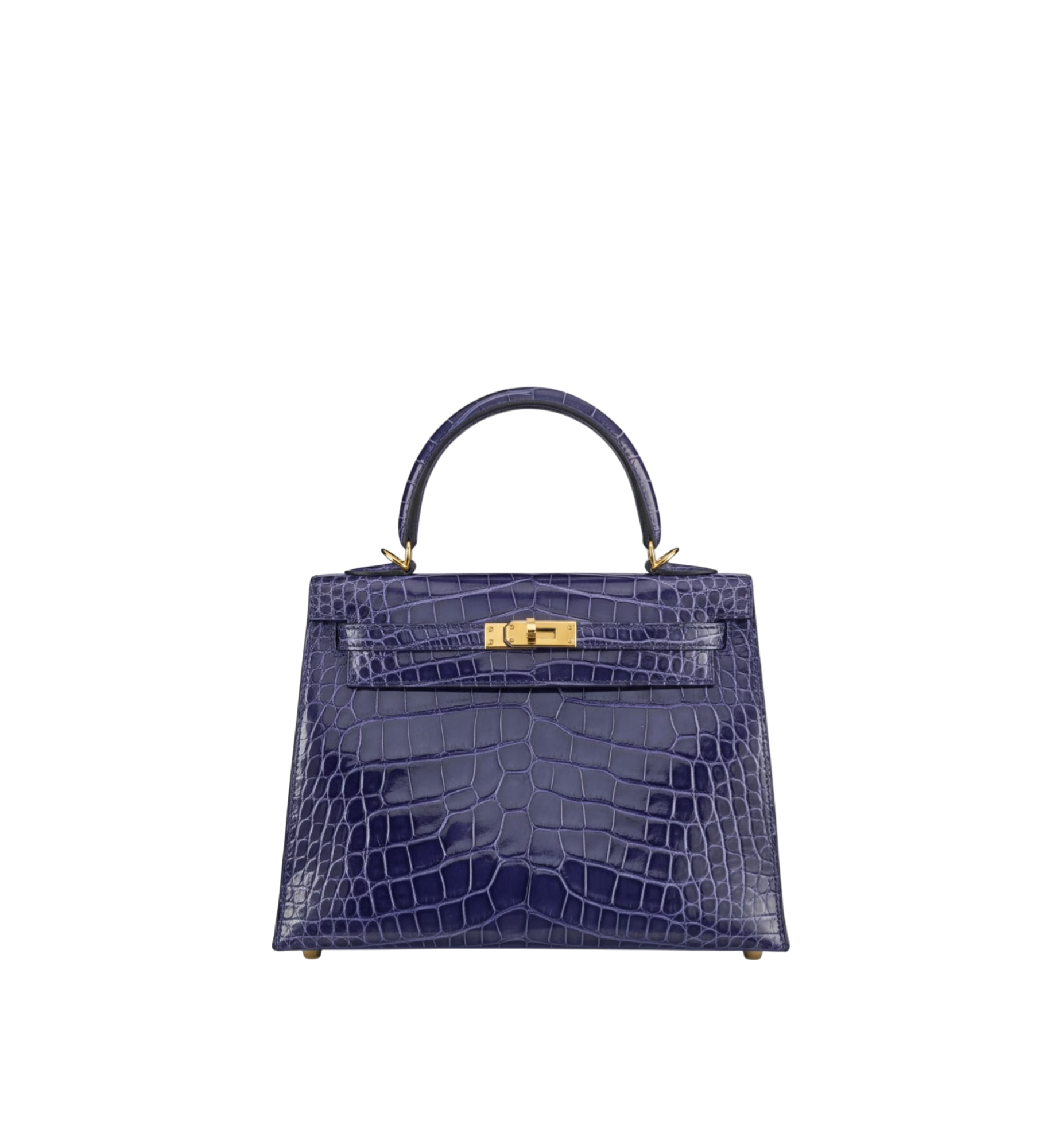

 Same Day Delivery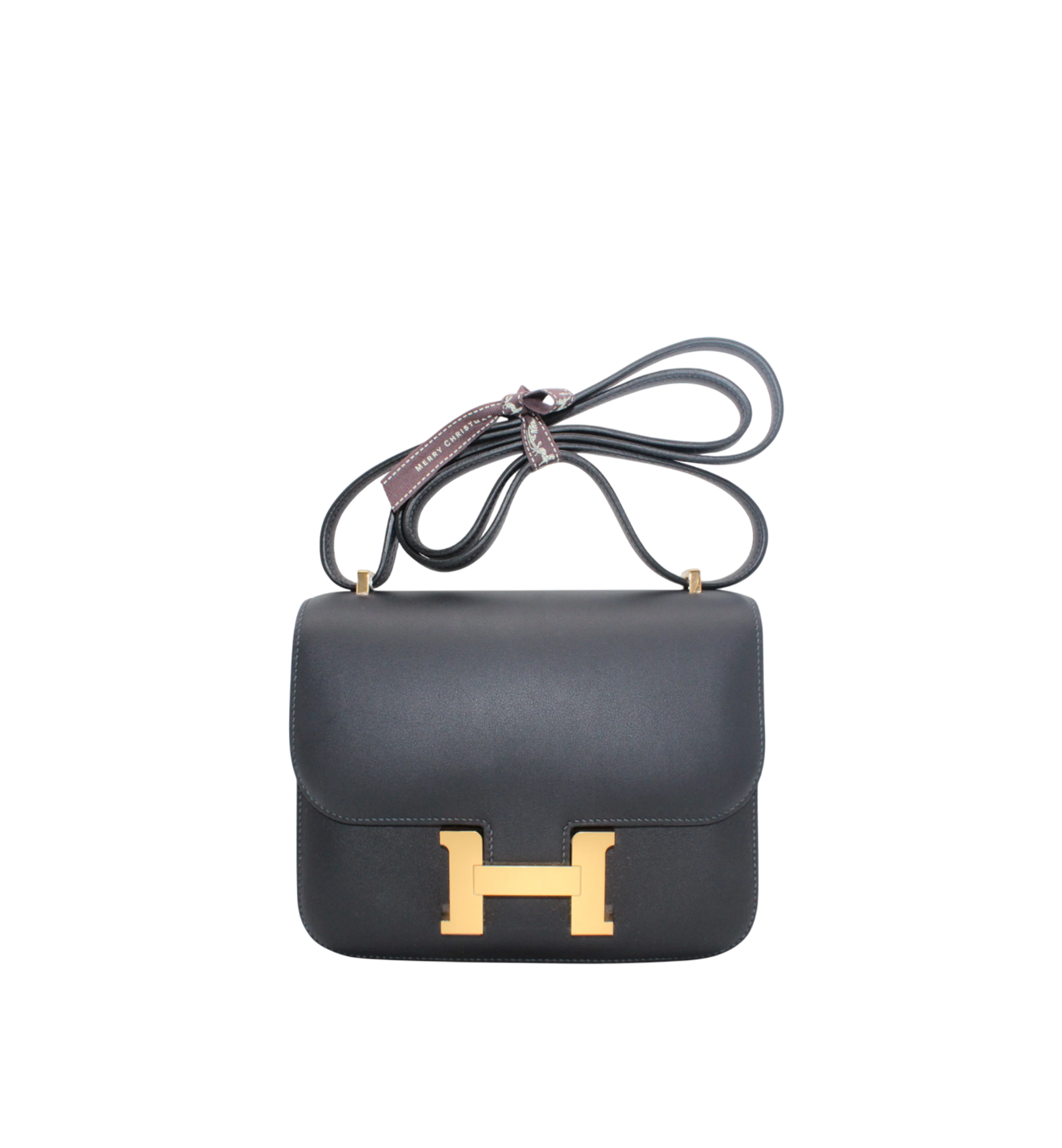


Read more
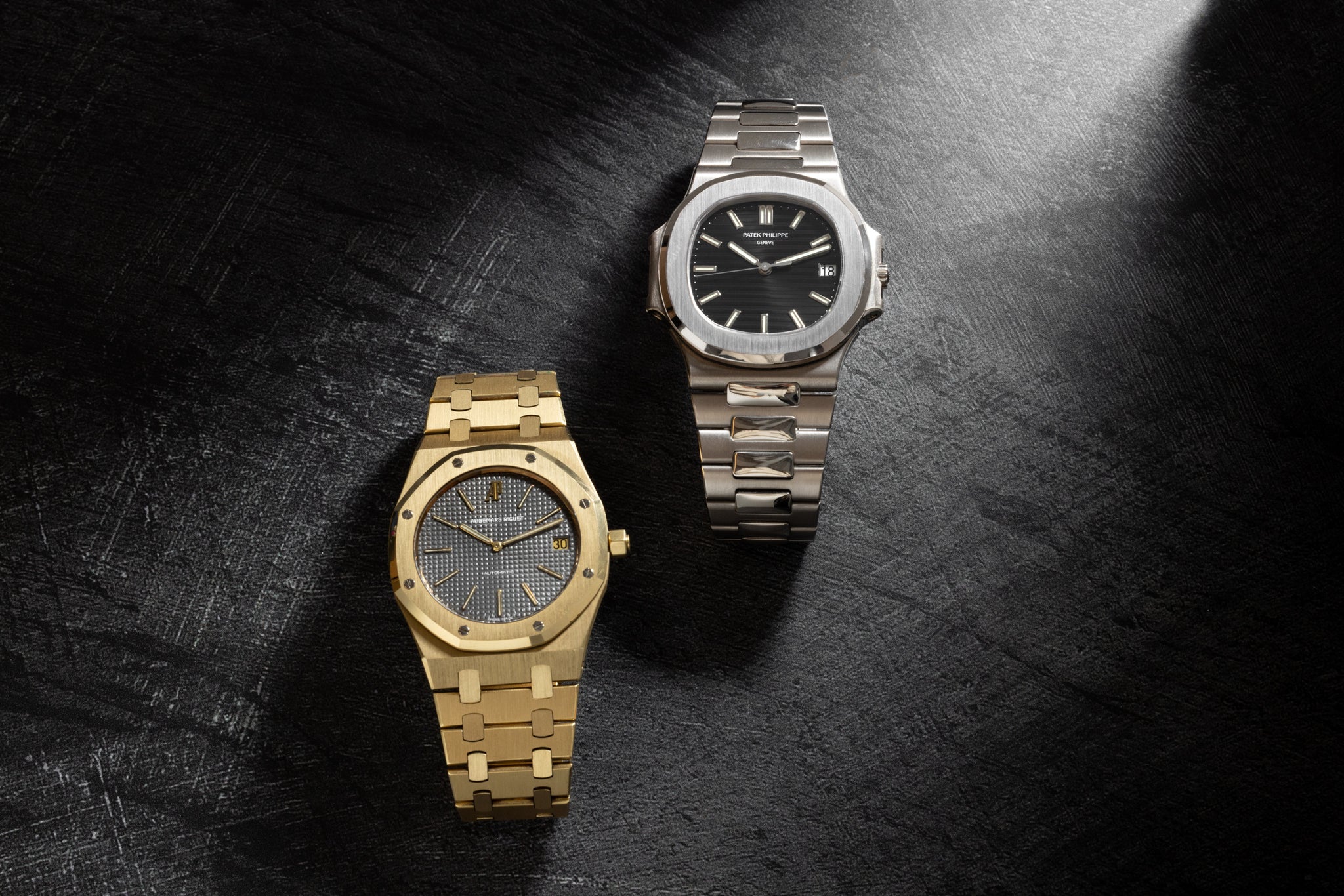
Royal Oak vs Patek Nautilus: Which Should You Buy in Dubai?
There is a conversation that happens at a certain point in a watch collector's life. You have looked seriously at the landscape. You understand what separates a real collection from a wallet full o...

Van Cleef & Arpels Alhambra Price Guide 2026: Every Model Compared
Van Cleef & Arpels raised Alhambra prices in April 2025 by an average of 4.8 percent in the United States and 5.1 percent in Europe. Malachite pieces saw the steepest increases, in some cases c...