

Tiffany vs Cartier vs Van Cleef 2026
You have decided to buy your first serious piece of jewellery. Or your second. Or you are buying a gift for someone who deserves something genuinely special. Either way, the decision narrows to three names faster than any other: Tiffany & Co., Cartier, and Van Cleef & Arpels. These are the three houses that dominate the luxury jewellery conversation globally, and they appear on more wishlists than every other brand combined.
But they are not interchangeable. Each house has a distinct design philosophy, a different relationship with pricing, and a very different story to tell. Choosing between them is not about which one is "best." It is about which one is best for you. This guide compares all three honestly: heritage, iconic pieces, 2026 pricing, resale performance, and the practical question of which house deserves your first purchase. Browse the full authenticated luxury jewellery collection alongside this guide.
The Heritage: Three Different Philosophies
Cartier: The Jeweller of Kings (Paris, 1847)
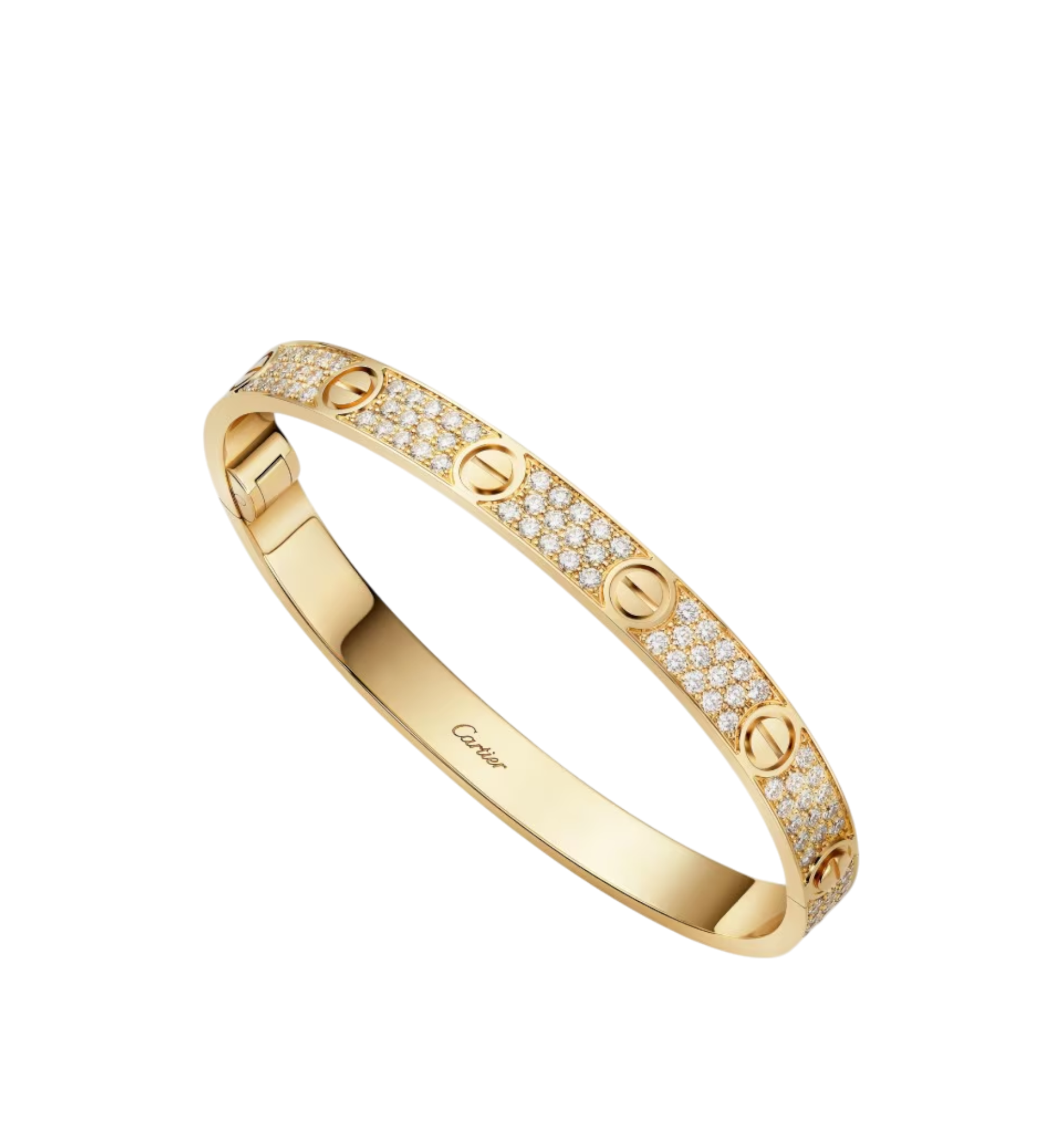
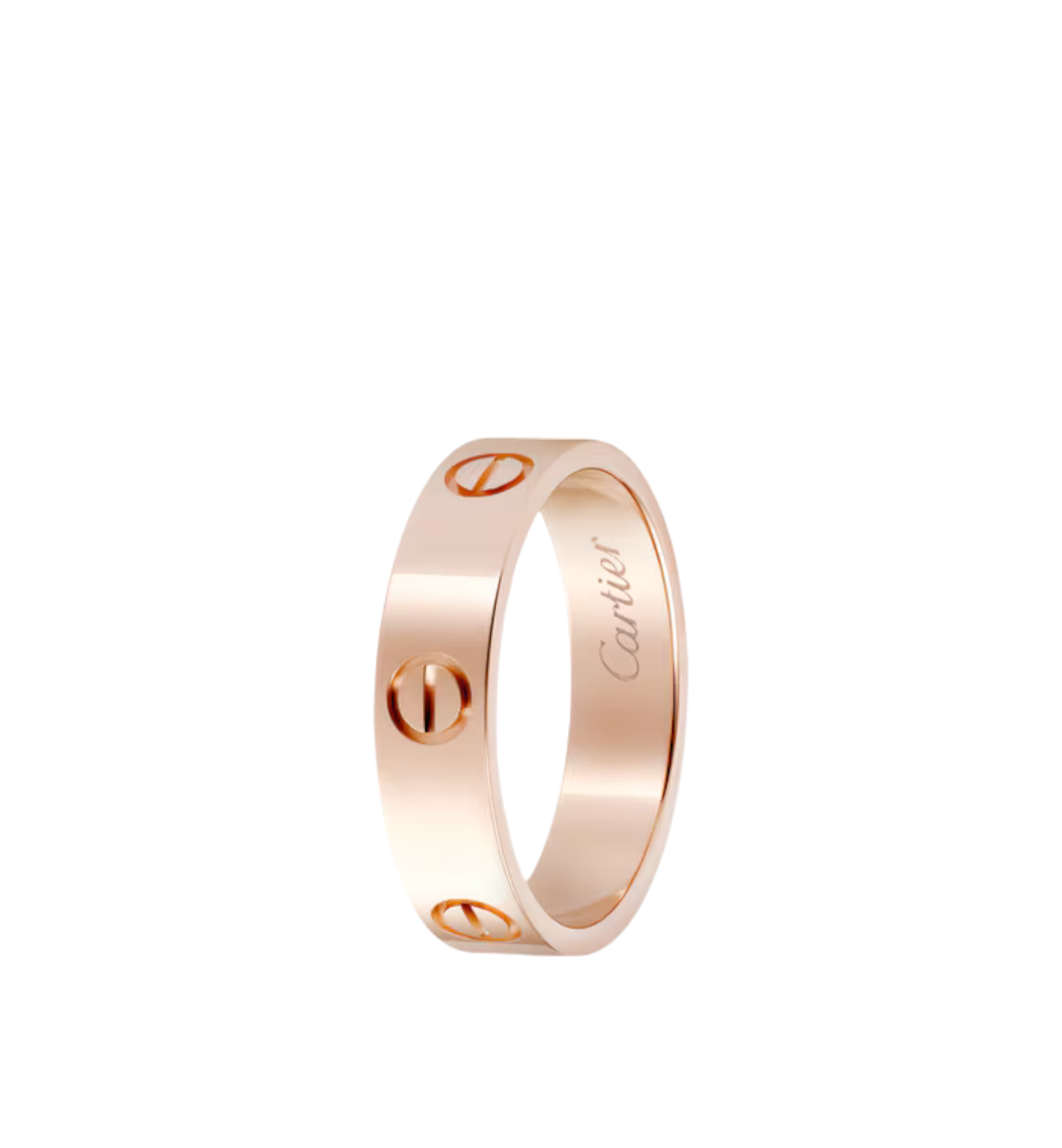
Cartier was founded in Paris in 1847 by Louis-François Cartier. Within decades, the house was serving European royalty. King Edward VII of England called Cartier "the jeweller of kings and the king of jewellers." That royal DNA runs through everything Cartier produces today: structured, bold, architecturally precise designs that project confidence and status. Cartier does not whisper. It declares. The Love bracelet, the Juste un Clou, the Panthère, the Santos watch, these are pieces that are immediately recognisable from across a room. That visibility is the point.
Van Cleef & Arpels: The Poet of Place Vendôme (Paris, 1906)
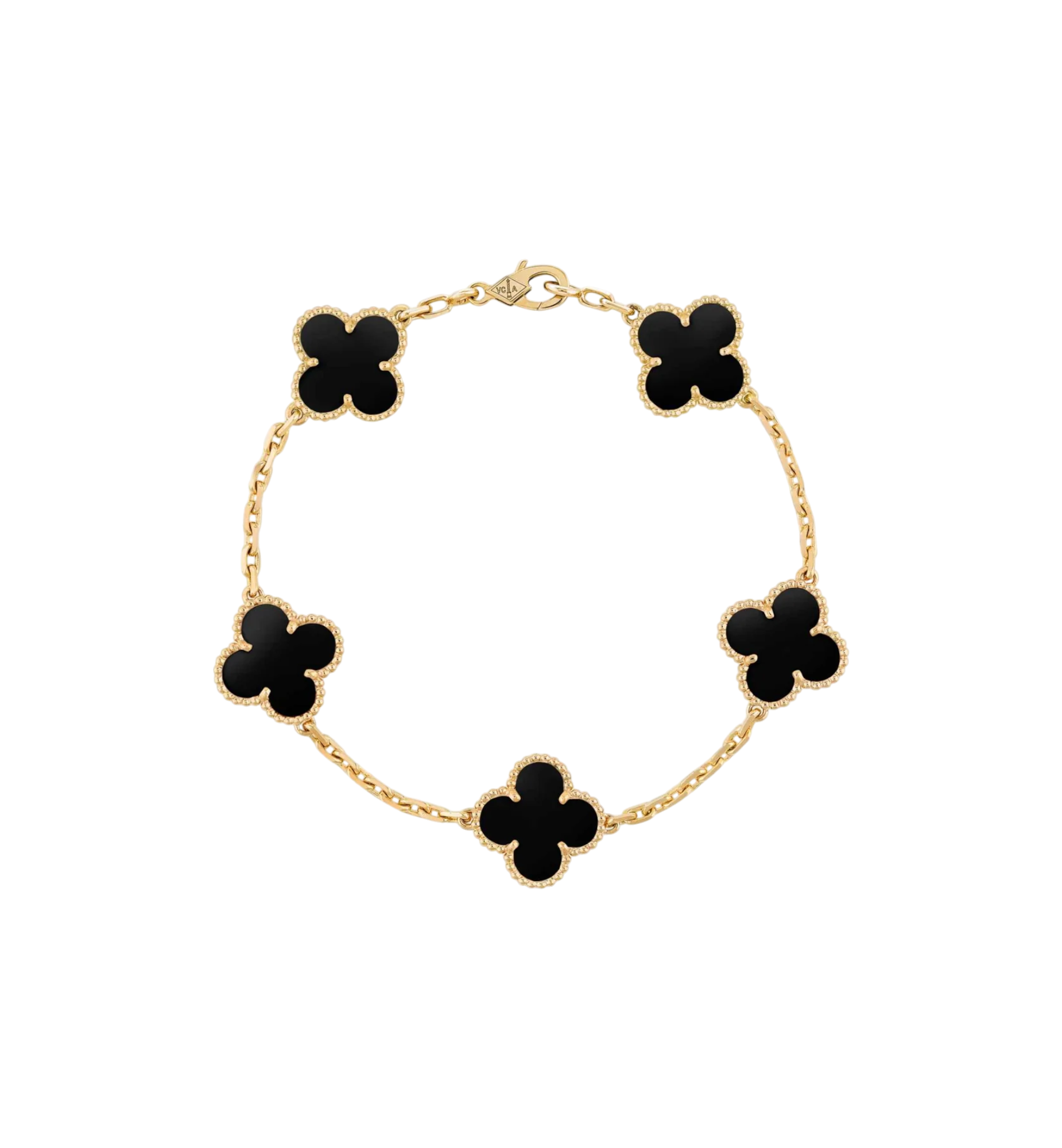
Van Cleef & Arpels was born from a love story. Alfred Van Cleef married Estelle Arpels in 1895, and their families combined to open their first boutique on Place Vendôme in 1906. That romantic origin shaped everything that followed. Van Cleef designs are inspired by nature, luck, and femininity: four leaf clovers, butterflies, flowers, and fairies. The Alhambra's quatrefoil motif represents luck. The Perlée collection captures the delicacy of tiny gold beads. Van Cleef invented the Mystery Setting in 1933, a technique that makes gemstones appear to float with no visible prongs, and it remains the house's most celebrated technical achievement. Where Cartier is bold, Van Cleef is poetic.
Tiffany & Co.: The American Icon (New York, 1837)
Tiffany is the oldest of the three, founded in New York in 1837. It is the house that invented the modern engagement ring (the six prong Tiffany Setting in 1886), popularised sterling silver jewellery as a luxury category, and created the most famous shade of blue in retail history: Tiffany Blue. Tiffany's design language is clean, architectural, and democratic. It makes the world's most expensive diamonds, but it also sells a Return to Tiffany heart tag necklace that a college student can afford. That range is Tiffany's superpower and also, some argue, its limitation. Since LVMH acquired Tiffany in 2021 for $15.8 billion, the house has been aggressively repositioning toward higher price points, with the T collection, Lock collection, and HardWear collection pushing the brand firmly into the luxury jewellery space rather than the accessible luxury space it previously occupied.
The Iconic Pieces: What Defines Each House
| House | Signature Piece | 2026 Entry Price (18K Gold) | Approximate AED | Character |
|---|---|---|---|---|
| Cartier | Love Bracelet | ~$8,800 | ~AED 32,300 | Bold, permanent, symbolic |
| Cartier | Juste un Clou Bracelet | ~$4,550 (small) | ~AED 16,700 | Edgy, modern, confident |
| Van Cleef | Vintage Alhambra 5-Motif Bracelet (MOP) | ~$6,350 | ~AED 23,300 | Feminine, delicate, lucky |
| Van Cleef | Vintage Alhambra Pendant (MOP) | ~$3,400 | ~AED 12,500 | Everyday elegance |
| Tiffany | T Wire Bracelet | ~$1,800 | ~AED 6,600 | Minimalist, modern |
| Tiffany | Lock Bracelet | ~$7,200 | ~AED 26,400 | Contemporary, unisex |
| Tiffany | HardWear Link Bracelet | ~$14,000 | ~AED 51,400 | Bold, industrial chic |
The pricing tells its own story. Tiffany offers the lowest entry point into 18K gold jewellery among the three, with the T Wire bracelet starting around AED 6,600. Cartier's small Juste un Clou starts at approximately AED 16,700. Van Cleef's Alhambra pendant starts at approximately AED 12,500. For the full Van Cleef pricing breakdown, read our Van Cleef Alhambra price guide.
Design DNA: How They Differ
Cartier designs are architectural. Clean lines, geometric forms, and structured metal work. The Love bracelet is an oval that requires a screwdriver to fasten. The Juste un Clou is literally a bent nail rendered in 18K gold. The Trinity ring is three interlocking bands. Every piece has an almost engineering quality: precise, symmetrical, deliberate. Cartier jewellery works equally well on men and women, which is a strength that neither Van Cleef nor Tiffany can match as consistently.
Van Cleef & Arpels designs are organic. Nature motifs dominate: the quatrefoil clover, the butterfly, the flower, the ballerina. Materials include mother of pearl, malachite, carnelian, onyx, and lapis lazuli alongside gold and diamonds. The aesthetic is feminine, romantic, and layered. Van Cleef pieces are designed to be stacked and combined, creating personal compositions that grow over time. This is jewellery that tells stories.
Tiffany designs sit between the two. More minimalist than Van Cleef, less structured than Cartier. The T motif is clean and modern. The Lock is contemporary and bold. The Return to Tiffany heart is nostalgic and sentimental. Since the LVMH acquisition, Tiffany has been pushing toward bolder, heavier gold pieces that compete more directly with Cartier on price and presence. The HardWear collection in particular represents a significant step up in both weight and pricing from Tiffany's traditional positioning.
Resale Value: The Investment Comparison
This is where the three houses diverge significantly, and it matters enormously for buyers who view jewellery as both beautiful and financially prudent.
| House | Iconic Piece | Secondary Market Retention | Key Factor |
|---|---|---|---|
| Cartier | Love Bracelet (plain) | ~95% of retail | Highest demand, universal recognition |
| Cartier | Juste un Clou (regular) | ~97% of retail | Heavy gold content, trend momentum |
| Van Cleef | Vintage Alhambra | 80 to 90% of retail | Scarcity, limited boutique allocation |
| Tiffany | T Bracelet | 55 to 65% of retail | Higher production volume, less exclusivity |
| Tiffany | Lock Bracelet | 60 to 70% of retail | Newer design, still building resale market |
Cartier dominates resale value. The Love and Juste un Clou are two of the most liquid luxury jewellery pieces on the secondary market. They sell quickly, hold value tightly, and benefit from annual retail price increases that raise the floor under existing pieces. At $4,700+ gold per ounce in 2026, the gold content in Cartier bracelets (31 to 36 grams of 18K gold) represents 39 to 41% of the retail price, creating a meaningful material value floor. For the full math, read our gold jewellery investment guide.
Van Cleef performs strongly but slightly below Cartier. The Alhambra's use of stone inlays means less gold per piece, which lowers the material floor. However, Van Cleef compensates with genuine boutique scarcity. Popular Alhambra configurations sell out, and certain stones (malachite, guilloche) carry waitlists. This scarcity supports 80 to 90% retention.
Tiffany trails both houses on resale. The brand's historically broader accessibility (silver jewellery from AED 600) dilutes the exclusivity that drives secondary market demand. The LVMH repositioning is gradually changing this, but the resale data in 2026 still reflects the brand's pre-acquisition positioning. If pure investment performance matters to you, Cartier and Van Cleef are the stronger choices. For the full luxury jewellery value analysis, read our guide to jewellery that holds its value.
Craftsmanship: What Are You Paying For?
All three houses use 18K gold as standard and employ skilled artisans. The differences are in the details.
Cartier craftsmanship centres on metalwork precision. The Love bracelet's screw mechanism, the Trinity's three interlocking bands that spin freely, and the Panthère's articulated links all require manufacturing tolerances that mass production cannot achieve. Cartier operates its own workshops and controls every stage of production.
Van Cleef craftsmanship centres on stone work and setting. The Mystery Setting, where gems are slotted into invisible gold rails so they appear unsupported, is one of the most technically demanding techniques in jewellery. A single Mystery Set piece can take hundreds of hours. Even the standard Alhambra requires precise stone cutting and setting within the beaded gold bezels. A single Alhambra motif passes through approximately seven artisans' hands.
Tiffany craftsmanship centres on diamond expertise and finishing. Tiffany sources and cuts its own diamonds (one of only a few houses that does), and its gemological standards are among the most stringent in the industry. The six-prong Tiffany Setting for solitaire diamonds remains the industry benchmark. In the gold jewellery category, Tiffany's craftsmanship is solid but less distinctive than Cartier's engineering or Van Cleef's stone work.
Which House Should You Buy From First?
Buy Cartier first if: You want a piece that holds maximum value on the secondary market. You want something that works for both men and women. You prefer bold, structured, immediately recognisable design. You want a piece you wear 24/7 (the Love bracelet lifestyle). You are practical minded about luxury: the highest gold content per dirham spent, combined with the strongest resale, makes Cartier the most financially rational first purchase. Browse the authenticated Cartier jewellery.
Buy Van Cleef first if: You are drawn to feminine, nature inspired design. You want a piece that feels personal and romantic rather than bold and public. You value the exclusivity of boutique scarcity. You plan to build a layered collection over time (the Alhambra is designed for stacking and layering). You appreciate that Van Cleef pieces use coloured stones and materials that add visual variety beyond plain gold. Browse the Van Cleef Alhambra collection.
Buy Tiffany first if: You want the most accessible entry point into 18K gold from a heritage house. You appreciate clean, modern, minimalist design. You are buying a first piece of luxury jewellery and want to start at a lower price before committing to Cartier or Van Cleef price points. You are drawn to the cultural weight of the Tiffany blue box and the brand's American heritage. Browse the Tiffany Tiffany & Co. collection Co. collection.
The Three Collection Strategy
Here is how experienced collectors typically approach all three houses. It is not about choosing one forever. It is about choosing the right one at each stage.
First purchase: A Cartier Love bracelet or Juste un Clou (small). This becomes your daily wear foundation. It is the piece that stays on your wrist through everything: work, gym, sleep, travel. Strong resale value means minimal financial risk.
Second purchase: A Van Cleef Vintage Alhambra pendant or 5-motif bracelet. This adds a different aesthetic to your collection, something delicate and layered that contrasts with Cartier's boldness. It works for both casual and dressy contexts.
Third purchase: A Tiffany statement piece (HardWear, Lock) or a second Cartier piece to stack with the first. At this stage, you know what you love and you are building depth rather than breadth.
This order is not a rule. But it reflects how most collectors who own all three brands actually built their collections: practical value first, personal expression second, collection depth third.
Buying Pre Owned in Dubai
The pre owned market for all three houses is active and offers real savings. Cartier pieces trade closest to retail (85 to 97%) because demand is highest. Van Cleef trades at 80 to 90% with occasional premiums on scarce configurations. Tiffany offers the deepest discounts on the secondary market (55 to 70% of retail), which makes pre owned Tiffany arguably the best value proposition among the three for buyers who prioritise the piece itself over the retail experience.
Dubai's 5% VAT creates additional savings versus European and UK markets on all three brands. Every piece in the authenticated jewellery collection is verified through our authentication process, ensuring you buy with the same confidence as a boutique purchase.
Frequently Asked Questions
Which is better, Cartier or Van Cleef?
Neither is objectively better. Cartier offers bolder design, stronger resale value, and gender neutral appeal. Van Cleef offers more feminine, nature inspired design with genuine boutique scarcity. Cartier is the more practical first purchase. Van Cleef is the more personal and romantic choice. Many collectors own both.
Is Tiffany as good as Cartier?
Tiffany craftsmanship is excellent, particularly in diamond setting and finishing. However, Cartier commands stronger resale value and greater exclusivity in the gold jewellery category. Since LVMH's acquisition, Tiffany has been pushing upmarket with heavier gold pieces and higher price points, closing the gap. For pure investment value, Cartier currently leads.
Which jewellery brand holds its value best?
Cartier, specifically the Juste un Clou (97% retention) and Love bracelet (95% retention). Van Cleef Alhambra follows at 80 to 90%. Tiffany trails at 55 to 70%. The gap reflects differences in exclusivity, gold content, and secondary market demand.
What is the best first piece of luxury jewellery to buy?
For maximum value retention and daily wearability: Cartier Love bracelet or Juste un Clou (small). For the most accessible 18K gold entry point: Tiffany T Wire bracelet. For feminine elegance with a romantic story: Van Cleef Vintage Alhambra pendant. All are available in the authenticated jewellery collection.
Is Van Cleef Alhambra worth the money?
Yes. The Alhambra retains 80 to 90% of retail value, features genuine artisan craftsmanship (each motif passes through approximately seven pairs of hands), and benefits from boutique scarcity that supports long-term value. The coloured stone options (mother of pearl, malachite, onyx) add visual variety that plain gold pieces cannot match. For the complete pricing breakdown, read our Alhambra price guide.
Where can I buy Tiffany, Cartier, and Van Cleef in Dubai?
All three houses have boutiques in Dubai Mall and Mall of the Emirates. For pre owned options with savings of 10 to 30% versus retail, browse the authenticated collections at Konesseur: Cartier, Van Cleef Alhambra, Tiffany, and the full jewellery collection.
 Same Day Delivery
 Same Day Delivery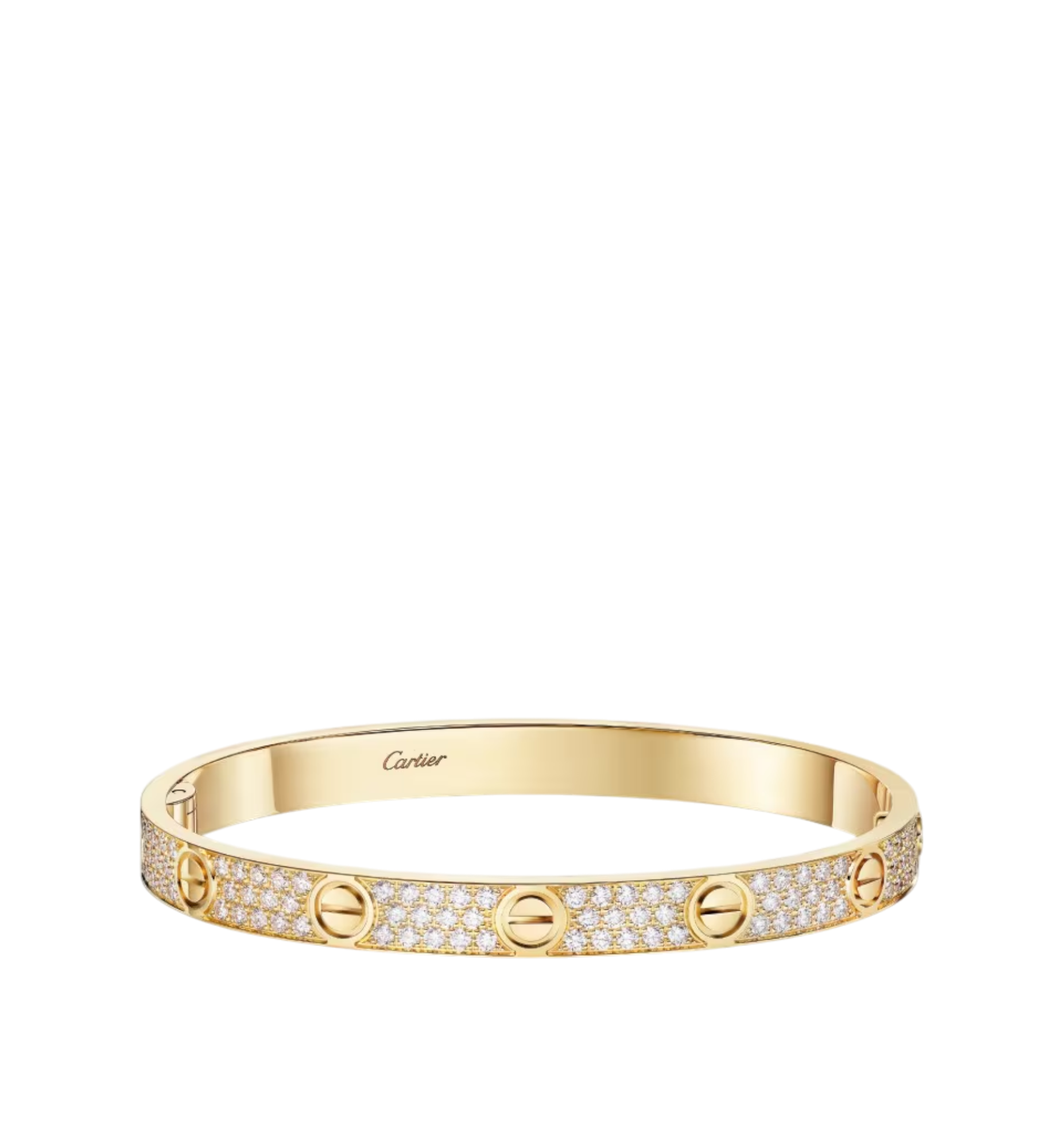
 Same Day Delivery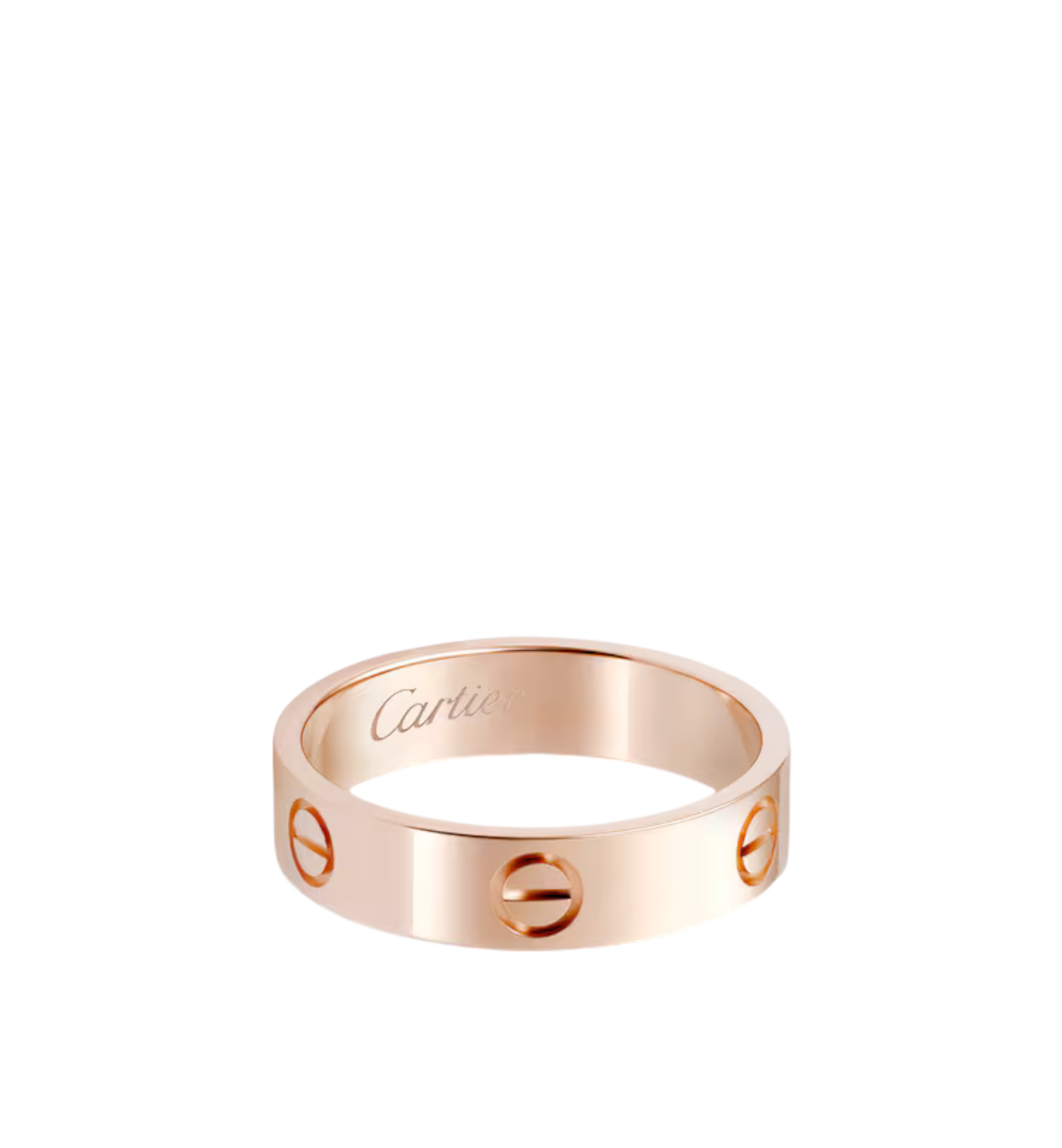
 Same Day Delivery
 Same Day Delivery
 Same Day Delivery


