



How the Ultra-Wealthy Actually Wear Their Jewellery
There is a particular way that people with real, established wealth wear their jewellery, and once you notice it you cannot unsee it. It is almost never about the biggest stone or the flashiest piece. It is about restraint, consistency, and a small number of exceptional things worn so often they become part of the person. The jewellery does not shout. It quietly signals to anyone who knows what they are looking at.
This is the opposite of how jewellery is often marketed, and it is worth understanding, because it is also the smarter way to build a collection. Here is how the quietly wealthy actually wear their jewellery, and how you can apply the same principles.
They Buy Few Pieces, and Wear Them Constantly
The defining habit is this: a handful of exceptional pieces, worn every single day, rather than a drawer full of things worn occasionally. The Cartier Love bracelet that never comes off. The Van Cleef Alhambra necklace worn daily for years. A pair of gold hoops that go with everything. These pieces become signatures precisely because they are constant.
This is why the classics endure. A Cartier Love or Juste un Clou bracelet is designed to be worn continuously, through showers, workouts, and sleep. It is not a special-occasion object. It is part of the wardrobe, and part of the person. Buying one excellent piece you wear constantly says far more than buying five you rarely touch.
The Art of Stacking Bracelets
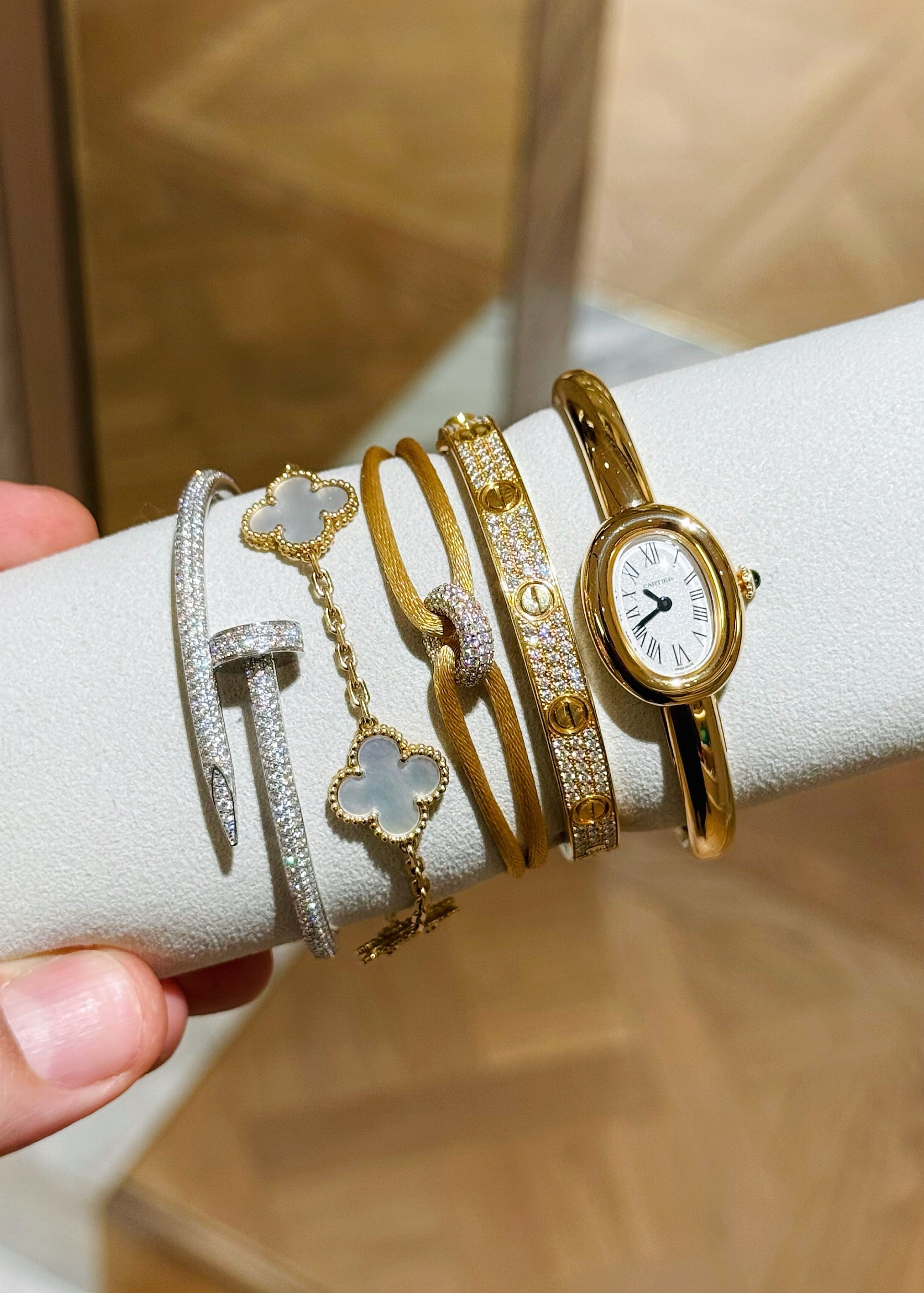
Stacking is where personal style really shows, and the wealthy do it with intention rather than excess. The approach is to build a stack that looks collected over time, because it usually was.
The most classic stack starts with a Cartier Love bracelet as the anchor. From there, a Juste un Clou adds an edgier line, and the two sit together beautifully because they share a design language. Some people add a slim diamond bangle or a plain gold cuff to soften or vary the stack. The trick is restraint: three or four pieces that work together, in complementary metals, rather than a wrist crowded with competing styles.
A few principles make a stack look considered rather than cluttered. Keep to one or two metal tones so the pieces feel like a family. Vary the visual weight, pairing a bold piece with slimmer ones so nothing fights for attention. And let the stack build naturally over time, adding pieces as they mean something, which is exactly why an organic stack looks better than a matching set bought all at once. Browse bracelets to find pieces that layer well.
The Art of Layering Necklaces
Layering necklaces follows the same logic: a few well-chosen pieces at different lengths, worn together to create depth. Done well, it looks effortless and personal. Done badly, it looks like everything was put on at once.
The classic approach uses two or three necklaces at clearly different lengths so they sit apart rather than tangling. A shorter piece close to the neck, a mid-length pendant, and sometimes a longer chain beneath. A Van Cleef Alhambra pendant is one of the most popular layering pieces in the world precisely because it works so well at different lengths and pairs beautifully with a simple chain. Explore the Alhambra collection and other necklaces for layering.
The principles again come down to restraint. Choose distinct lengths so each piece is visible. Mix a delicate chain with a piece that has a focal point, like a pendant or motif, so the eye has somewhere to rest. Stay within one or two metal tones. And resist the urge to add a fourth or fifth necklace, since the most elegant layering usually stops at two or three.
They Favour Signatures Over Trends
The quietly wealthy tend to wear the same recognisable pieces again and again, and there is a reason those particular designs recur. The Cartier Love, the Juste un Clou, the Van Cleef Alhambra, a Cartier Trinity ring, classic diamond studs. These are not trend pieces. They are established icons that have looked right for decades and will continue to. Building around signatures rather than seasonal trends is the difference between a collection that dates and one that lasts.
This also happens to be the financially sensible approach. The pieces that hold their value best are exactly these enduring classics, which is why the quiet-luxury wardrobe and the smart-investment wardrobe are essentially the same thing. For more on that, see our gold jewellery investment guide.
They Let the Quality Speak
Perhaps the most important principle is the quietest one. Real jewellery does not need to announce its price. The people who wear it best let the quality of the piece and the way it is worn do the talking. A single perfect gold bracelet, worn with confidence, reads as far more refined than a stack of obvious statement pieces. This is the essence of quiet luxury: the understanding that taste is shown through restraint, and that the person who recognises your Alhambra or your Love bracelet is exactly the person whose recognition you value.
This approach is also the most freeing, because it means you do not need a vault of jewellery. You need a few genuinely excellent pieces, worn well and worn often. Browse the full fine jewellery collection, every piece authenticated through our authentication process.
A Few Common Questions
How do you layer necklaces without them tangling?
Choose necklaces at clearly different lengths so they sit apart, typically two or three pieces such as a short chain, a mid-length pendant, and sometimes a longer chain. Mix a delicate chain with a piece that has a focal point like a pendant or motif, keep to one or two metal tones, and avoid adding too many. A Van Cleef Alhambra pendant layers particularly well because it works at different lengths.
How do you stack bracelets so it looks good?
Build around an anchor piece such as a Cartier Love bracelet, then add complementary pieces like a Juste un Clou and a slim bangle or cuff. Keep to one or two metal tones so the pieces feel like a family, vary the visual weight so nothing competes, and stop at three or four pieces. The most elegant stacks look collected over time rather than bought as a matching set.
What is quiet luxury jewellery?
Quiet luxury jewellery is about restraint and quality rather than flash. It means wearing a small number of exceptional, understated pieces, often classics like the Cartier Love bracelet or Van Cleef Alhambra, worn consistently rather than a large collection of obvious statement pieces. The idea is that taste is shown through subtlety, and the right people recognise the quality without it needing to announce itself.
What jewellery do wealthy people actually wear?
Established wealth tends to favour enduring classics worn constantly rather than trend pieces: the Cartier Love and Juste un Clou bracelets, the Van Cleef Alhambra, a Cartier Trinity ring, and classic diamond studs. The emphasis is on a few exceptional pieces worn every day, in complementary metals, chosen for timeless design rather than seasonal fashion. These pieces also happen to hold their value best.
Should you mix gold and silver jewellery?
You can, but the most refined looks usually stay within one or two metal tones so the pieces feel cohesive. If you do mix metals, do it intentionally and consistently, for example choosing pieces that themselves combine two tones, rather than mixing at random. Keeping a stack or layered look tonally consistent is one of the simplest ways to make it look considered.
Where can I buy classic fine jewellery in Dubai?
The fine jewellery collection at Konesseur includes authenticated classics from Cartier, Van Cleef and Arpels, and other leading houses, with every piece verified through the authentication process and available to view in person at the Dubai boutique.
Share
Jewellery
 Same Day Delivery

 Same Day Delivery
 Same Day Delivery
Read more
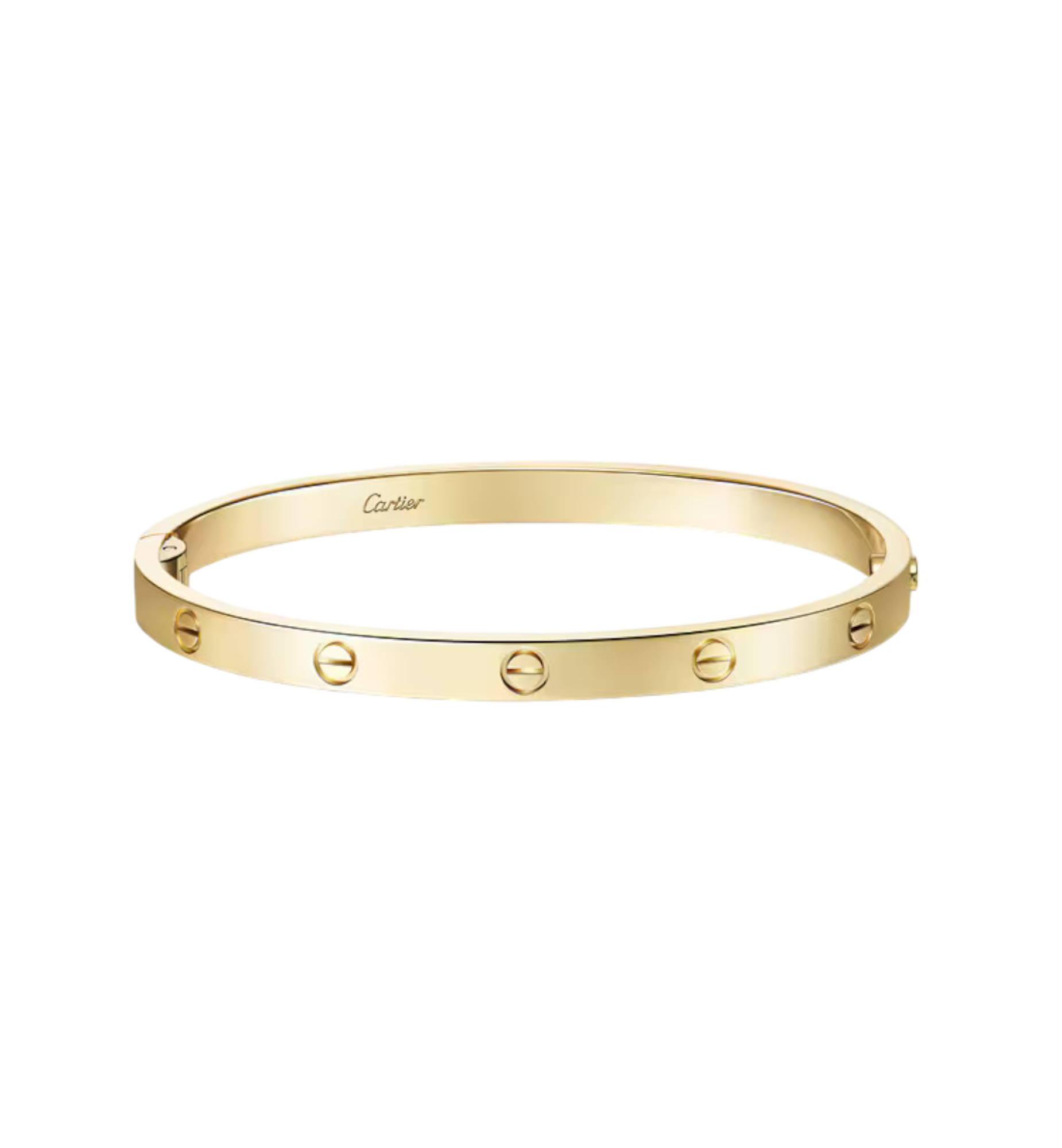
How to Spot a Fake Cartier Love Bracelet: A Buyer's Guide
The Cartier Love bracelet is one of the most counterfeited pieces of jewellery in the world. It is iconic, it is expensive, and it is instantly recognisable, which is exactly what makes it a targe...
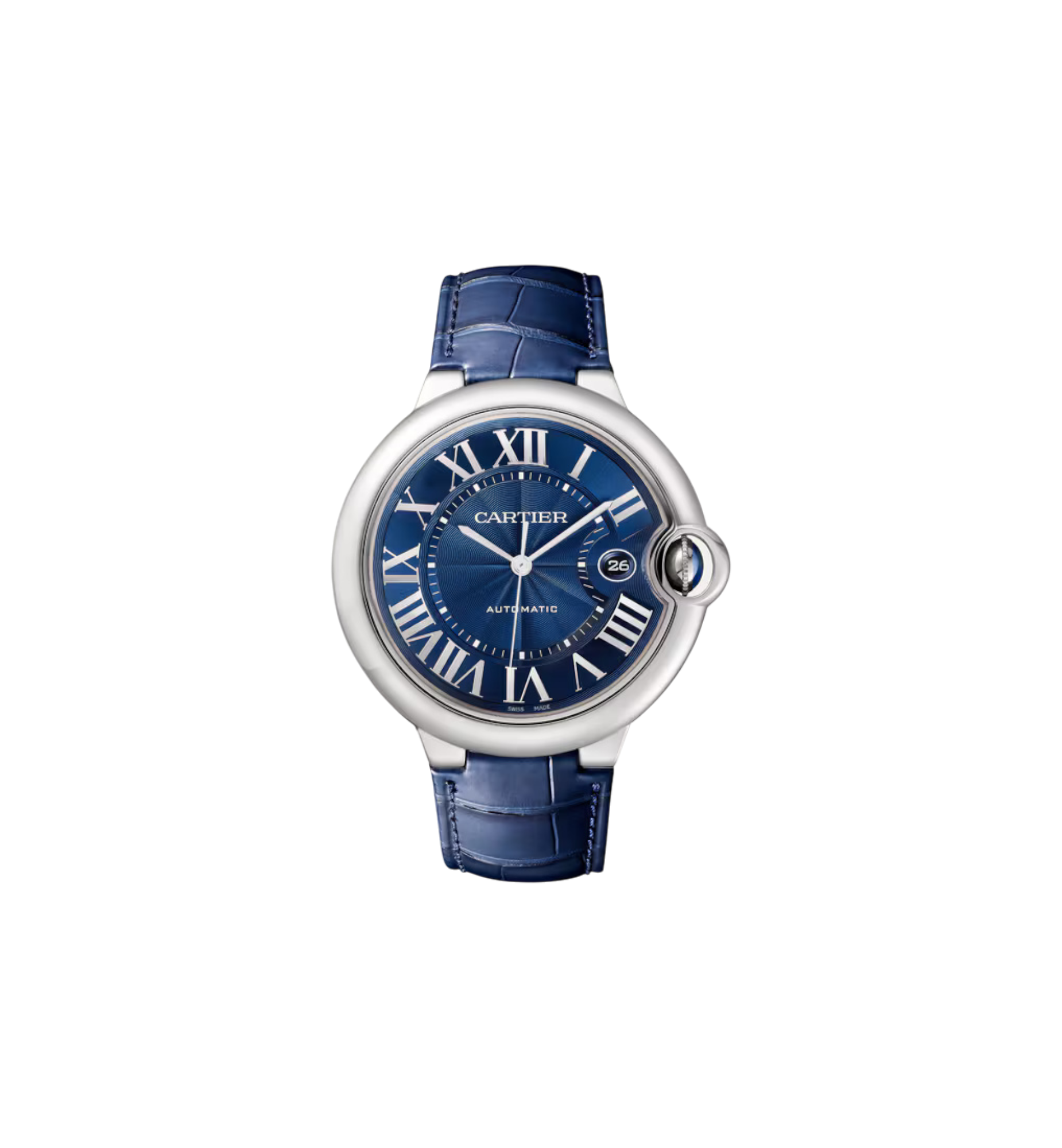
Cartier Ballon Bleu: The Complete Buying Guide
Some watches earn their place through heritage, others through complications. The Cartier Ballon Bleu did it through pure design. It arrived in 2007, which makes it a newcomer by Cartier standards,...